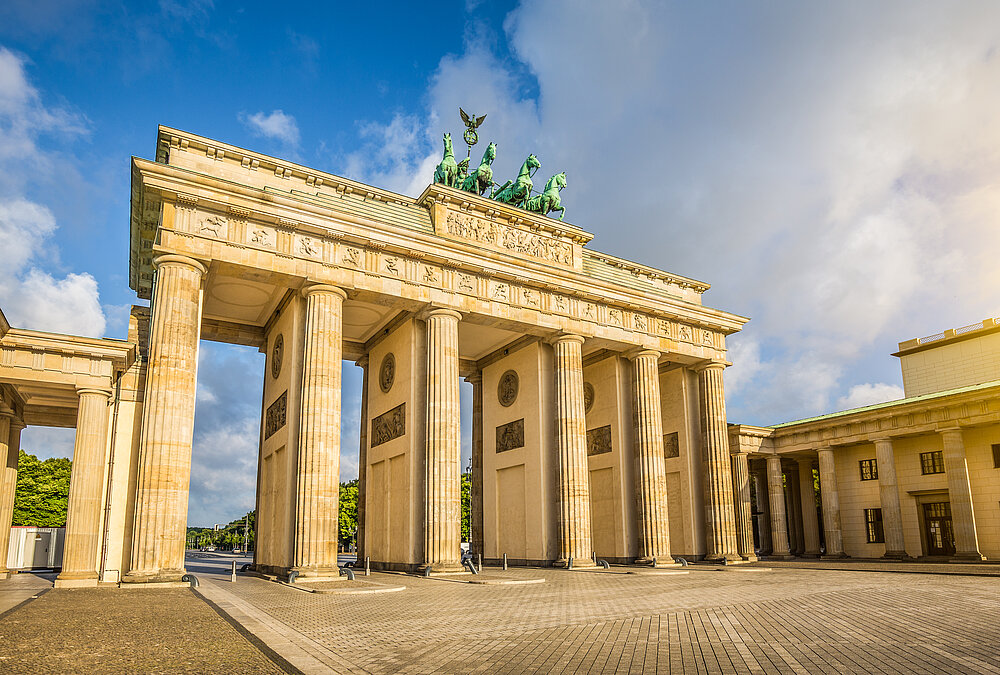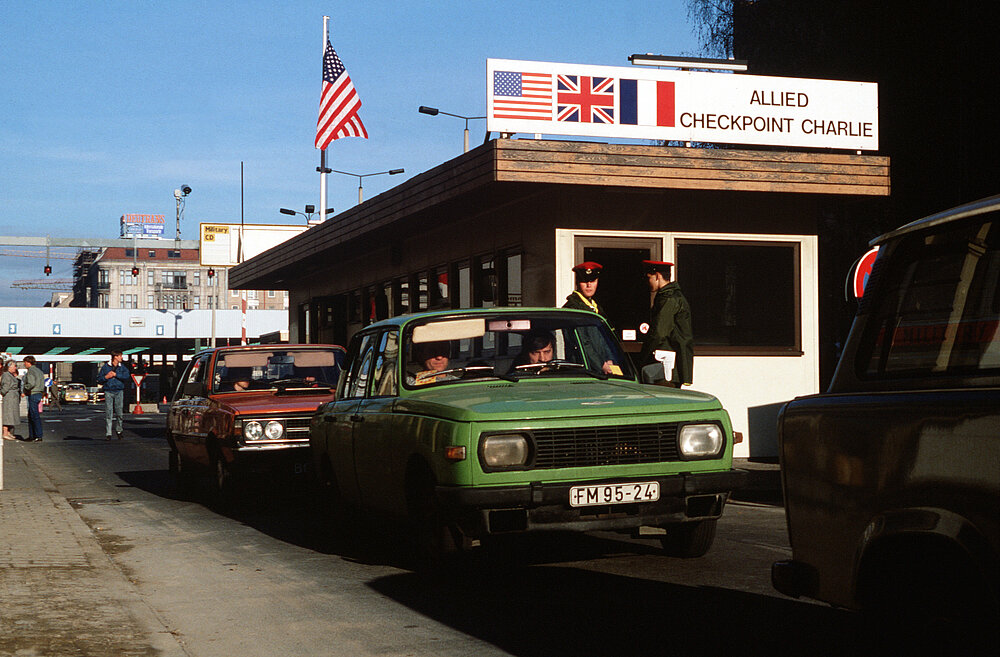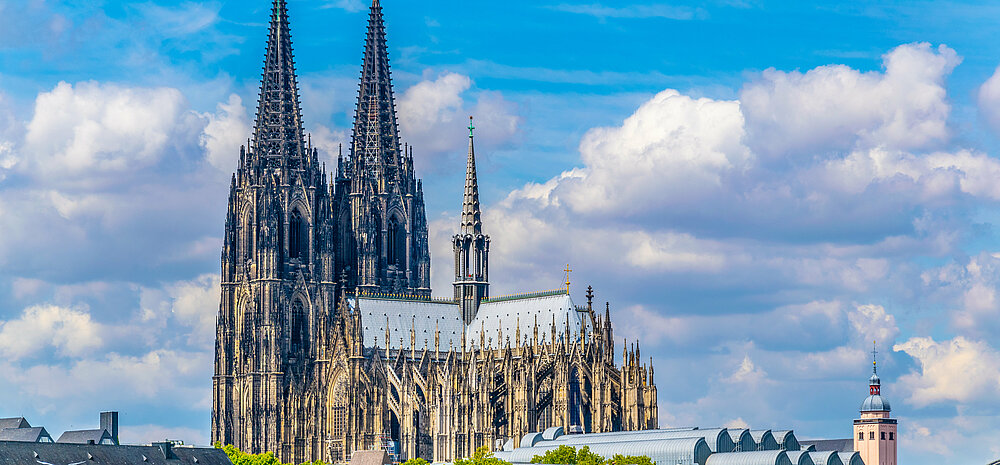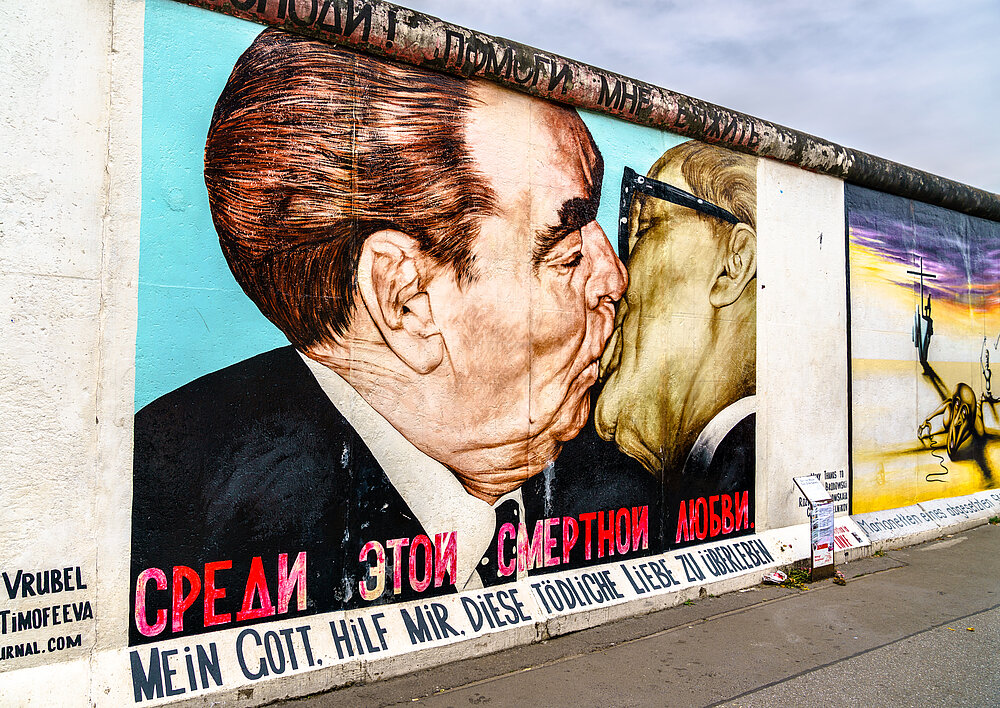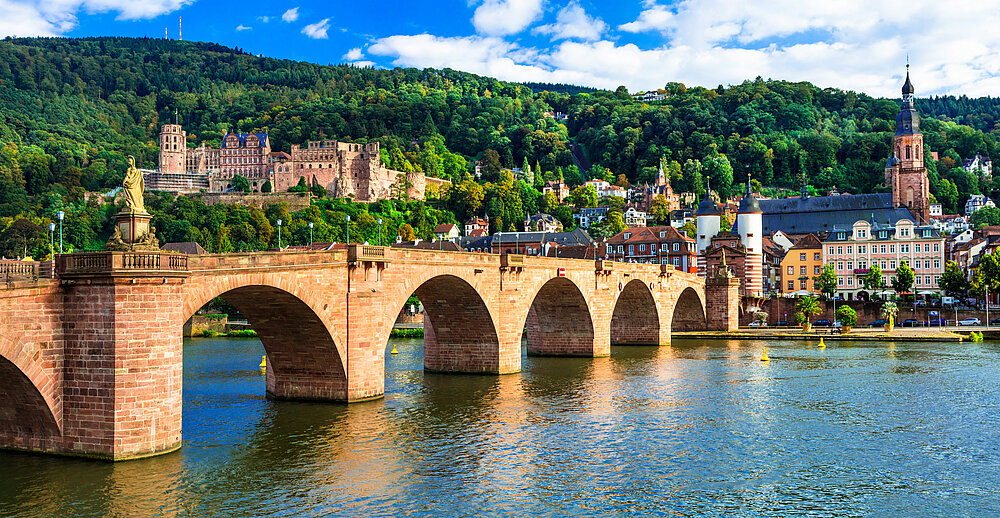

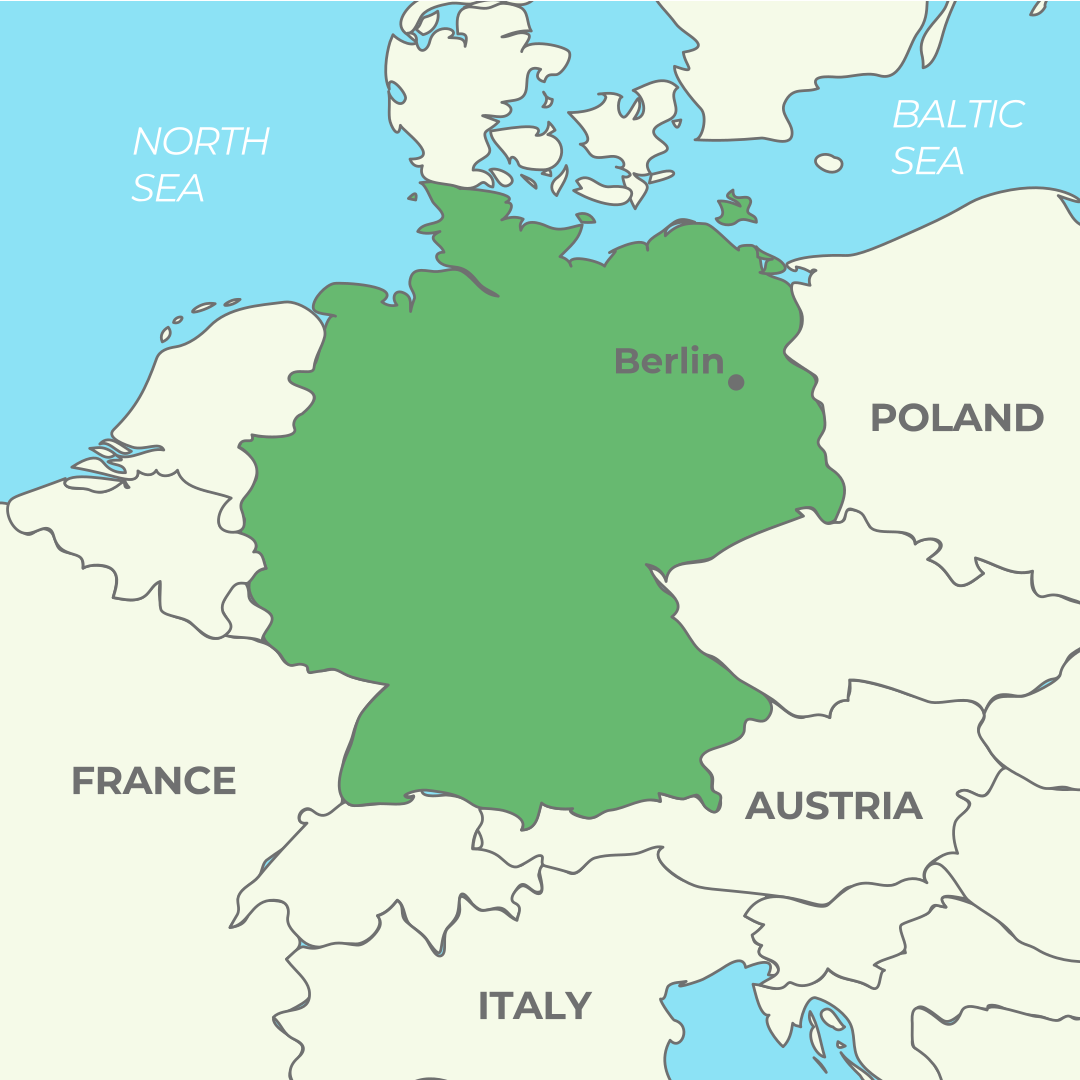
Germany is located in the heart of Europe, bordering both the North Sea and the Baltic Sea. Stone Age finds provide evidence of human settlement in what is now the Federal Republic of Germany several hundred thousand years ago. In ancient times, the Romans ruled all of Europe up to the Rhine and Danube, but failed in their attempts to conquer the territories beyond the major rivers. In 962, the Holy Roman Empire was proclaimed as the German successor state to the Roman Empire. Its kings received the imperial dignity from the Pope and ruled over a large part of Central Europe until the conquest by Napoleon in 1806. Although the German principalities and duchies thus had a common emperor for almost 1,000 years, a true national movement did not emerge until the French period. The path to the formation of a nation state was marked by the rivalry between Prussia and Austria. It culminated in the founding of the German Empire in 1871, without the participation of Austria. After a long period of peace, the German Empire led Europe and its colonies into the two world wars in the first half of the 20th century. As a result of the division after World War II, the country became a mirror of the opposites of the two major social models of the 20th century, capitalism and communism. The Cold War finally ended with the fall of the Berlin Wall in 1989 and the subsequent reunification of Germany.
Facts
- Capital and largest city: Berlin
- Official language: German
- Area: 357,022 km2 (137,847 sq mi)
- Population: 84,220,184 (2023 estimate)
- Reunification of East and West Germany: 3rd October 1990
Ancient roots
The English term "Germany" comes from the Roman name for the ungovernable wild land north-east of the Rhine and Danube, "Germania magma" (Greater Germania). "Germani" was a collective term used by the Romans for the numerous different tribes in this area. A whole series of legionary camps along the border later gave rise to major cities such as Cologne, Mainz and Trier.
Influential figures and history
Throughout history, many German personalities made decisive contributions to Western culture, art and science. Among the most famous are composers such as Johannes Sebastian Bach and Ludwig van Beethoven, the inventor of the printing press Johannes Gutenberg, philosophers such as Immanuel Kant and physicists such as Albert Einstein and Max Planck, to name just a few. The Brothers Grimm's collection of fairy tales is also world-famous and was partly staged by Hollywood. In addition to mythical creatures and magic, they often involve castles or palaces, which in turn can be traced back to their German origins.
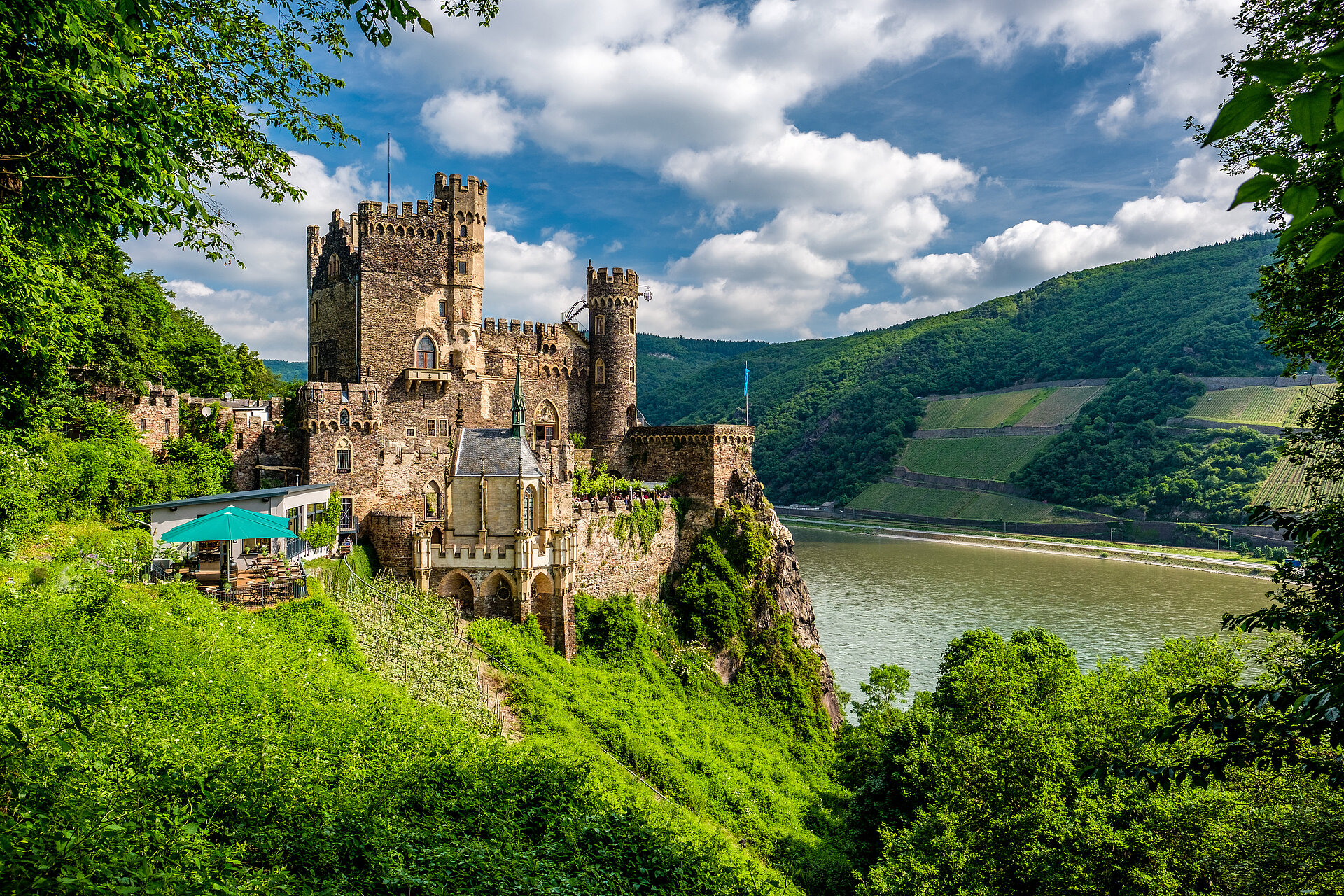
With about 25,000, Germany has the most castles in the world. Among them are Neuschwanstein Castle, Sanssouci Palace and Wartburg Castle, where the reformer Martin Luther produced the first German translation of the New Testament of the Bible in 1521/22. The German national flag was also carried for the first time at Wartburg Castle in 1817. At this event, students demonstrated for the foundation of a nation state. The colors black, red and gold originally came from the uniform of the Lützow Free Corps, a volunteer unit of the Prussian army that was deployed in the Wars of Liberation against Napoleon.
Current importance in the world
As Europe's largest economy, Germany plays a key role in the politics of the European Union and is also of considerable importance for international trade. Until the introduction of the Euro, the German Mark was the second-strongest currency in the world after the U.S. Dollar and served as the reserve currency for numerous countries. Germany is one of the world's leading nations, particularly in areas such as mechanical engineering, the automotive industry, and research and development.