
Welcome to
Saudi Arabia
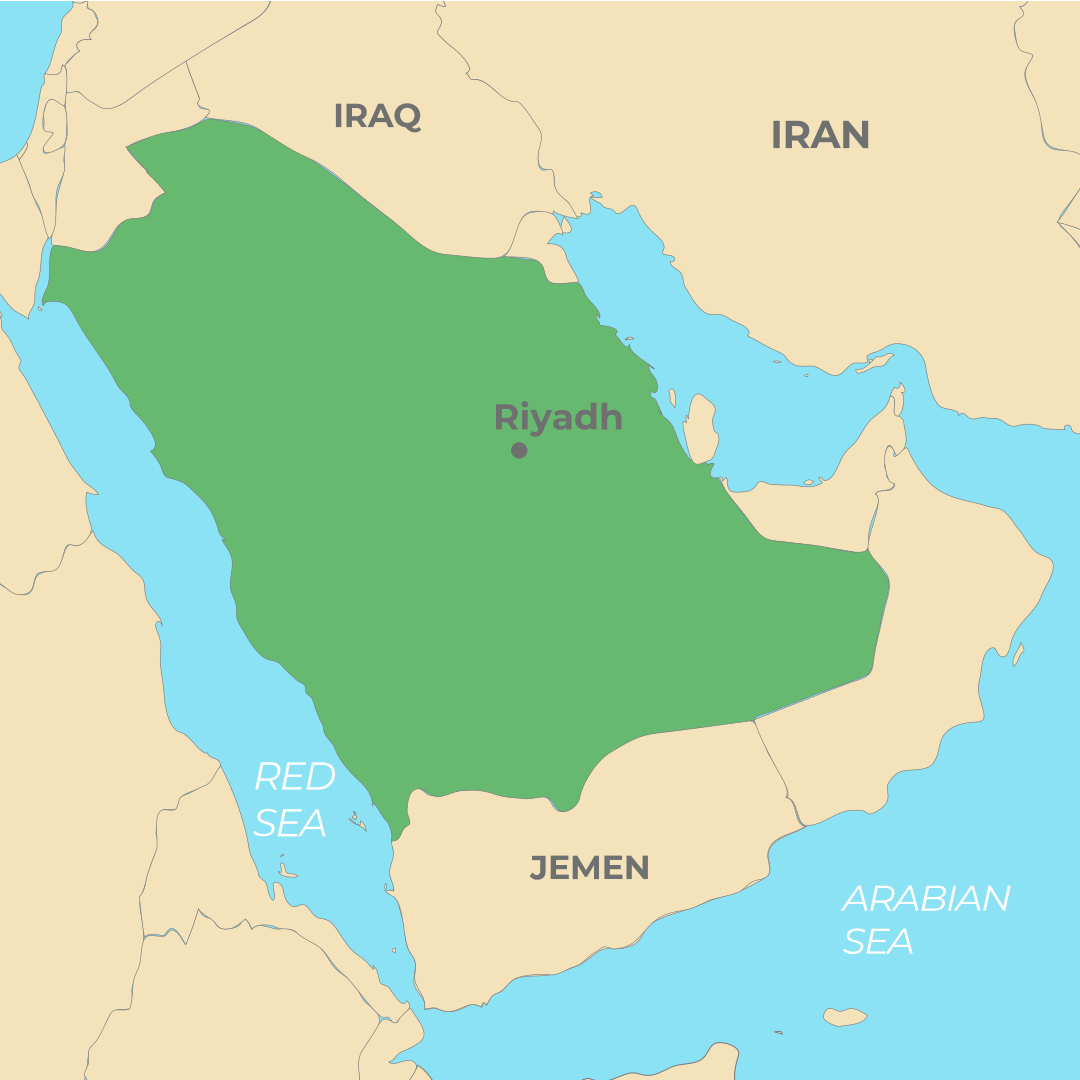
The Kingdom of Saudi Arabia comprises the majority of the Arabian Peninsula and borders both the Red Sea and the Persian Gulf. It is the largest country and the largest economy in the Middle East. The oldest evidence of human presence on the Arabian Peninsula dates back around 125,000 years. As most of the country is covered by desert, it was mainly populated by nomadic tribes throughout its history. The Prophet Muhammad united the various Arab tribes of the peninsula at the beginning of the 7th century and founded Islam as a common religion. After his death in 632, his successors conquered large parts of North Africa and Asia, as well as the Iberian Peninsula. Several powerful dynasties emerged from present-day Saudi Arabia. The Umayyad Caliphate (661–750) was one of the largest empires in history. Today's kingdom was founded in 1932 by unification under King Abdulaziz of the House of Al Saud. Since the discovery of large oil reserves in 1938, the country has developed into world's third-largest oil producer.
Facts
- Capital and largest city: Riyadh
- Official language: Arabic
- Area: 2,149,690 km2 (830,000 sq mi)
- Population: 36,544,431 (2024 estimate)
- Unification: 23rd September 1932
Arabian horses
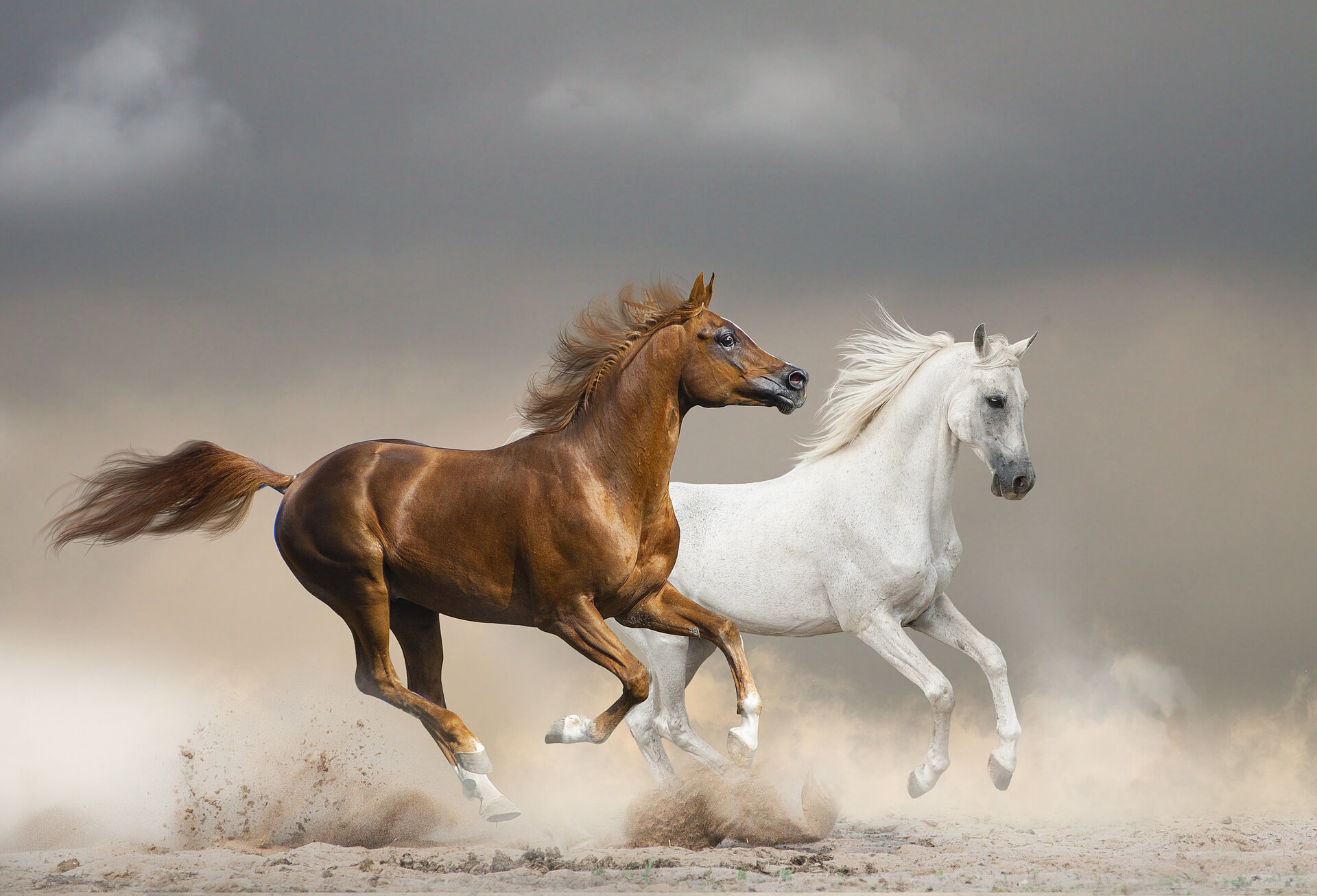
In addition to camels, horses have also been domesticated in the Arabian Peninsula for centuries. According to tradition, the famous Arabian horse breed descends from the five mares that the Prophet Muhammad had with him when he migrated to Medina. Interest in horses spread to Europe, particularly due to the long Muslim rule of the Iberian Peninsula. Thoroughbred Arabians can be recognized by their wedge-shaped head and the high tail carriage. Due to a number of outstanding characteristics, such as endurance, resilience, frugality and speed, they dominate endurance riding in equestrian sports. Thoroughbred Arabians are also a common status symbol, especially in Arab countries.
Muhammad
Muhammad was born around 570 AD and, according to Islamic belief, began his preaching after receiving the first revelation of the Quran from the angel Jibra'ill (known in English as the archangel Gabriel) in the cave of Hira on the mountain of Jabal al-Nour around 610 AD. Alongside the Sacred Mosque (or Masjid al-Haram), which houses the Kaaba, the cave of Hira is one of the most popular tourist attractions in Mecca. However, his proclamation of the oneness of God (“Allāh”) and total submission (“Islām”) as the right way of life was rejected by the polytheistic population of Mecca.
To escape persecution, Muhammad fled with his followers to Medina (formerly known as Yathrib) in 622, which marks the beginning of the Islamic calendar. There he united a number of tribes and founded a Muslim community. After several years of war against the Meccans, Muhammad succeeded in conquering Mecca in 630. Two years later, he made the so-called Farewell Pilgrimage from Medina to Mecca. It was the first Hajj after non-Muslims had been banned from entering the holy city. Shortly afterwards, in the summer of 632, Muhammad died and was buried in Medina.
Medina
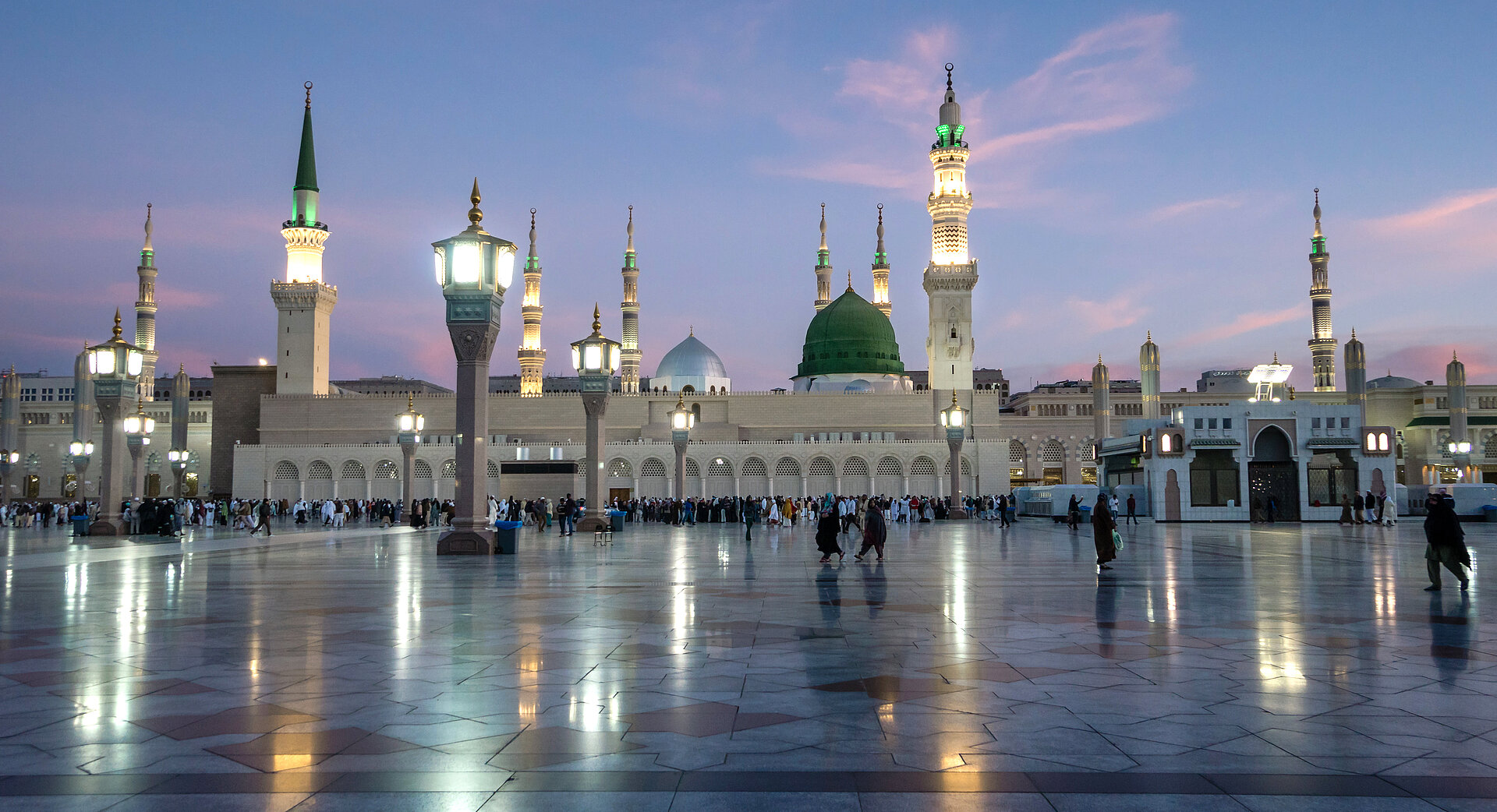
Medina is located in the Hejaz region of western Saudi Arabia, about 340 km (211 mi) north of Mecca, and is the burial site of Muhammad. The Prophet's Mosque, built by him in 622, is the second largest mosque in the world after the Sacred Mosque in Mecca. Its most distinctive feature is the green dome, which contains not only the tomb of Muhammad, but also those of the first two caliphs of Sunni Islam, Abu Bakr and Umar ibn al-Khattab. Another tomb is being prepared there for the prophet Jesus (ʿĪsā ibn Maryam), who, according to Islamic tradition, will die a natural death after his return.