
Welcome to the
United Arab Emirates
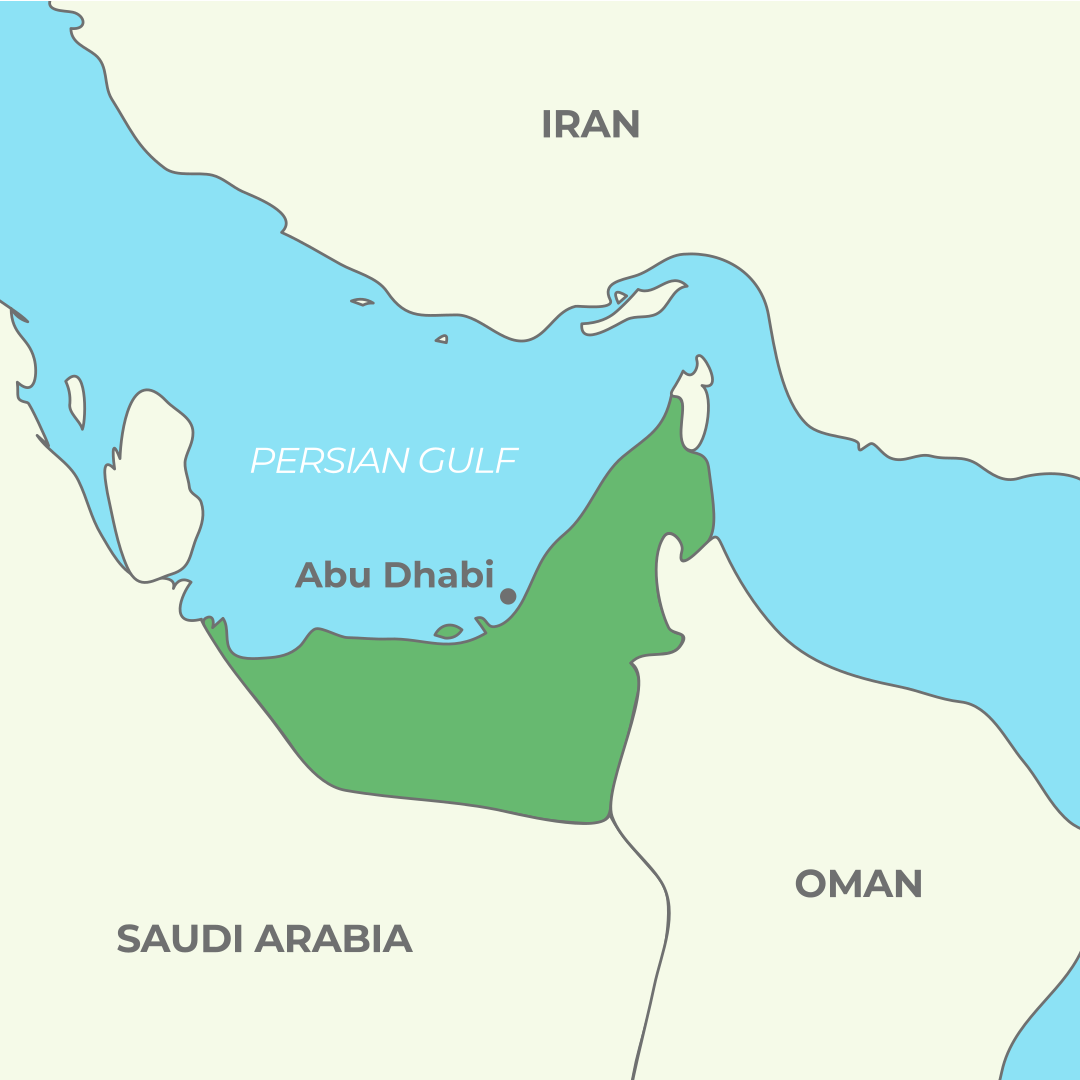
The United Arab Emirates (UAE) is located in the south of the Arabian Peninsula on the Persian Gulf. It is a federal constitutional monarchy consisting of seven autonomous emirates. The oldest evidence of human settlement in the region dates back around 127,000 years, and trade relations with various cultures between Mesopotamia and the Indus Valley already existed in ancient times. In 633 AD, shortly after the death of the Prophet Mohammed, Islam took hold as a result of the Ridda Wars, thus ending the rule of the Persian Sassanid Empire. After the Portuguese increasingly controlled trade in the 16th century, the southern Persian Gulf became known as the “Pirate Coast” in the 18th century. To protect its Indian trade, the British East India Company began to intervene against the then-dominant trading force of the Al Qasimi dynasty in 1809 and through a series of treaties with the local rulers, the so-called “Trucial States” were established as a British protectorate from 1820. The pearl industry experienced a major boom in the 19th century and in 1958, oil was found off the coast of Abu Dhabi for the first time. In 1971, the United Arab Emirates gained independence from the United Kingdom.
Facts
- Capital: Abu Dhabi
- Largest city: Dubai
- Official language: Arabic
- Area: 83,600 km2 (32,300 sq mi)
- Population: 10,032,213 (2024 estimate)
- Independence from the United Kingdom: 2nd December 1971
The Emirates
The seven emirates are Abu Dhabi, Ajman, Dubai, Fujairah, Ras al-Khaimah, Sharjah and Umm Al Quwain. While each of the emirates has a sheikh as ruler, the UAE is governed at the federal level by a president as head of state, who is elected by the Federal Supreme Council from one of the royal families.
Tourism
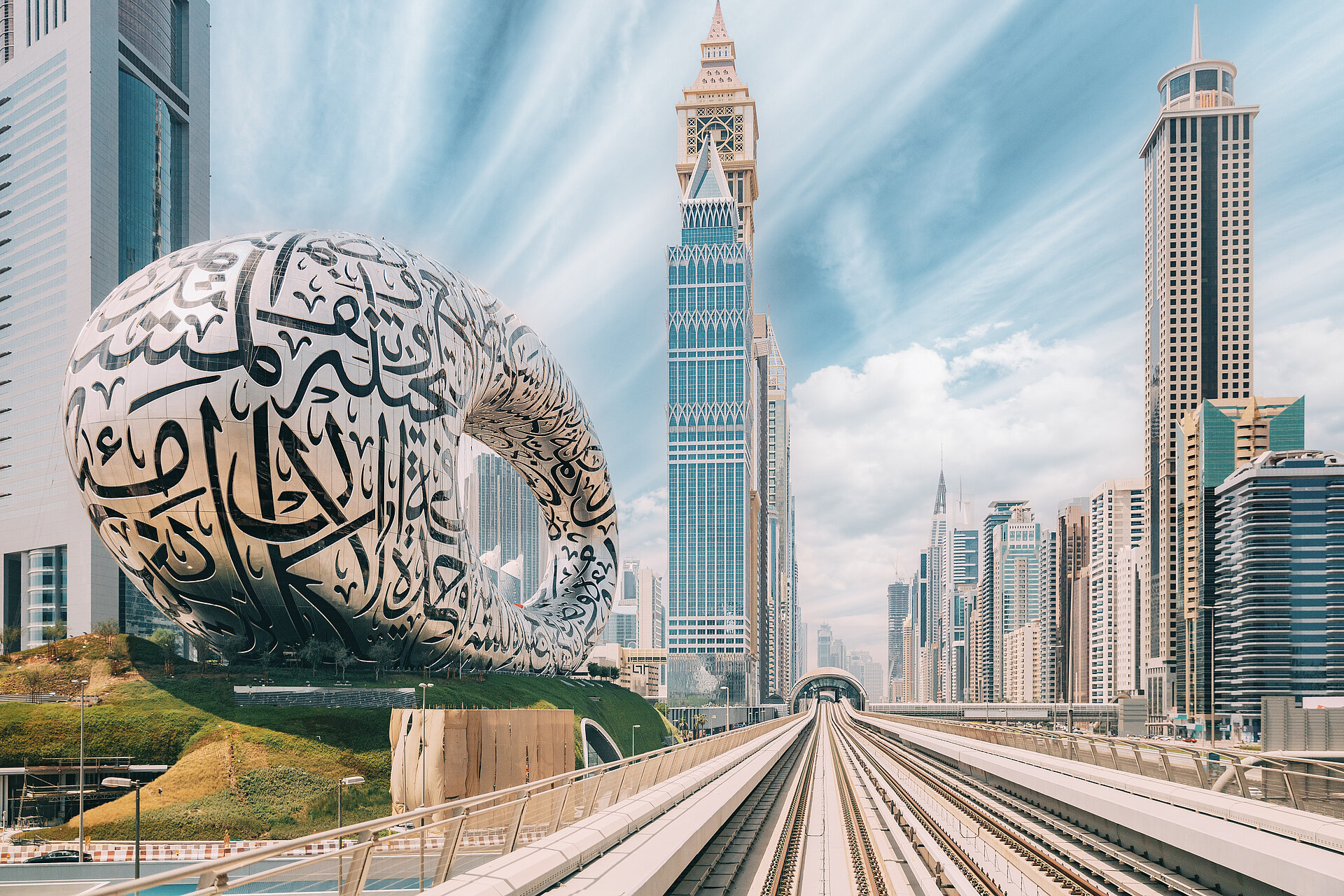
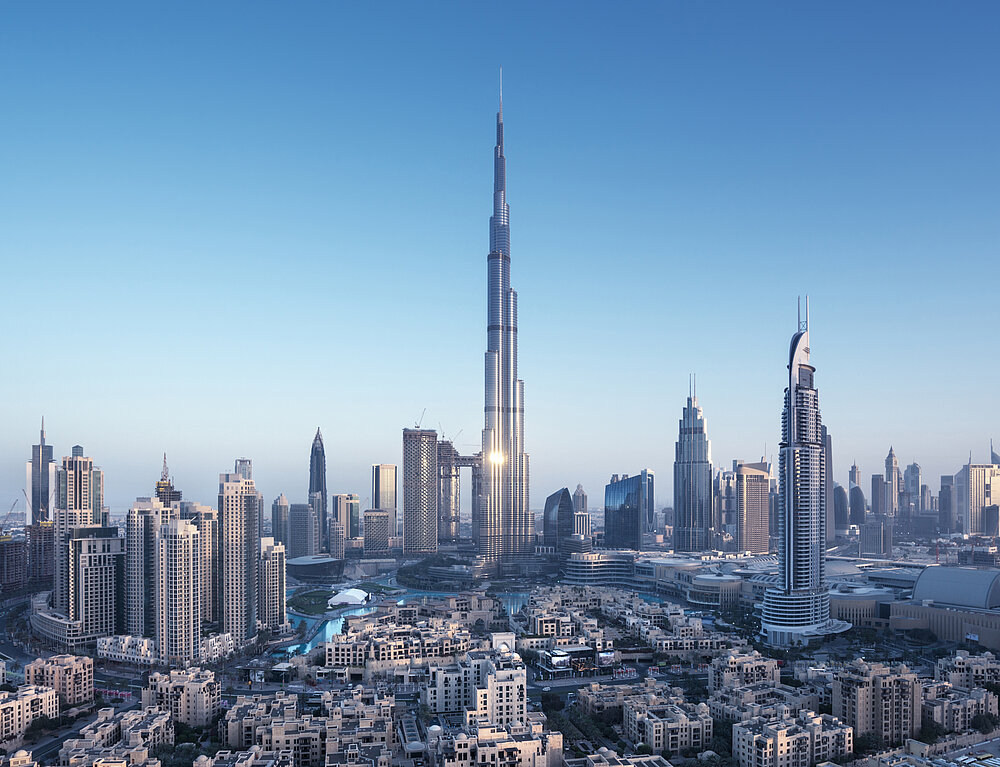
Although the oil industry is still a major economic sector in the United Arab Emirates, finance and tourism have gained enormous importance in the 21st century. Dubai is one of the most visited cities in the world, with over 10 million tourists a year, and is famous for its skyscrapers, including the world's tallest building. It is also home to the second largest number of five-star hotels in the world, as well as several artificial islands in the Persian Gulf. Although Arabic is the official language, English is the most commonly used.
World records and artificial islands
In addition to the world's tallest building, the United Arab Emirates boasts many other superlative structures, such as the world's largest Ferris wheel and longest zipline. In 2001, construction began off the coast of Dubai on several huge artificial island groups in the shape of palm trees and a world map. Land reclamation to build the islands is possible due to the relatively shallow water in the Persian Gulf. The Palm Jumeirah archipelago, completed in 2022, is home to 25,000 residents.