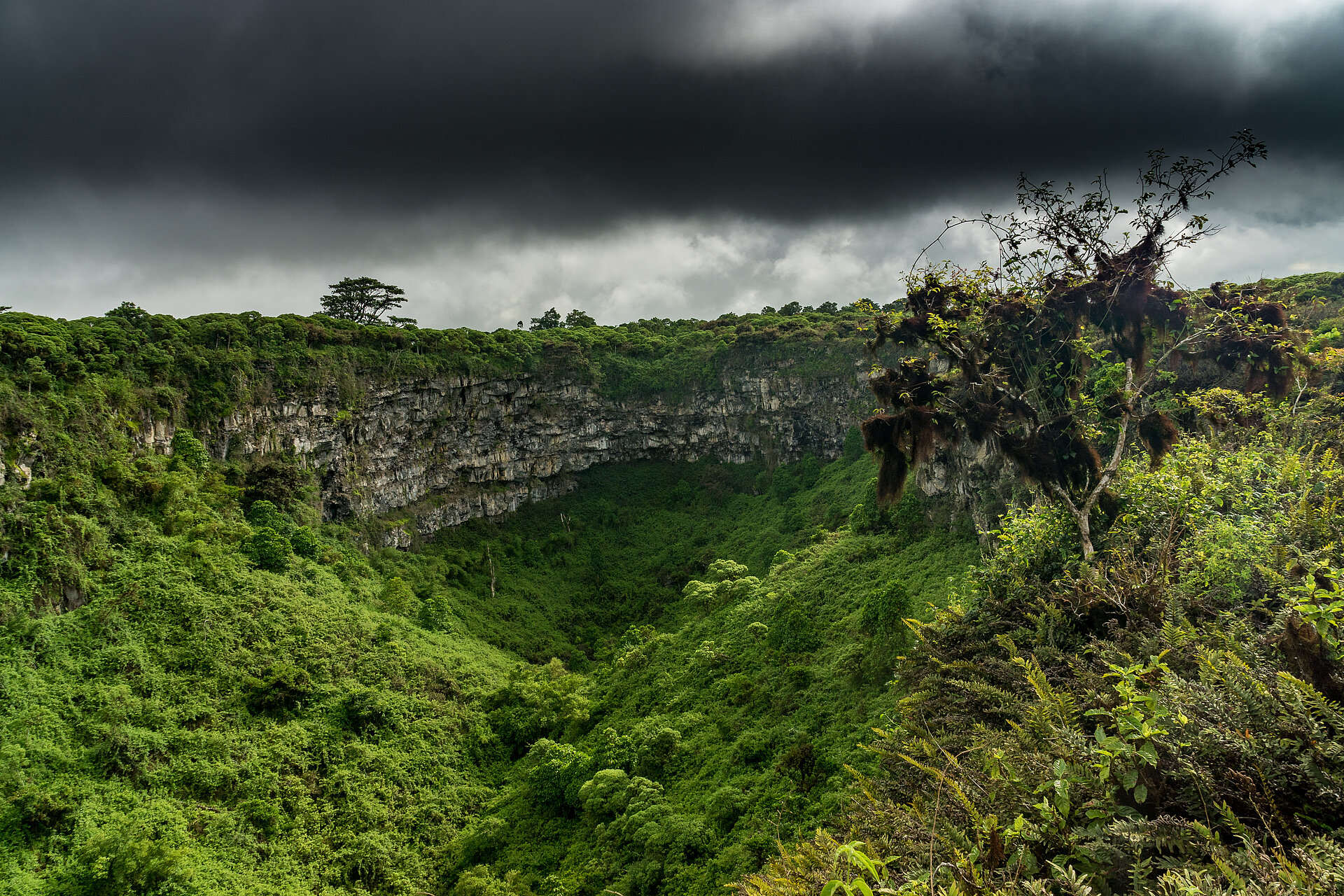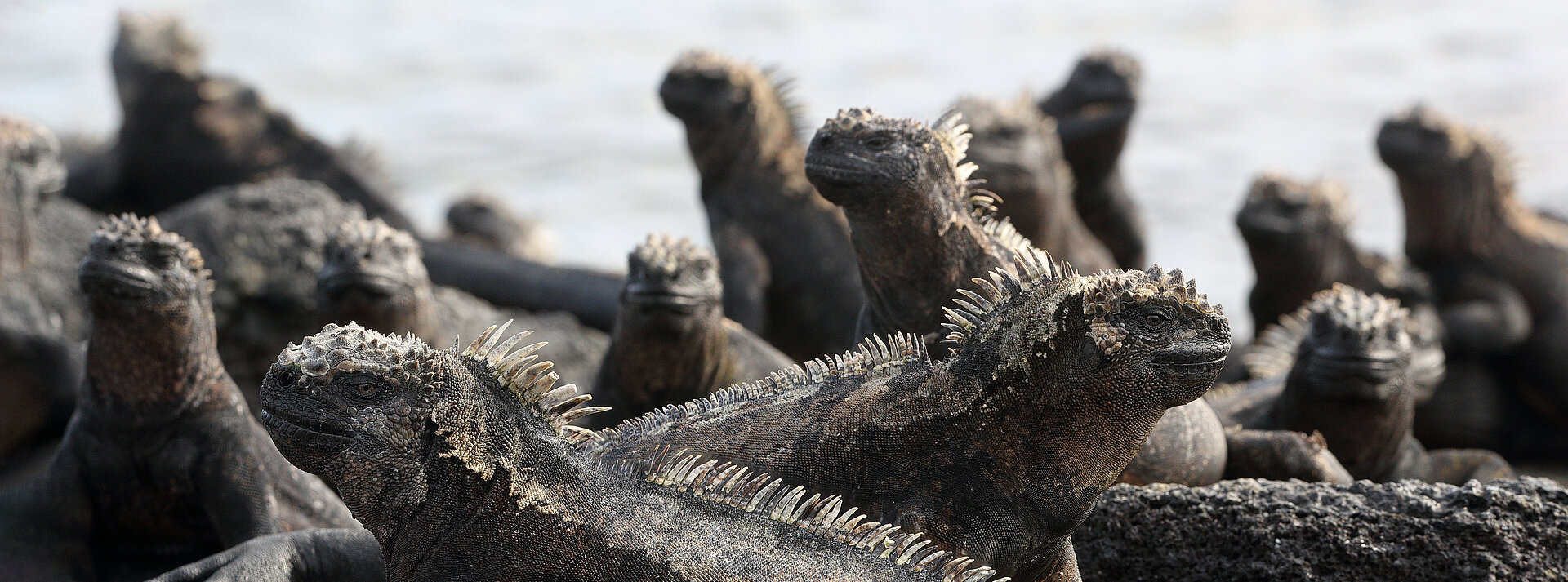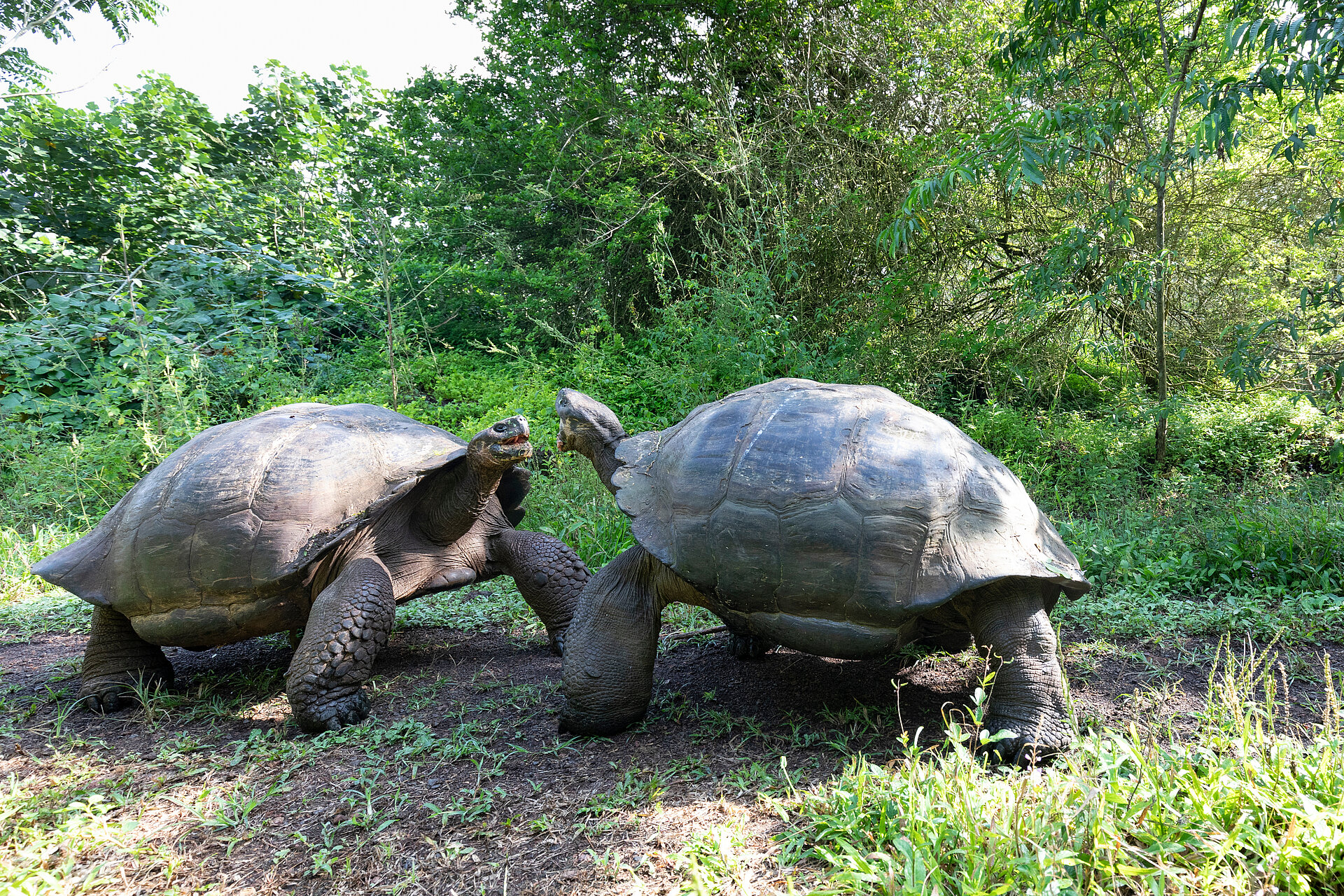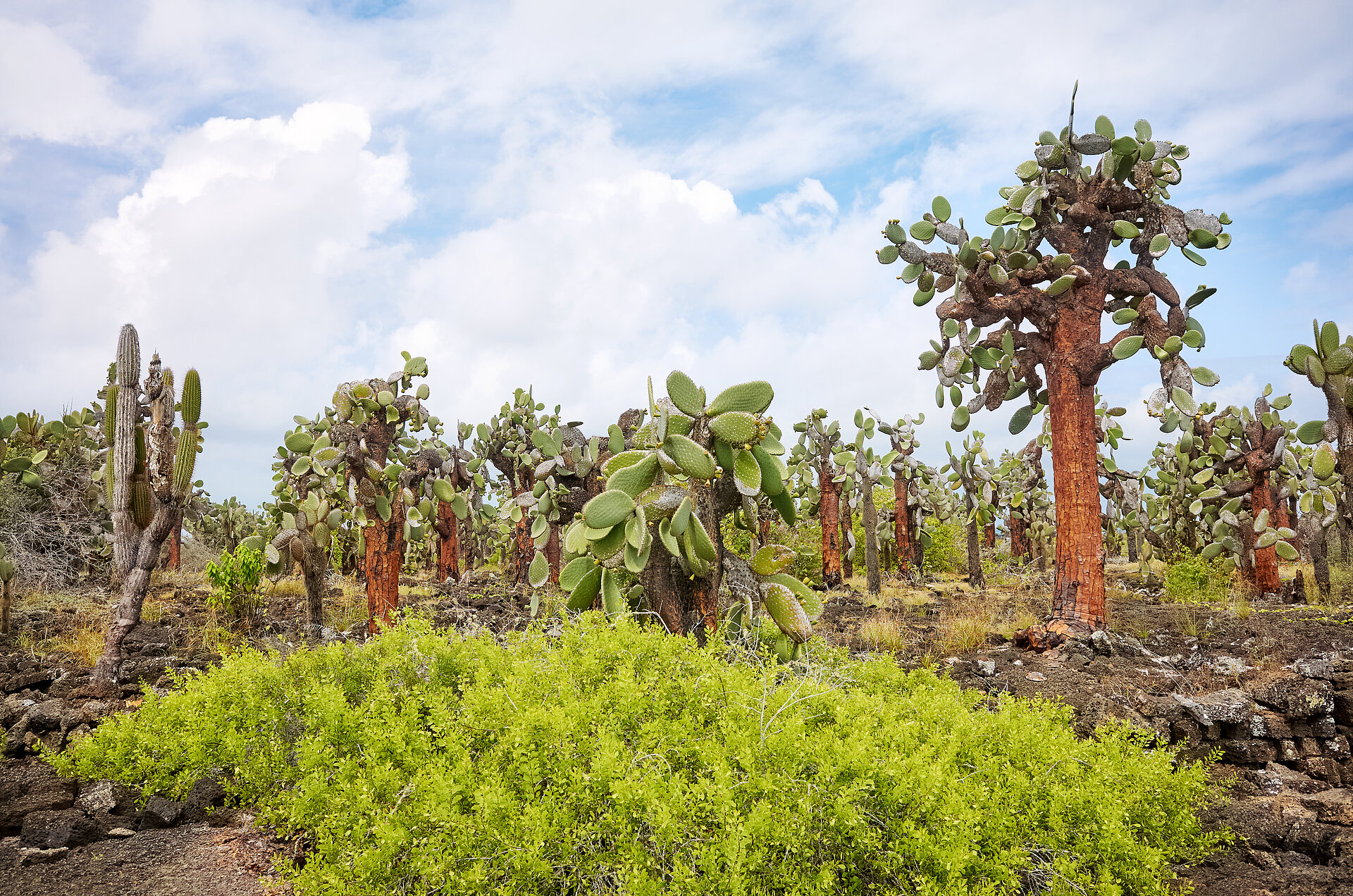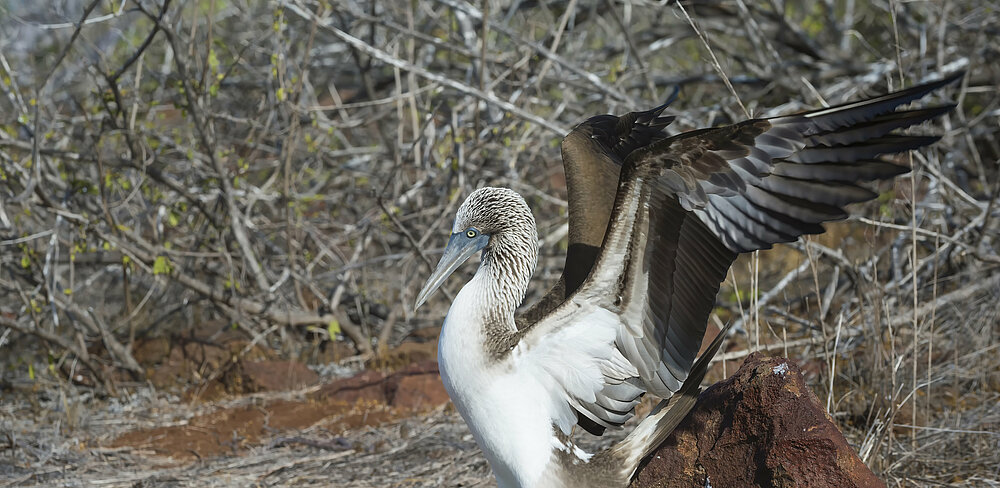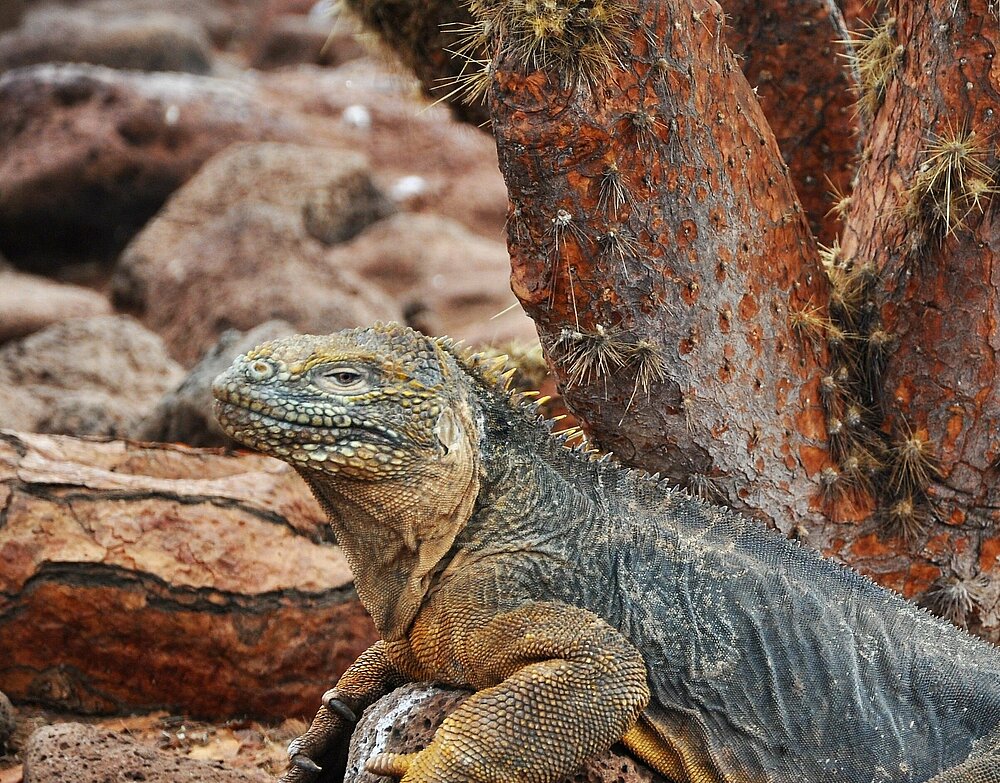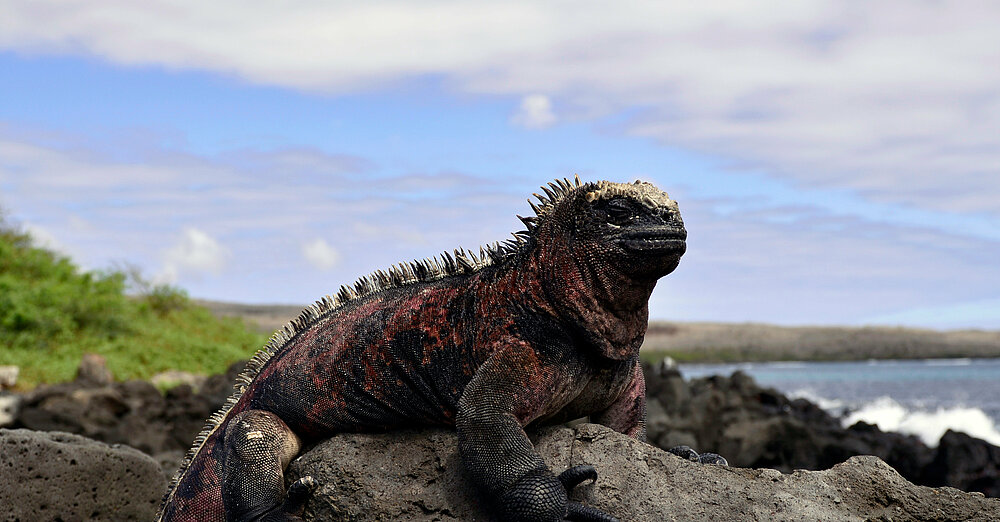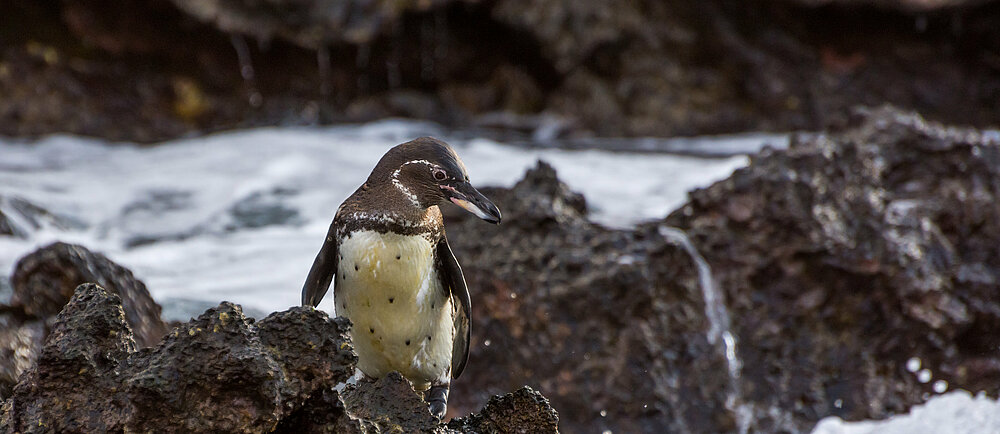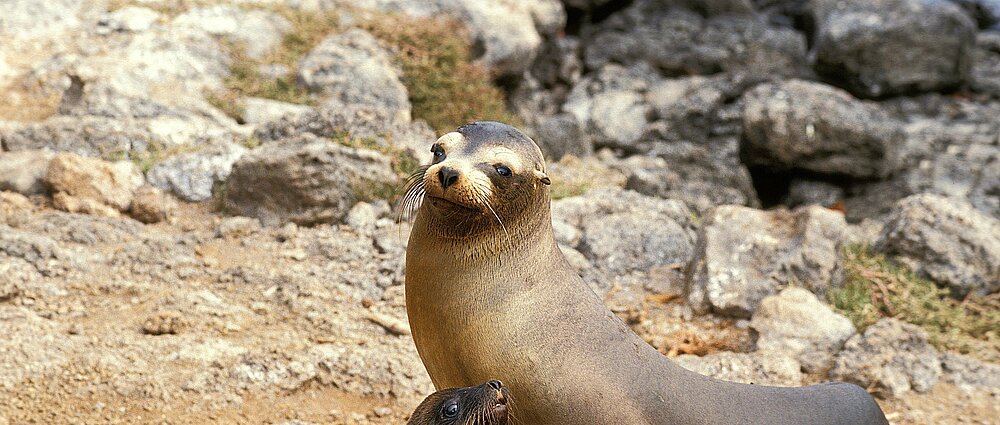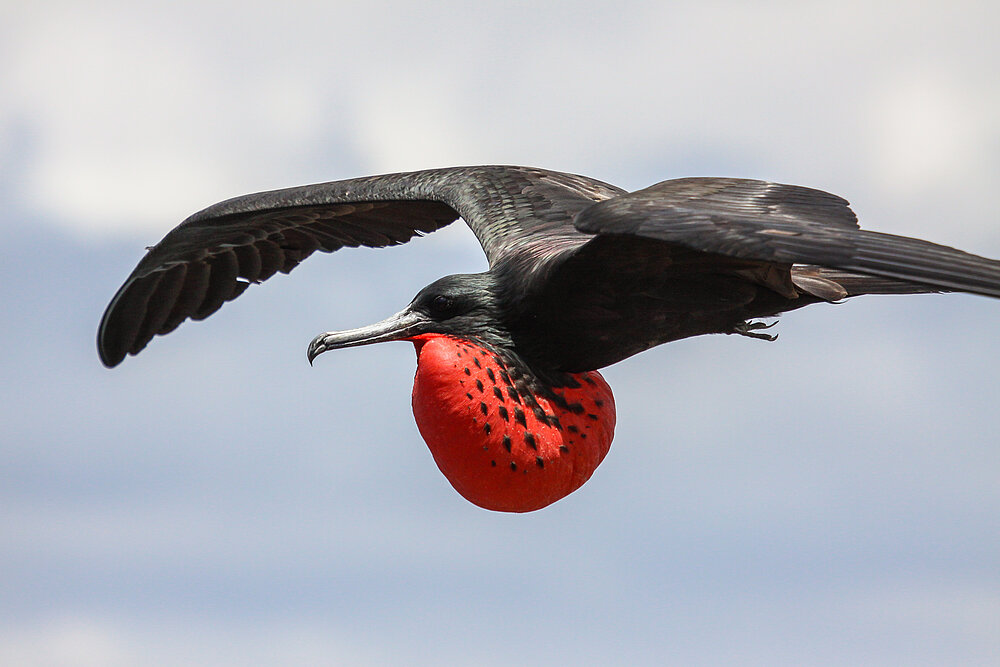

Galápagos is a group of volcanic islands in the eastern Pacific Ocean, about 900 km (560 mi) from the South American mainland. It belongs to the national territory of Ecuador and the province of the same name is home to about 30,000 inhabitants. Due to the geographical isolation and the confluence of three ocean currents, a unique diversity of endemic animal and plant species has developed on the Galápagos Islands. The archipelago comprises 13 larger islands of over 10 km² and more than 100 smaller ones. Five of the islands are inhabited: Baltra, Floreana, Isabela, San Cristóbal and Santa Cruz. At 4,586 km² (1,771 sq mi), Isabela is larger than all the other islands combined and, with its six volcanoes, is among the places with the highest volcanic activity in the world. One of them, Wolf Volcano, is the highest elevation in the Galápagos at 1,710 m (5,610 ft). It is located right on the equator.

Facts
- Country: Republic of Ecuador
- Province: Galápagos
- Capital city: Puerto Baquerizo Moreno
- Official language: Spanish
- Area: 8,010 km2 (3,093 sq mi)
- Population: 28,500 (2022 estimate)
- Discovered: 1535
- UNESCO World Heritage Site: Galápagos Islands (1978)
Discovery and piracy
Whether the islands were inhabited before the European colonial era is not known. The first documented discovery took place in 1535, when the Spanish bishop Tomás de Berlanga strayed off course on his way to Peru and stumbled across Galápagos by chance. The word “galápago” is derived from the pre-Roman Iberian word for turtle. However, the official name is “Archipiélago del Colón” (Columbus Archipelago). As the islands did not appear to be of interest to the Spanish, they remained uninhabited and only served as an anchorage for whalers and pirates targeting the Spanish silver fleet. After Ecuador gained its independence from Spain in 1822, the Ecuadorian General José de Villamil laid claim to the archipelago.
Charles Darwin's observations
The islands became world-famous through the work of Charles Darwin. The English naturalist accompanied an expedition around the world for cartographic surveys on the HMS Beagle under Captain Robert FitzRoy from 1831 to 1836. Darwin's aim was to collect and document fossils as well as plant and zoological specimens. During their stay from 15th September to 20th October 1835, he noticed that the mockingbirds of the various islands differed slightly from one another.
From his notes, he later concluded that species adapt to the special requirements of their habitat and that certain characteristics prevail through natural selection. All existing creatures therefore descend from a common ancestor. On 24th November 1859, Darwin published the evidence for the now generally accepted theory in his magnum opus entitled “On the Origin of Species”, thereby founding modern evolutionary biology.
Many animal species, cities or geographical landmarks were named after Darwin, such as “Darwin's Arch” off the northernmost Galápagos island, Isla Darwin. The rock formation on a plateau in the ocean is a popular tourist destination. It was about 18 meters (59 ft) high, but collapsed in 2021 due to erosion. Since then, it has also been called “The Pillars of Evolution” (Spanish: Los Pilares de la Evolución).
Tourism and World Heritage Site
The Galápagos National Park was established in 1959 and was the first national park in Ecuador. In 1969, the first organized tours for tourists were offered. Prior to this, the islands could only be visited by private boats. The number of travel opportunities increased in the following decades, and local fishermen began to offer their own boats for both cruises and overnight stays. Today, tourism is the most important source of income for the inhabitants and, in addition to two airports, there are several hotels, restaurants and shopping facilities. On beaches designated as “recreation areas”, camping is now also permitted to a limited extent. To protect the environment, tourism is strictly regulated. The Galapagos Islands have been a UNESCO World Heritage Site since 1978 and the surrounding marine reserve is the second largest in the world after Australia's Great Barrier Reef Marine Park.