

Magnificent frigatebird
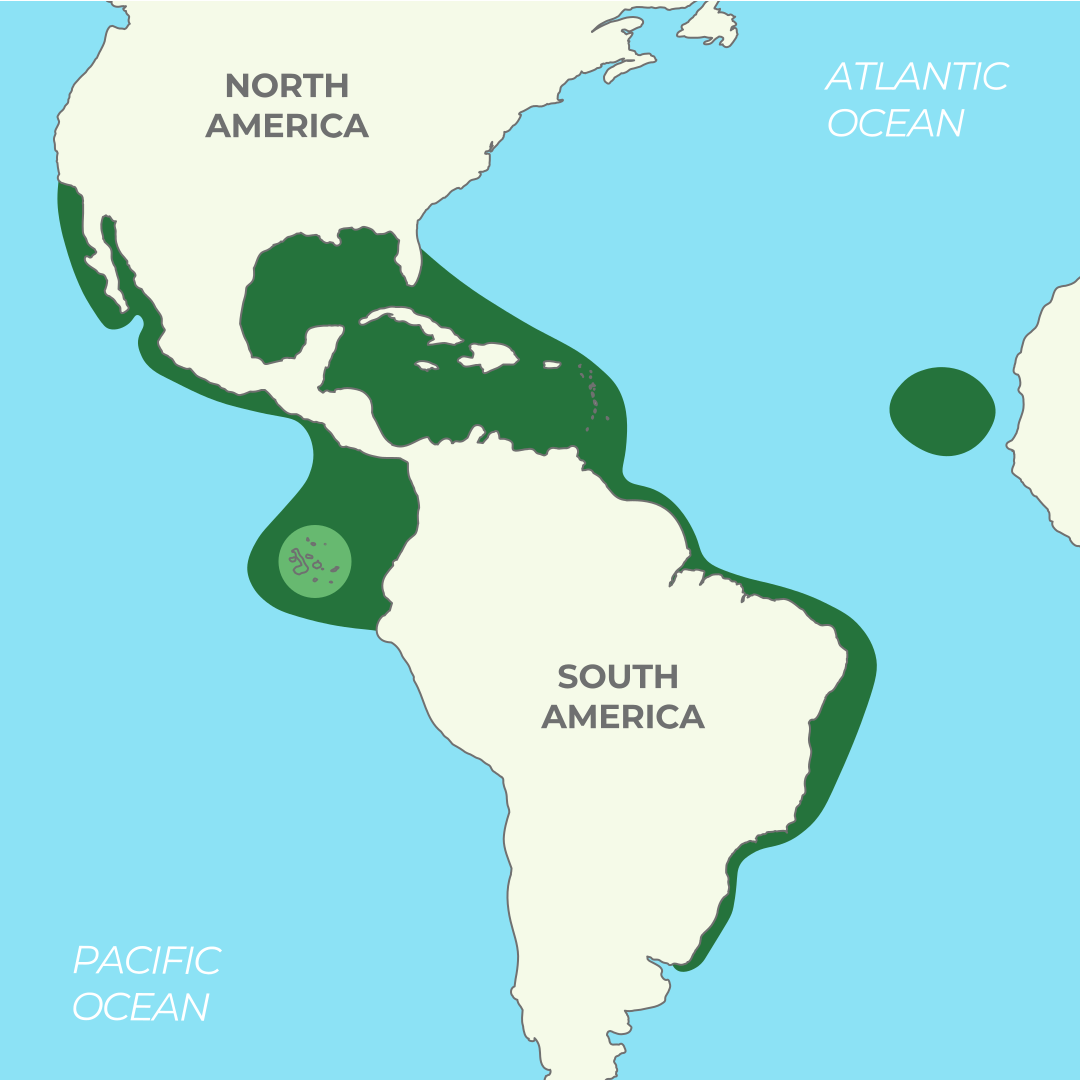
The range of the magnificent frigatebird includes the American Pacific coast between Mexico and Ecuador, the Gulf of Mexico, the Caribbean, the Atlantic coast as far south as Brazil and the Cape Verde Islands. Individual specimens are also occasionally spotted in Europe or Canada.
Isolation on the Galápagos Islands
According to a recent study, the population on the Galapagos Islands is genetically and morphologically very different from its relatives due to over 100,000 years of isolation and is therefore considered by some scientists to be a separate species with the name “Fregata magnificens magnificens”. As such, the magnificent frigatebird is classified as a vulnerable species.
Wingspan and gular sac
With a wingspan of over 2.30 meters (7.5 ft), the magnificent frigatebird is the largest species in the genus frigatebird. While the females are somewhat larger, the males have a very distinctive visual feature: a red gular sac. During courtship, they inflate it like a balloon to attract females.
Kleptoparasitism
The diet of the magnificent frigatebird consists mainly of fish, squid and crustaceans. However, it does not always hunt these itself, but often captures them from other seabirds, which it forces to regurgitate their prey by attacking them. This tactic, widespread in the animal world, is known as “kleptoparasitism” and has given the bird its name. The Frenchman Jean-Baptiste du Tertre described the genus in 1667 and named it after the frigate warship.
FACTS
- Binominal name: Fregata magnificens magnificens
- Other names: Frigate petrel, man o' war, fragata real (Spanish for “royal frigate”)
- Distribution: Galápagos Islands
- First described: 1914 (Gregory Mathews)


Magnificent frigatebird Folding Card
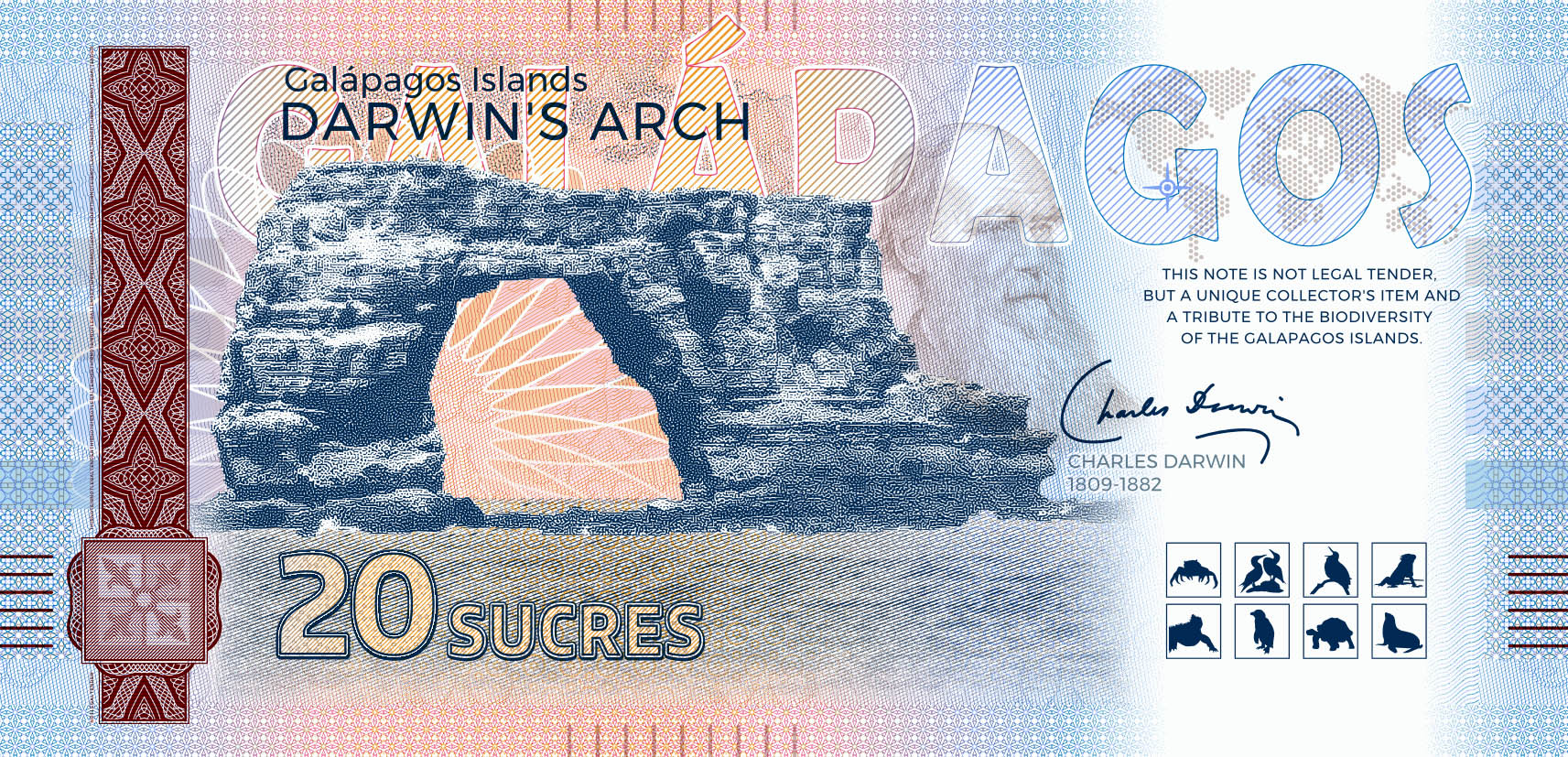
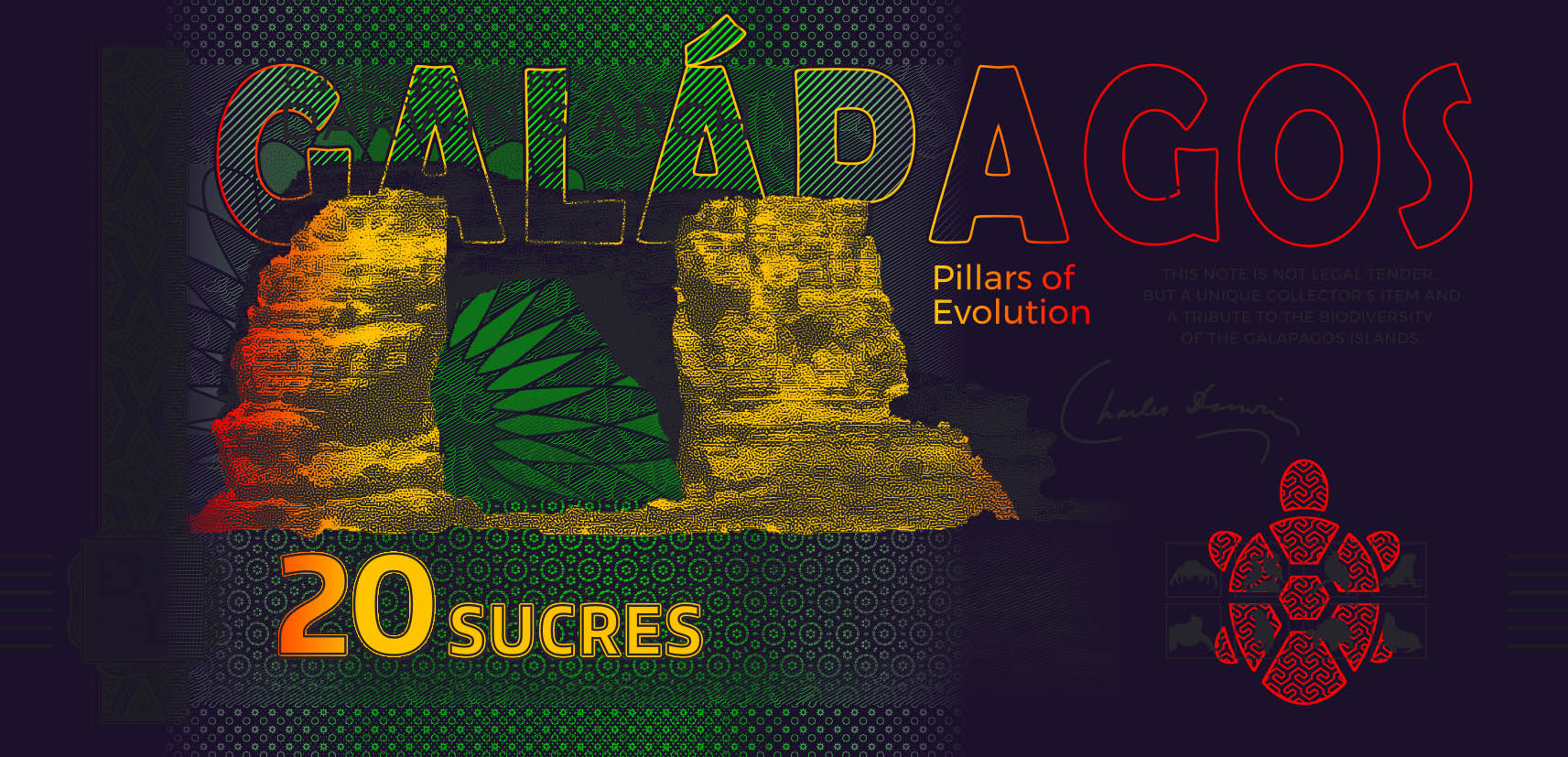
This souvenir note from the Galápagos Series is dedicated to the magnificent frigatebird. Printed on genuine security paper, it features a Galápagos tortoise as a gold foil patch, motifs in UV color and haptic elements. While the vertically designed obverse depicts a magnificent frigatebird, the reverse shows a portrait of Charles Darwin and Darwin's Arch before its collapse in 2021. Under UV light, the current appearance of the rock formation is visible. The Galápagos Series, which comprises a total of eight souvenir notes, is also available in a booklet with lots of information and pictures.
Obverse: Magnificent frigatebird, stylized Galápagos tortoise, map of the Galápagos Islands
Reverse: Darwin's Arch rock formation southeast of Darwin Island, portrait of Charles Darwin (1809-1882)
| Dimensions: 145 x 70 mm (5.71 x 2.76 in) Material: Paper |


