

Blue-footed booby
One of the bird species nesting on the Galapagos Islands is the blue-footed booby. The name is derived from its unusual blue feet and the Spanish name "bobo" ("stubborn" or "foolish" in English), which refers to the clumsy way the bird moves on land. Large specimens can reach a wingspan of up to 1.5 meters (5 ft). Of particular interest to researchers are the parent-offspring conflicts due to its asynchronous breeding behavior. The unequal growth and size differences between the chicks often lead to siblicide (siblicide) when food is scarce. The range of the blue-footed booby extends along the Pacific coast of the Americas from California to Peru, with the birds on the Galápagos Islands making up around half of the entire population. It was identified as a separate subspecies in 1948.
Dives and diet
The blue-footed booby feeds almost exclusively on fish, which it catches underwater. From heights of well over 10 meters (33 ft), sometimes even up to 100 meters (330 ft), it dives into the ocean at a speed of almost 100 km/h (62 mph). It can reach depths of 25 meters (80 ft). Special air sacs in its head protect the brain from the pressure
Cause of the coloration
The blue coloration of the feet is due in part to the carotenoids the boobies get from fresh fish and also plays an important role in courtship. When food is less plentiful, the feet become paler, indicating that the birds are in poorer condition.

FACTS
- Binominal name: Sula nebouxii excisa
- Other names: Piquero camanay
- Distribution: Galápagos Islands
- First described: 1948 (W. E. Clyde Todd)

Blue-footed booby Folding Card
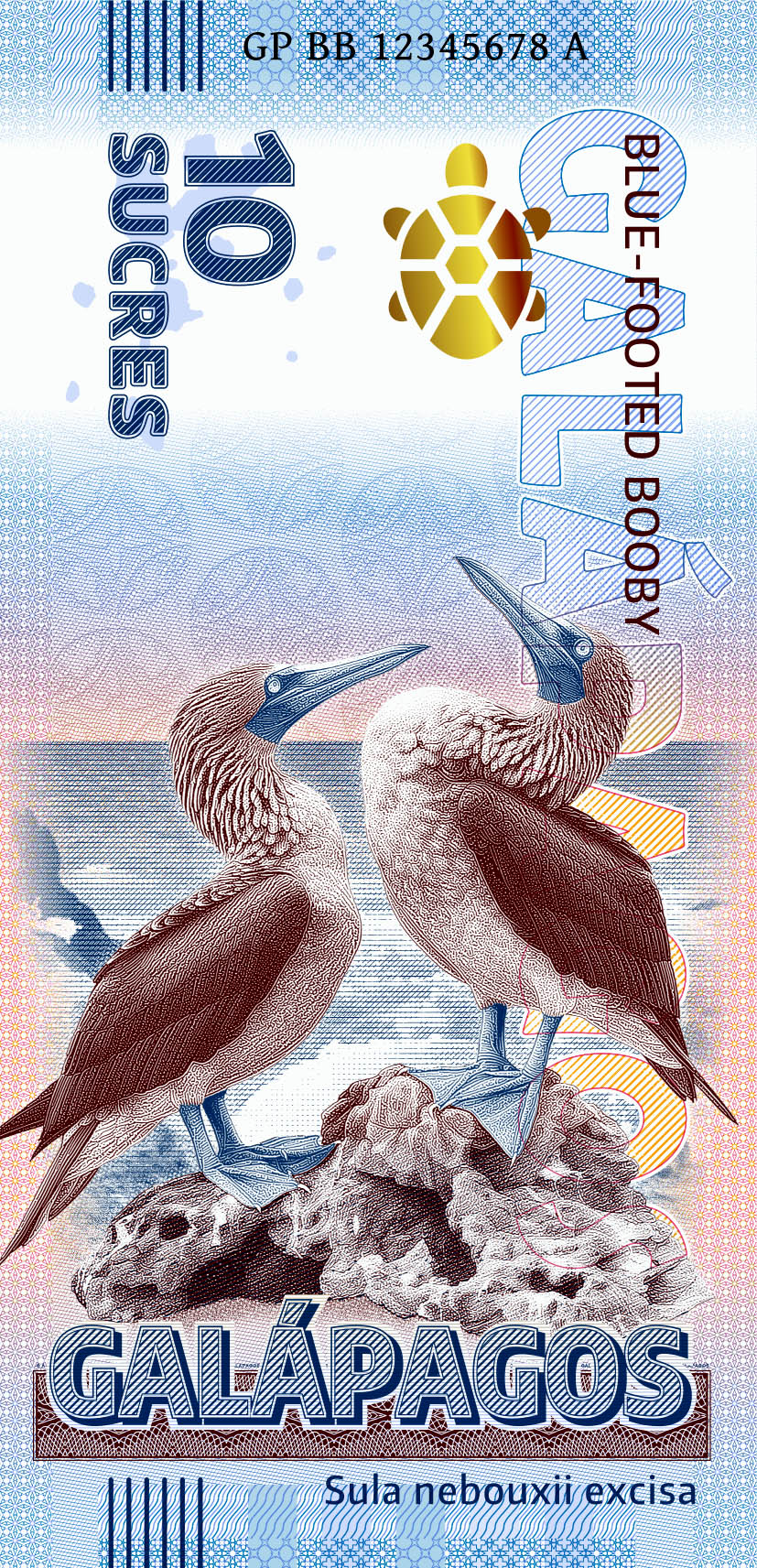
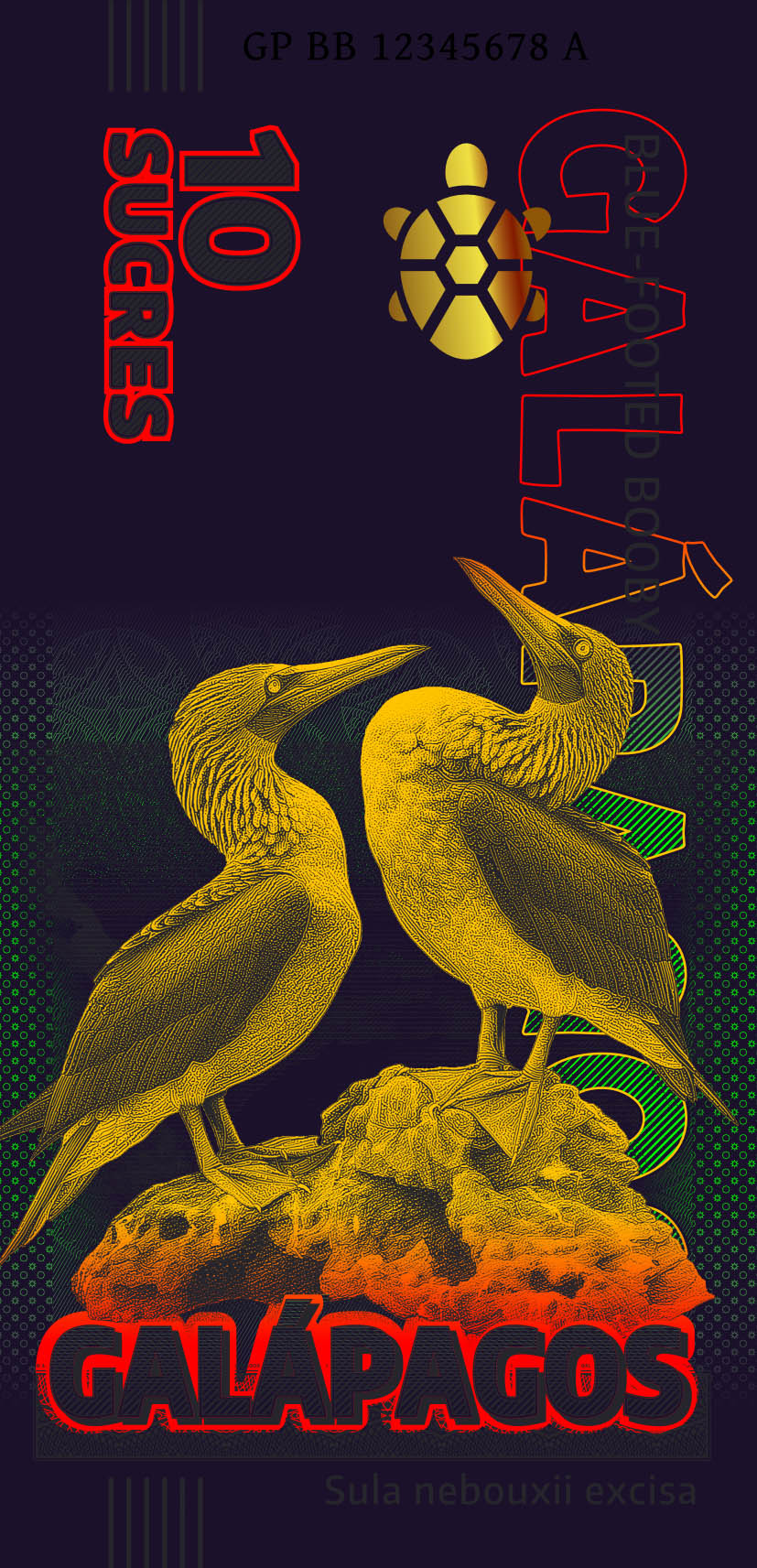
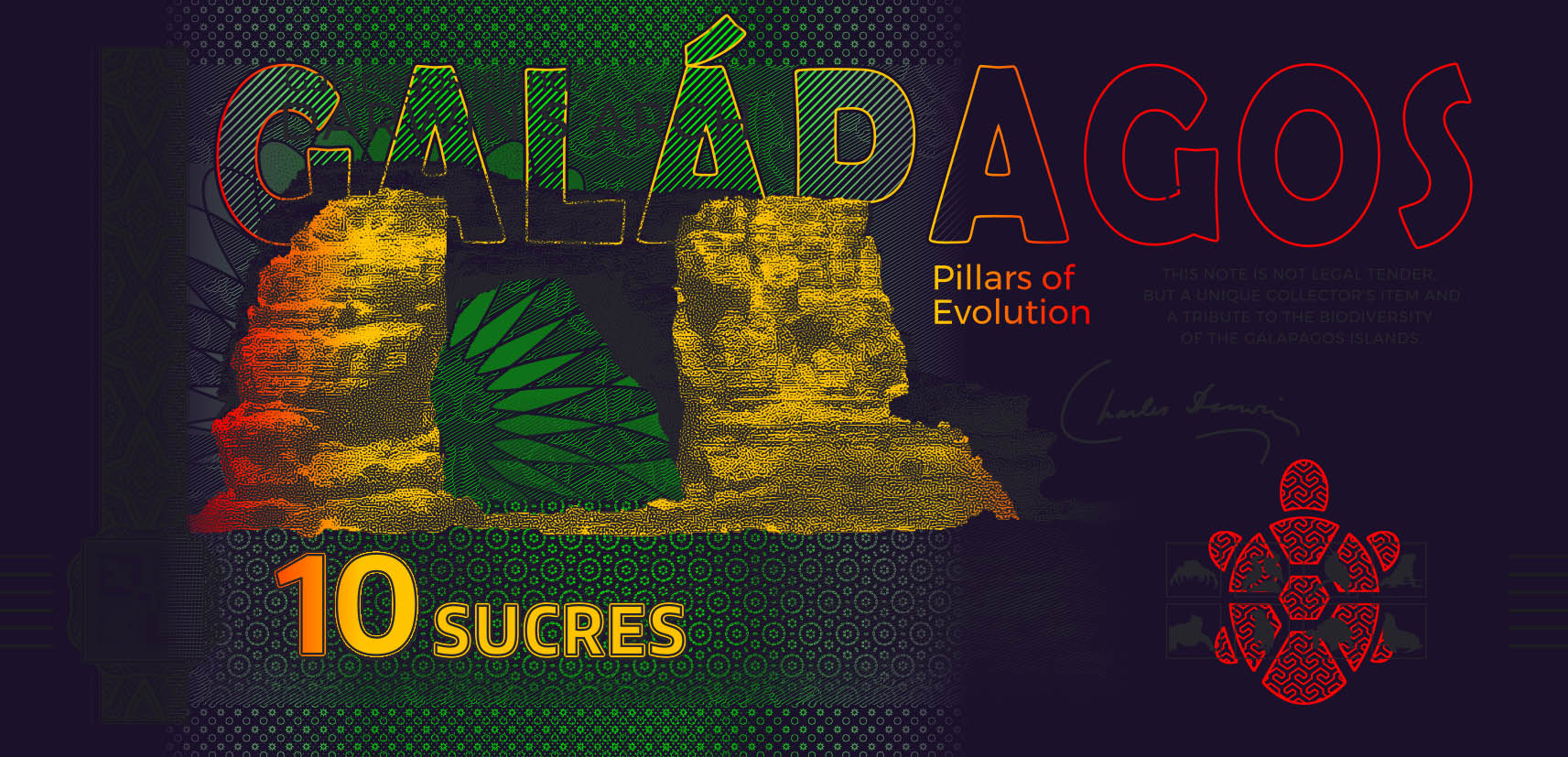
This souvenir note from the Galápagos Series is dedicated to the blue-footed booby. Printed on genuine security paper, it features a Galápagos tortoise as a gold foil patch, motifs in UV color and haptic elements. While the vertically designed obverse depicts two blue-footed boobies, the reverse shows a portrait of Charles Darwin and Darwin's Arch before its collapse in 2021. Under UV light, the current appearance of the rock formation is visible. The Galápagos Series, which comprises a total of eight souvenir notes, is also available in a booklet with lots of information and pictures.
Obverse: Blue-footed boobies, stylized Galápagos tortoise, map of the Galápagos Islands
Reverse: Darwin's Arch rock formation southeast of Darwin Island, portrait of Charles Darwin (1809-1882)
| Dimensions: 145 x 70 mm (5.71 x 2.76 in) Material: Paper |


