
Welcome to
Greenland
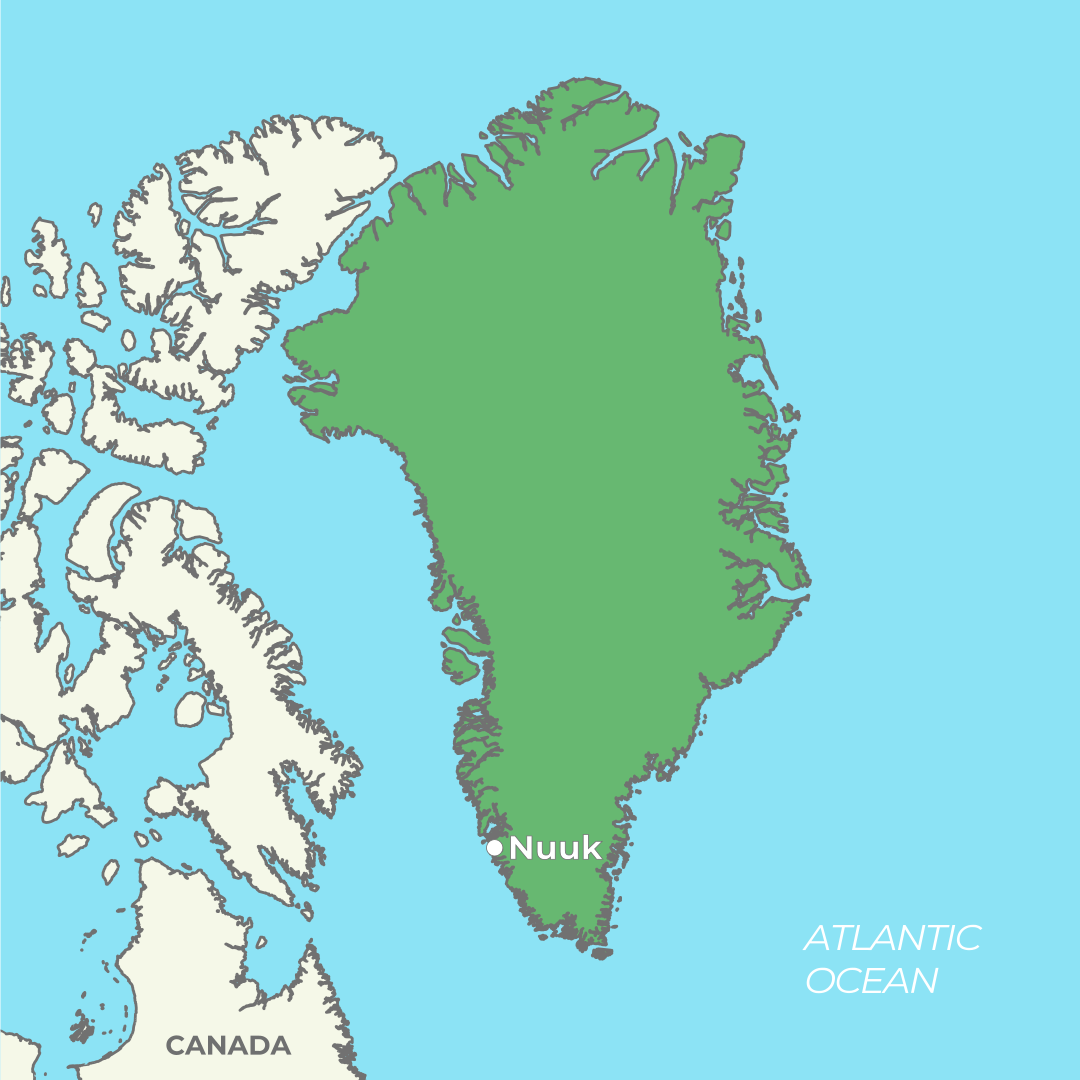
Greenland is the largest island in the world and is located between the Arctic and Atlantic Oceans. With a total area of almost 2.2 million km² (850,000 sq mi), it is more than twice the size of Germany, France and the Benelux countries combined. While Greenland is geographically part of North America, it is politically a self-governing unit of Denmark. About two-thirds of Greenland is covered by permanent ice and most of the nearly 58,000 inhabitants live on the ice-free west coast. When the first Europeans, led by the Norwegian Erik the Red, reached Greenland in 986, they encountered the indigenous inhabitants of the Dorset culture. They were one of the Paleo-Inuit peoples, who probably migrated from Canada as early as 2,500 BC. After the Vikings abandoned their settlements between the 14th and 15th centuries, European interest in Greenland did not increase again until the 17th century, primarily for whaling purposes. In 1721, Denmark-Norway, then in a personal union, laid claim to sovereignty and the Lutheran missionary Hans Egede founded a settlement that later became the capital, Nuuk. When the personal union was dissolved in 1814, Greenland remained part of Denmark.
Facts
- Country: Denmark
- Administrative division: Autonomous territory
- Capital city: Nuuk
- Official language: Greenlandic (Kalaallisut)
- Recognized common language: Danish
- Area: 2,166,086 km2 (836,330 sq mi)
- Population: 57,751 (2024 estimate)
- End of colonial status: 1953 (recognition as a Danish province)
Northern lights
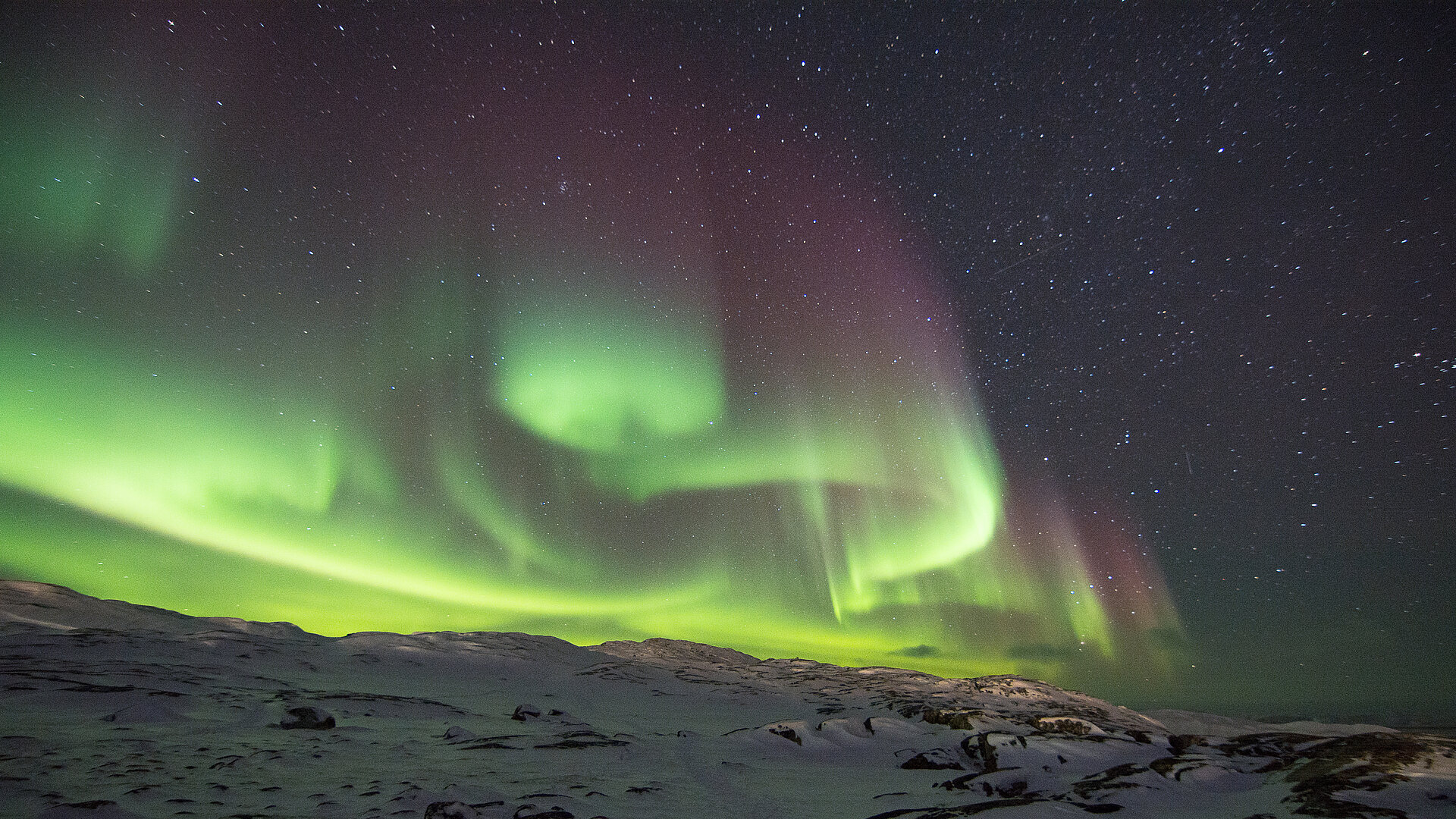
In addition to the extraordinary Arctic wildlife, a world-famous light phenomenon can also be observed in Greenland: the aurora borealis, also known as the northern lights. It occurs throughout the polar region, including at the South Pole, where it is called the aurora australis. This mysterious light is caused by particularly strong solar flares. The charged particles of the solar wind then have increased speeds; instead of about 300 km/s, they move at over 750 km/s. When these reach the Earth, the magnetosphere is disrupted and electricity is generated on the dark side of the Earth, which leads to ionization and excitation of particles in the atmosphere. Since the field lines of the Earth's magnetic field penetrate the atmosphere at the poles, this is where the spectacular glow is most frequently seen.
Viking settlers and Thule culture
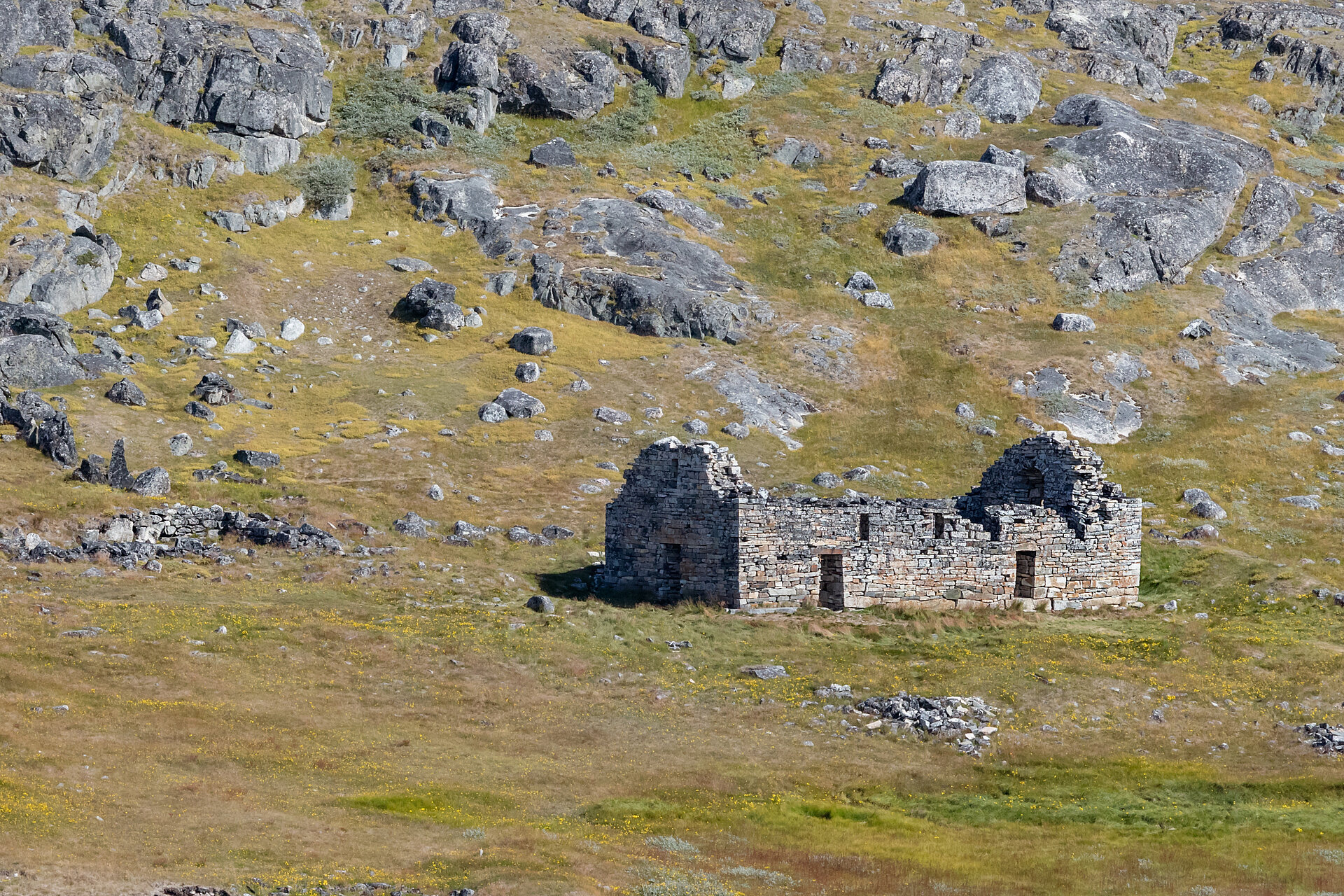
The Vikings settled in the south of Greenland. The present name “Greenland” was given to the island by Erik the Red. According to tradition, he wanted to encourage more Norsemen to settle there. The climate was probably much milder at that time, which favored agriculture. Around the year 1000, Erik the Red's son, Leif Erikson, began the Christianization of Greenland after discovering the American continent, probably the first European to do so. It is still not clear why the Scandinavians left their settlements in Greenland, although the effects of the Little Ice Age are considered the most likely cause.
Today's population is mainly descended from the Inuit of the Thule culture, who reached Greenland around the year 1300. They introduced some technical achievements, such as more effective harpoons for whaling and the use of dog sleds. The largest ethnic group in Greenland today is the Kalaallit, from whom the official language Kalaallisut originates. However, Danish is also used as a common language.
Dog sleds
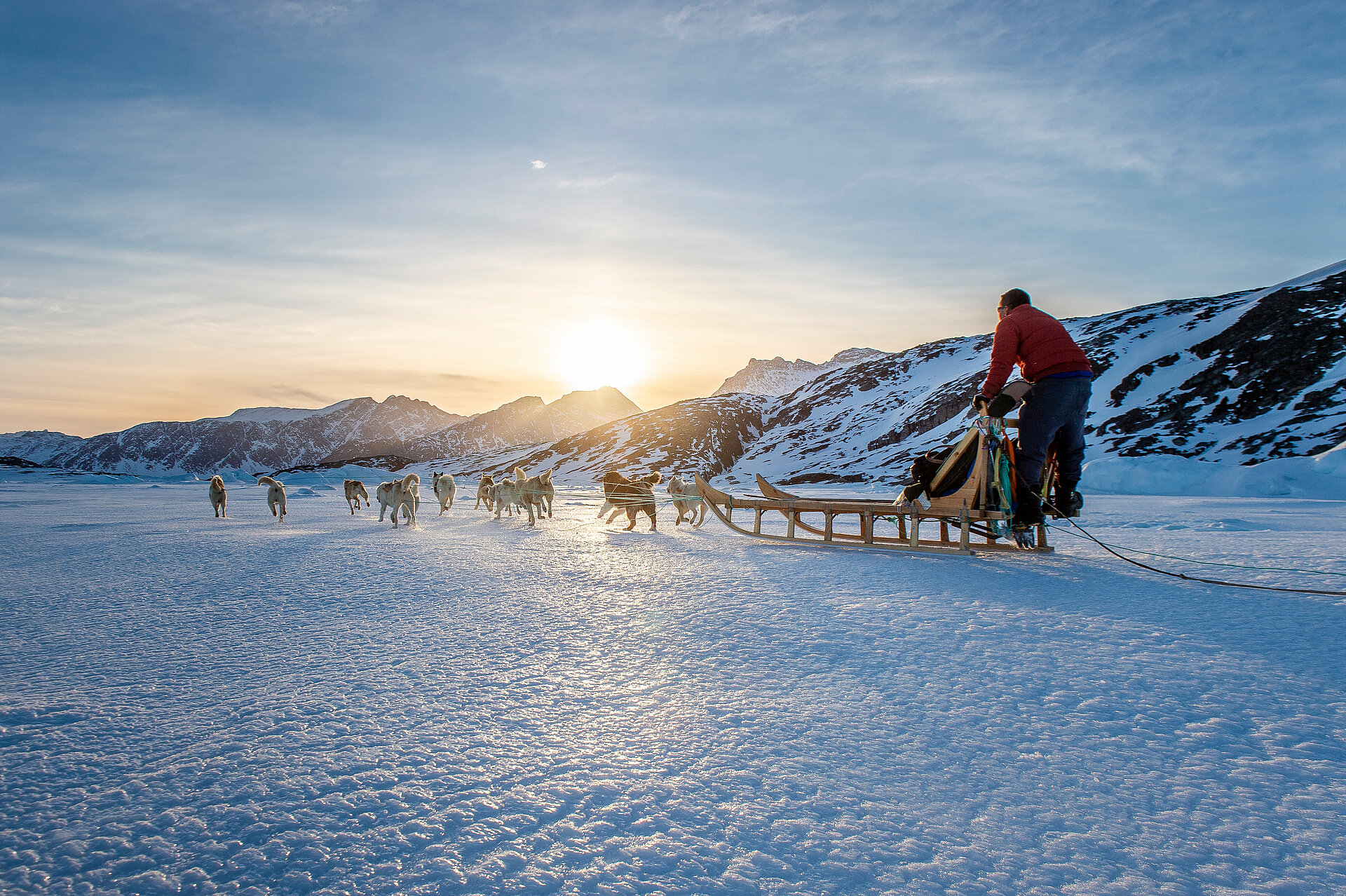
Meanwhile, dog sleds are not only an essential means of transportation, but also a popular tourist attraction, and thus of particular economic importance for the locals. Unlike today, the sled driver (musher) traditionally stood at the front of the sled. From around 1920, the musher's position at the back of the sled has become established. Depending on the terrain and landscape, there are three different types of harnessing. The fan hitch is the original form. In this case, all dogs are harnessed in front of the sled with their own leash and can be released individually, which is done, for example, when hunting. The fan formation can only be used in open areas without obstacles such as trees. On narrower trails, either a double file (or gang hitch) with two rows of dogs or a single file (or tandem hitch) with only one row is used. The double file is the most common type used today worldwide and can be led by either a single lead dog or a double lead. The Greenland dog is a popular breed for dog sledding. It is a spitz type of dog and was already bred by the Inuit of the Thule culture.