

Polar bear
The world's largest land predator
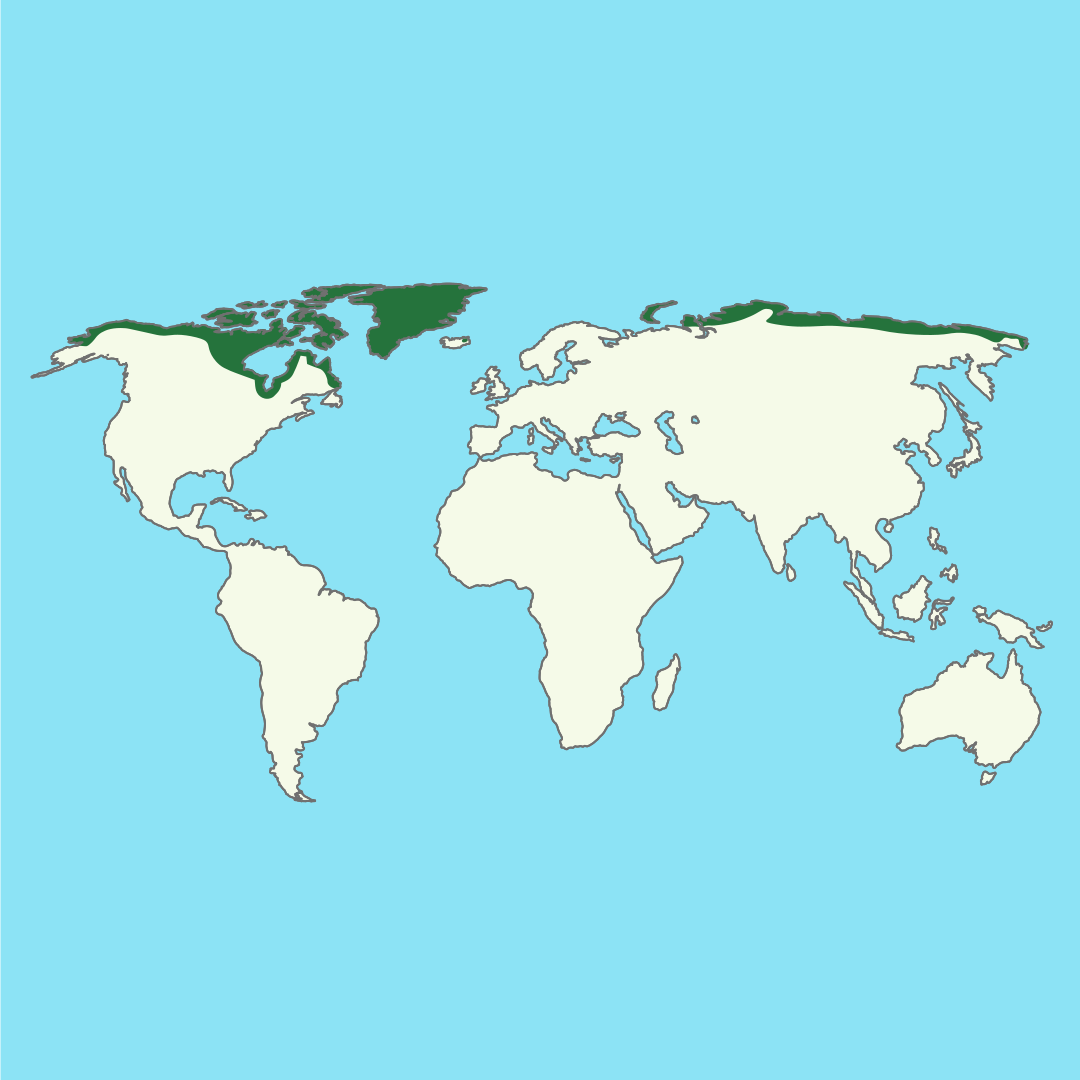
The polar bear is native to Greenland, Alaska, Canada, Norway and Russia. It is the largest land carnivore in the world and is at the top of the Arctic food chain. Large males weigh up to 800 kg (1,760 lb) and can reach a body length of 2.5 m (8.2 ft). As the Latin name “Ursus maritimus” (sea bear) suggests, the polar bear is also considered a marine mammal. It lives mainly on the constantly changing sea ice and sometimes covers several thousand kilometers a year, north in spring and south in fall. In Greenland, the polar bear is therefore also called “Angalatooq” (the great wanderer). For many cultures in the Arctic region, the polar bear has great mythological significance. For example, it embodies power, fearlessness and intelligence. Although the polar bear, like most bears, is omnivorous, it feeds primarily on meat, with seals being its preferred prey.
Transparent hair
Its thick layer of fat and unique fur help the polar bear survive in the Arctic temperatures. The outer guard hairs are actually not white, but transparent and hollow. They make swimming easier and provide thermal insulation. Incoming light is scattered by the hairs and then reflected by the black skin, making the bear appear white. However, the heat cannot escape, which is why polar bears are almost invisible in infrared images.
Symbol of conservation
The polar bear is one of the most popular animals worldwide. As a vulnerable species, it has also become one of the best-known symbolic animals for climate and environmental protection.
Facts
- Binominal name: Ursus maritimus
- Other names: “Angalatooq” (Inuit name in Greenland for “the great wanderer”)
- First described: 1774 (Constantine John Phipps)
- Distribution: Alaska, Canada, Greenland, Norway and Russia

Polar bear souvenir note
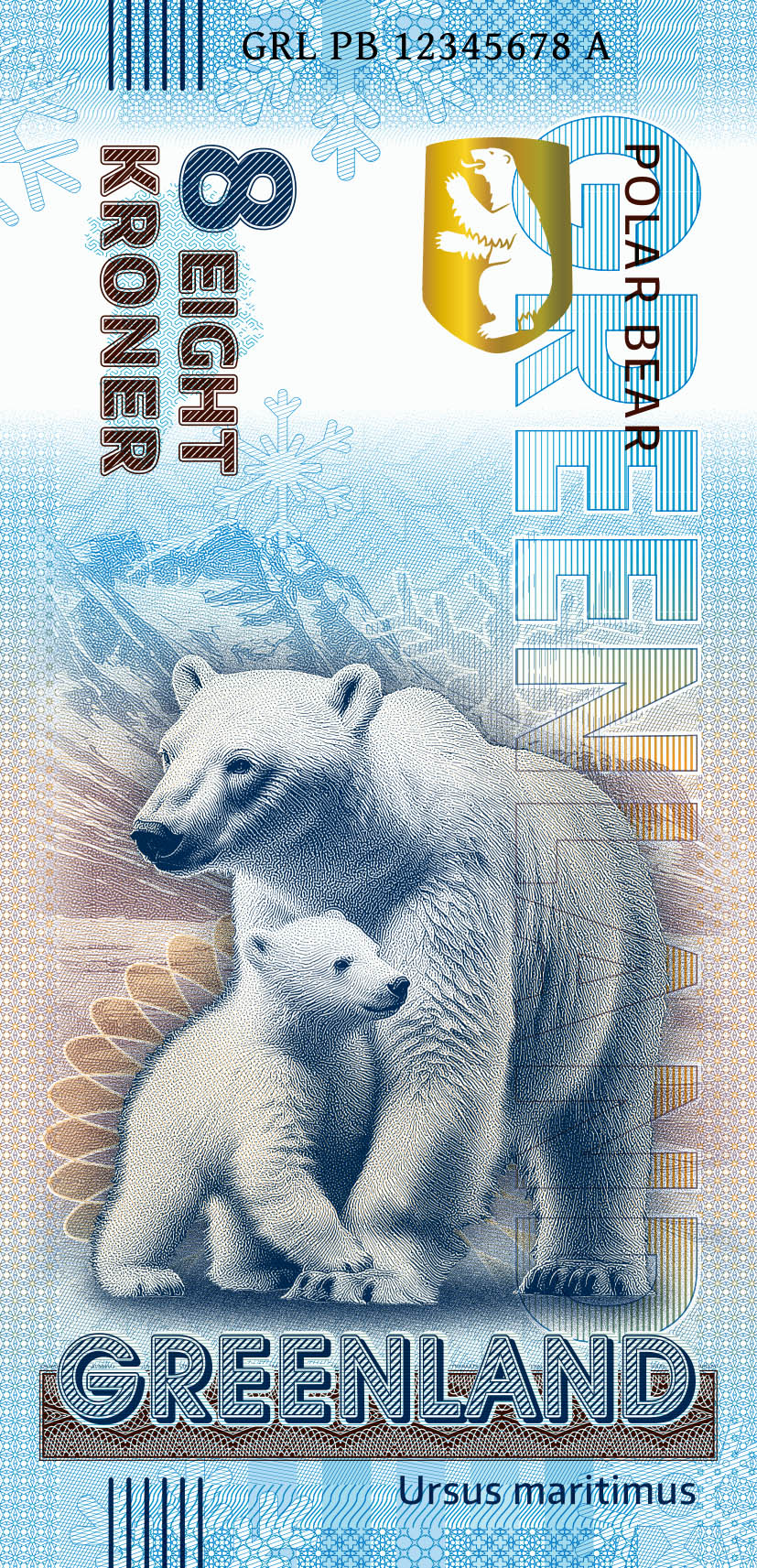
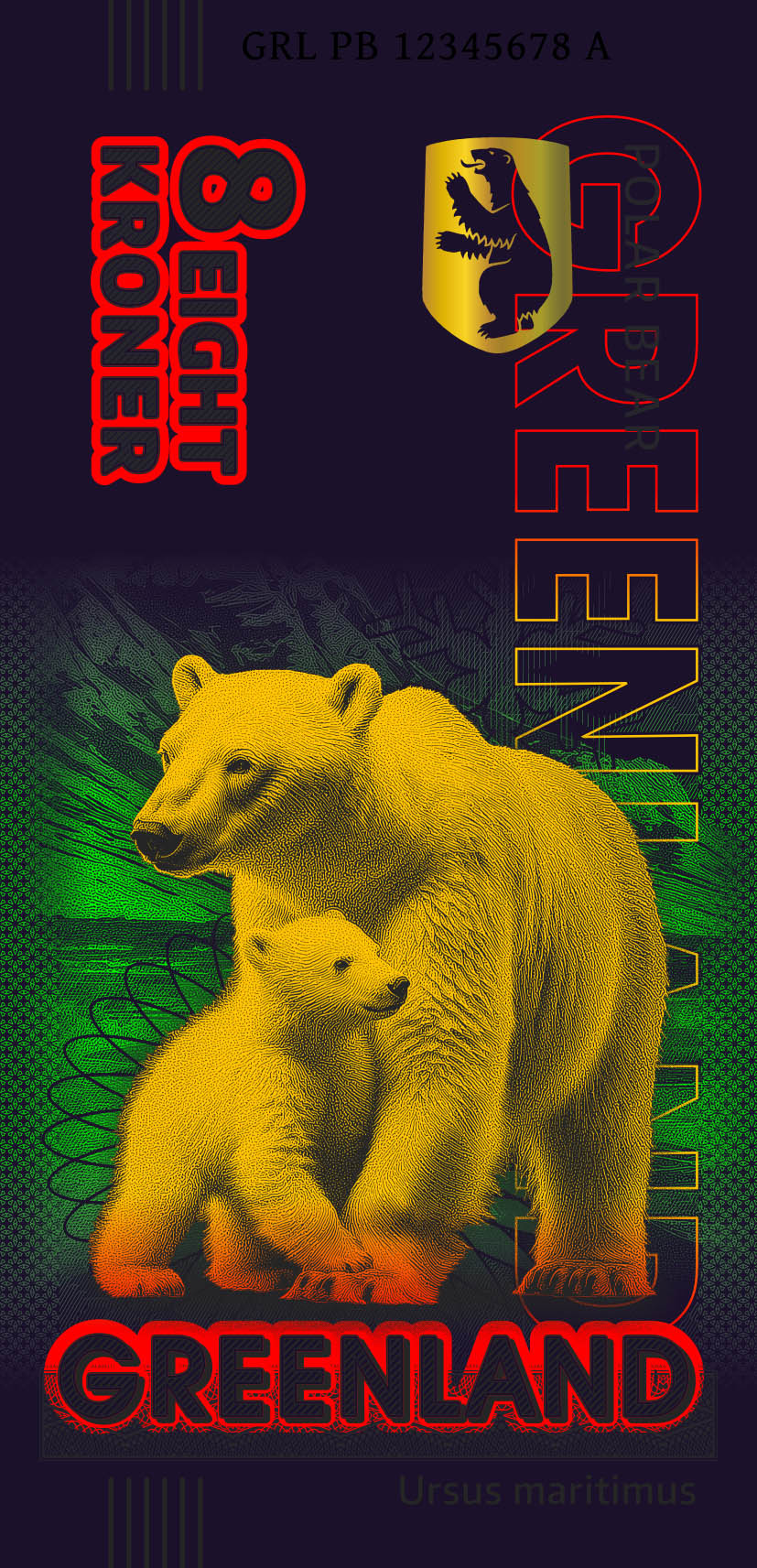
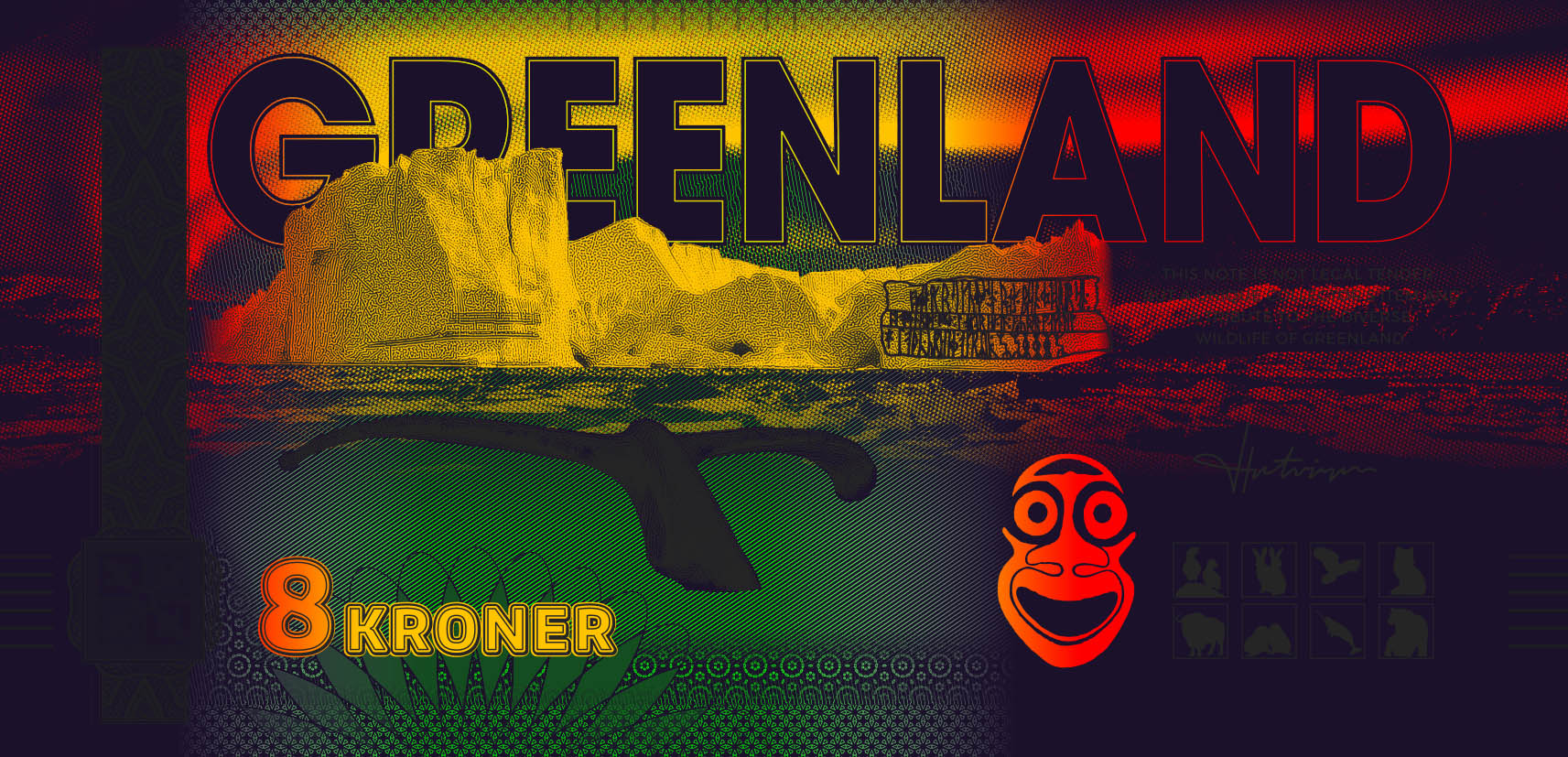
This souvenir note from the Greenland Series is dedicated to the polar bear. Printed on genuine security paper, it features the coat of arms of Greenland as a gold foil patch, motifs in UV color and haptic elements. While the vertically designed obverse depicts a polar bear with cub, the reverse shows the tail fin of a whale, a coastal glacier and the Kingittorsuaq Runestone, which was discovered in 1824 by a hunter in north-west Greenland and is now in the Danish National Museum. The runes on it are of Norse origin and date from between 1135 and 1330. The Greenland Series which comprises a total of eight souvenir notes, is also available in a booklet with lots of information and pictures.
Obverse: Polar bear with cub, coat of arms of Greenland, map of Greenland
Reverse: Tail fin of a whale, coastal glacier, Kingittorsuaq Runestone, Inuit art
| Dimensions: 145 x 70 mm (5.71 x 2.76 in) Material: Paper |


