
Brandenburg Gate
Landmark of Berlin and Germany
The Brandenburg Gate is Berlin's most famous landmark and one of the most iconic buildings in Europe. It was designed by architect Carl Gotthard Langhans on behalf of Prussian King Frederick William II and built between 1788 and 1793. The triumphal arch was modeled on the gate of the Acropolis in Athens and was one of the first Neoclassical buildings in Prussia.
Quadriga and Victoria
Located in the center of Berlin on Pariser Platz, it is the only remaining city gate in the capital. The structure is crowned by the Quadriga, a four-horse chariot with the Roman goddess of victory, Victoria. Napoleon sent it to Paris as spoils of war at the end of 1806; however, the Prussian army brought it back to Berlin after their victory in the Wars of Liberation in 1814. The return had great symbolic significance and developed into a solemn triumphal procession in many German cities.
Devision and Reunification
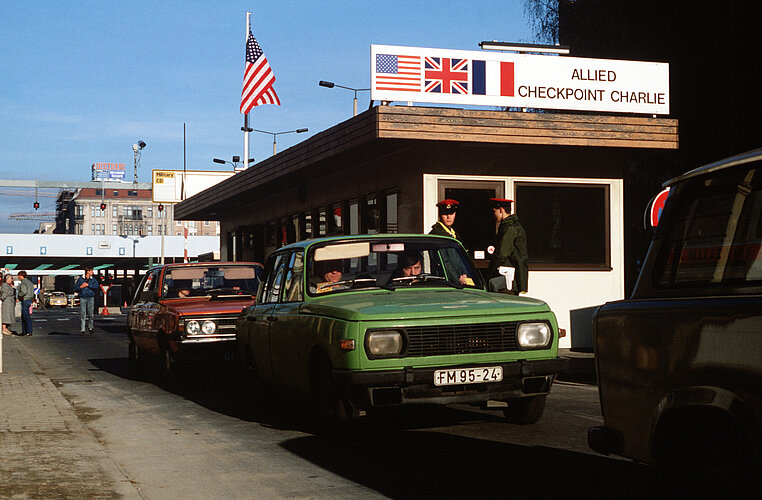
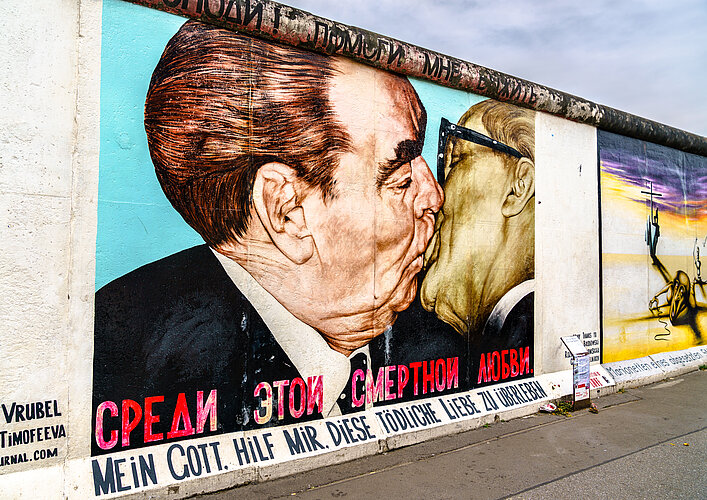
The Brandenburg Gate was severely damaged during World War II and extensively rebuilt in 1958. At the time of German division, it was located on the eastern side directly at the Berlin Wall in the restricted area of the GDR. In the wake of the fall of the Berlin Wall in 1989, the Brandenburg Gate became a prominent symbol of the end of the Cold War.
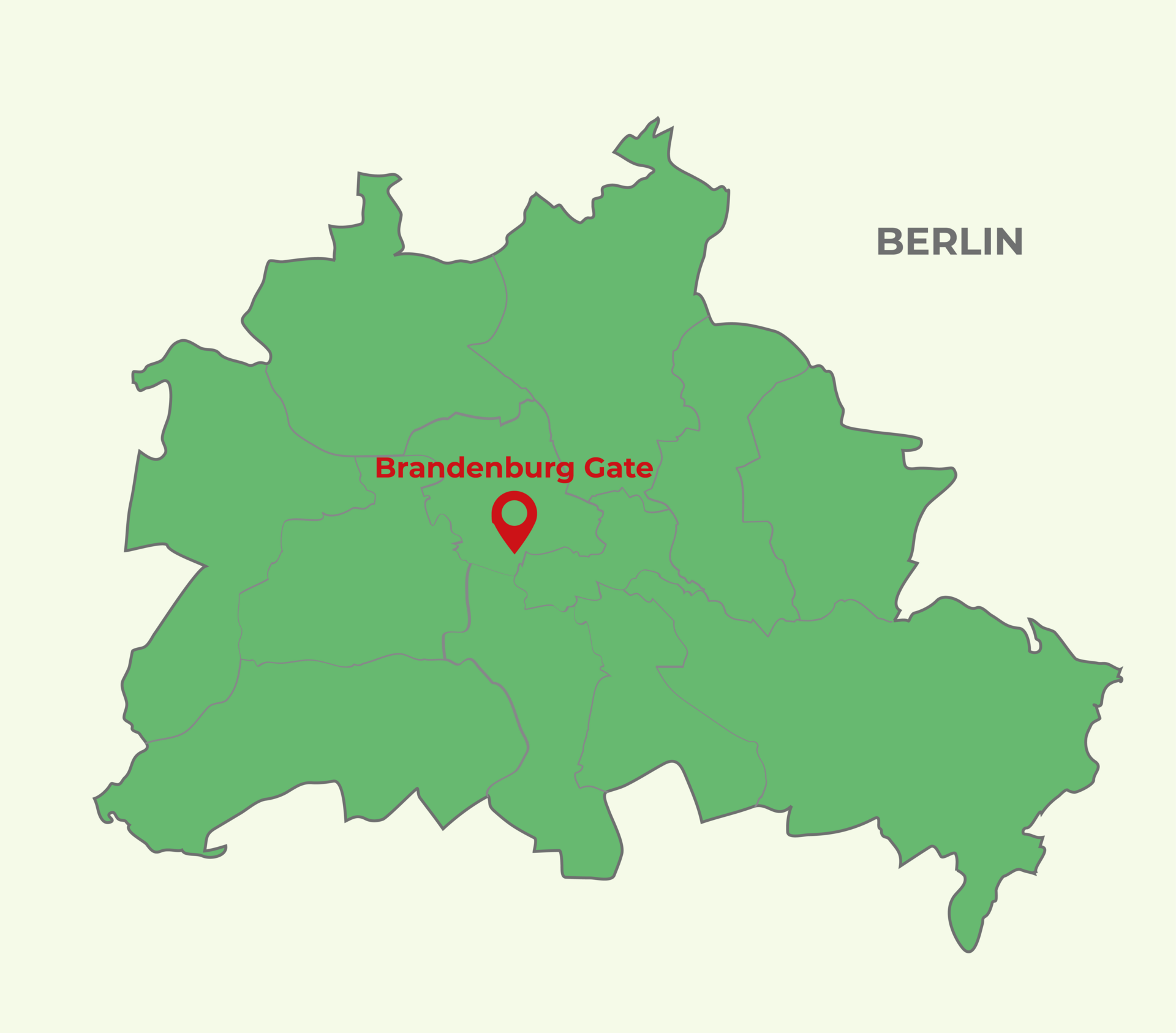
Facts
- Location: Pariser Platz, Berlin
- Built: Between 1788 and 1793
- Hight: 26 m (85 ft)
- Architectural style: Neoclassical
Brandenburg Gate Souvenir Note
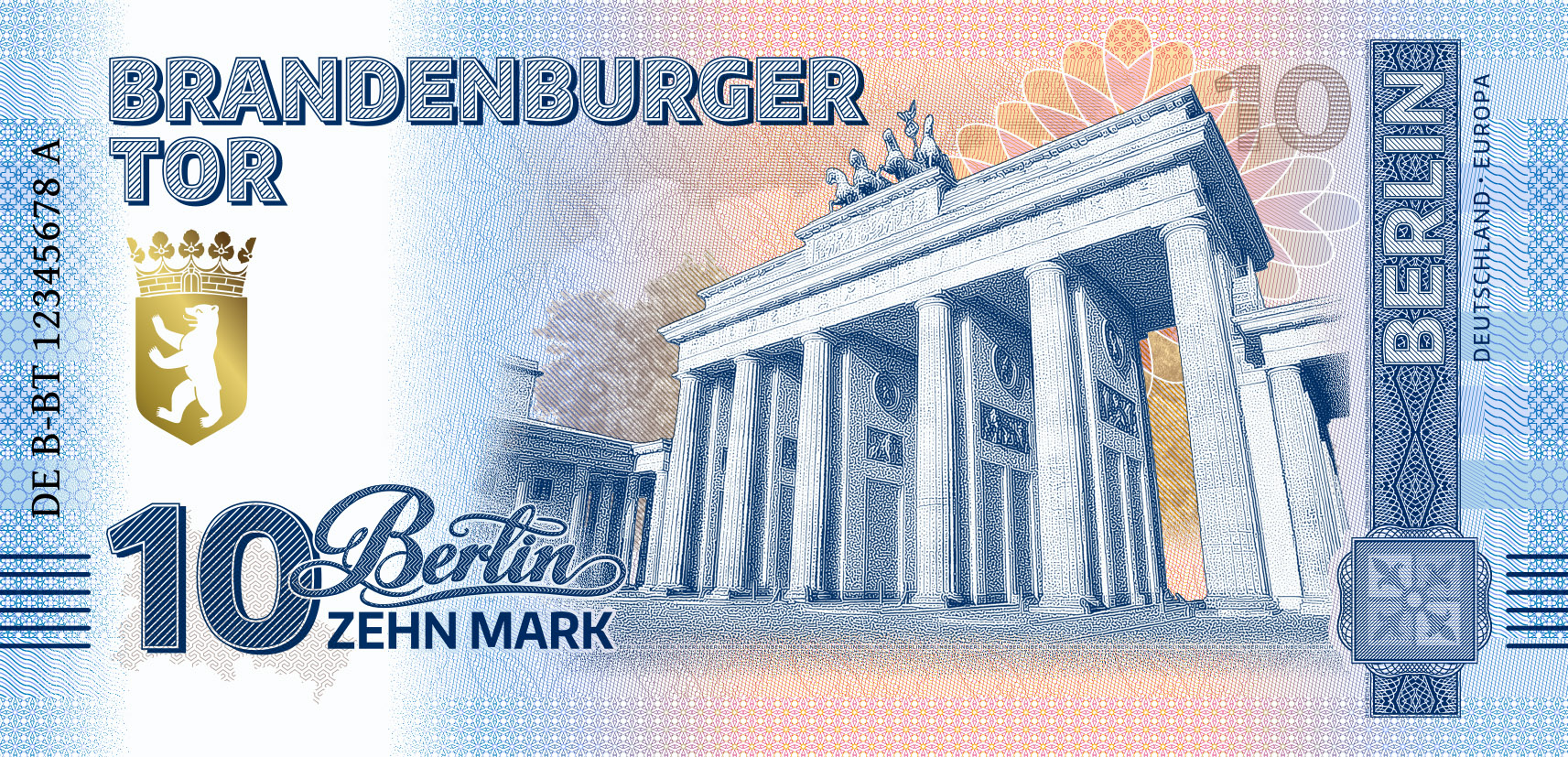
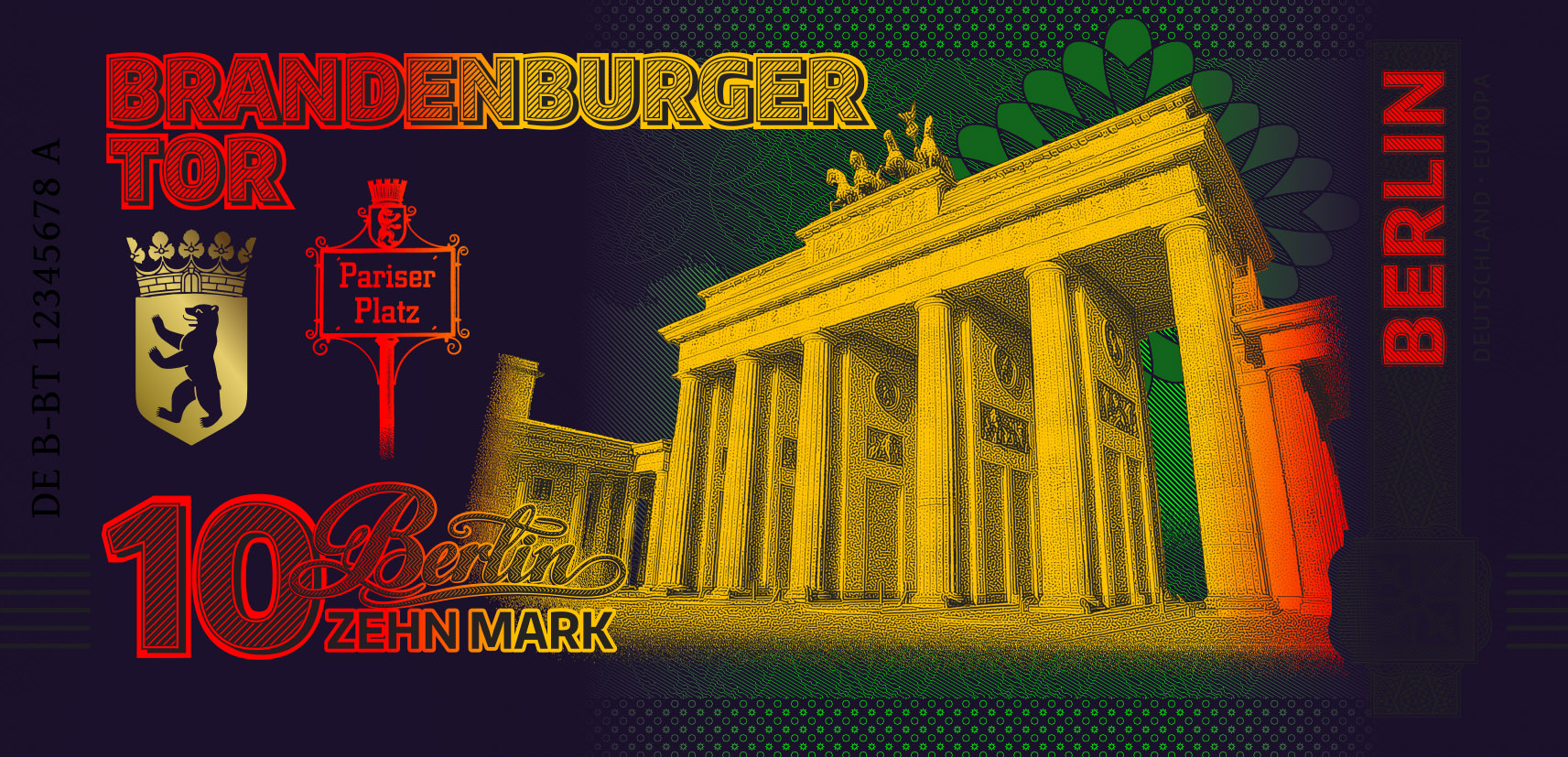
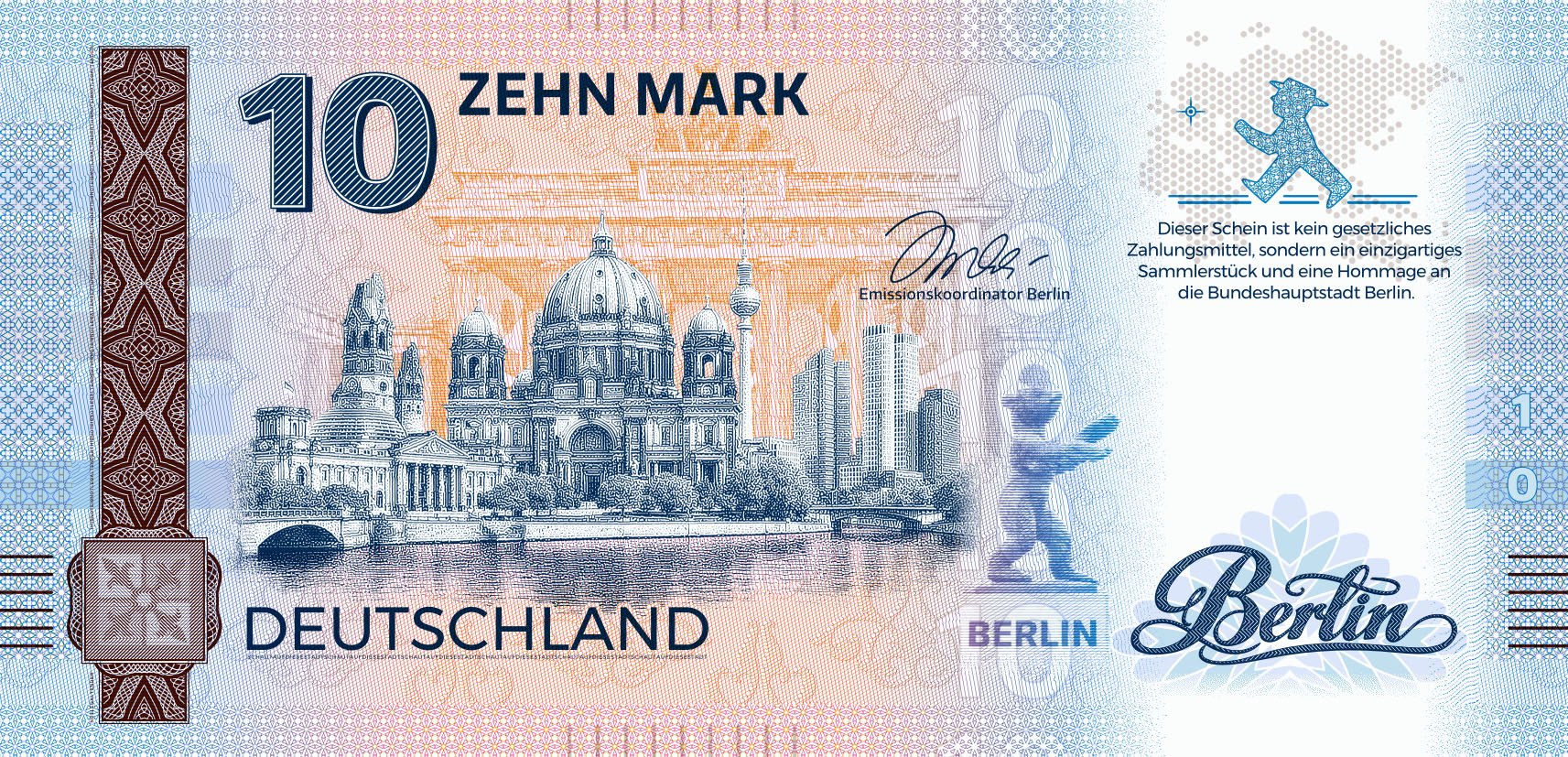
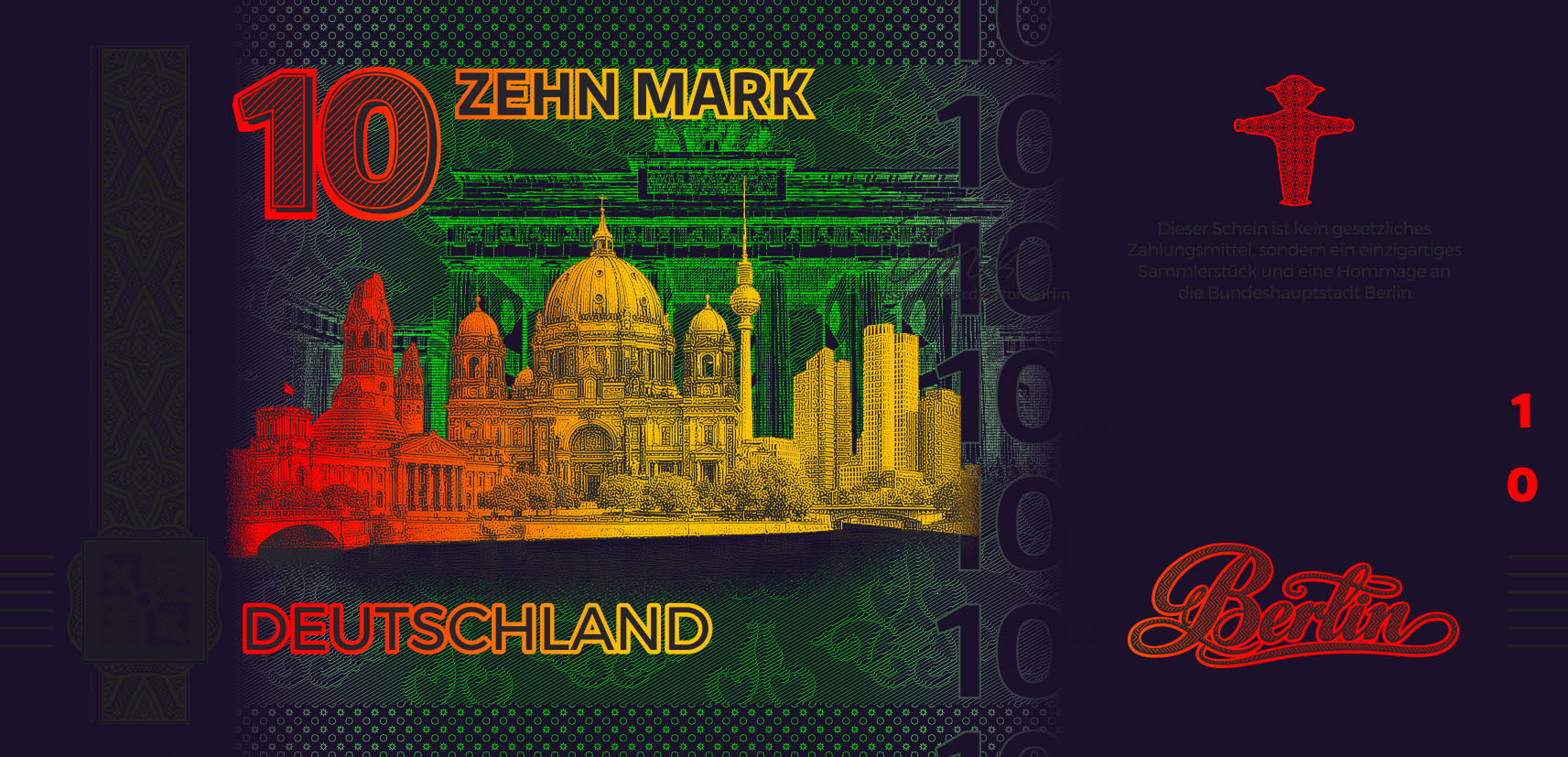
This special souvenir note is dedicated to Brandenburg Gate. It is printed on genuine security paper and features a gold foil patch, UV color as well as haptic elements. While the obverse depicts Brandenburg Gate, the reverse shows various significant buildings in Berlin and the iconic East German traffic light figure indicating “Go.” Under UV light, a street sign reading “Pariser Platz” and the East German traffic light figure indicating “Wait” appear on the note.
10 MARK
Obverse: Brandenburg Gate, city coat of arms of Berlin
Reverse: Various buildings in Berlin, Berlin bear (heraldic animal of Berlin), East German traffic light symbol
| Dimensions: 145 x 70 mm (5.71 x 2.76 in) Material: Paper |