
Petra
Petra's prosperity and architecture
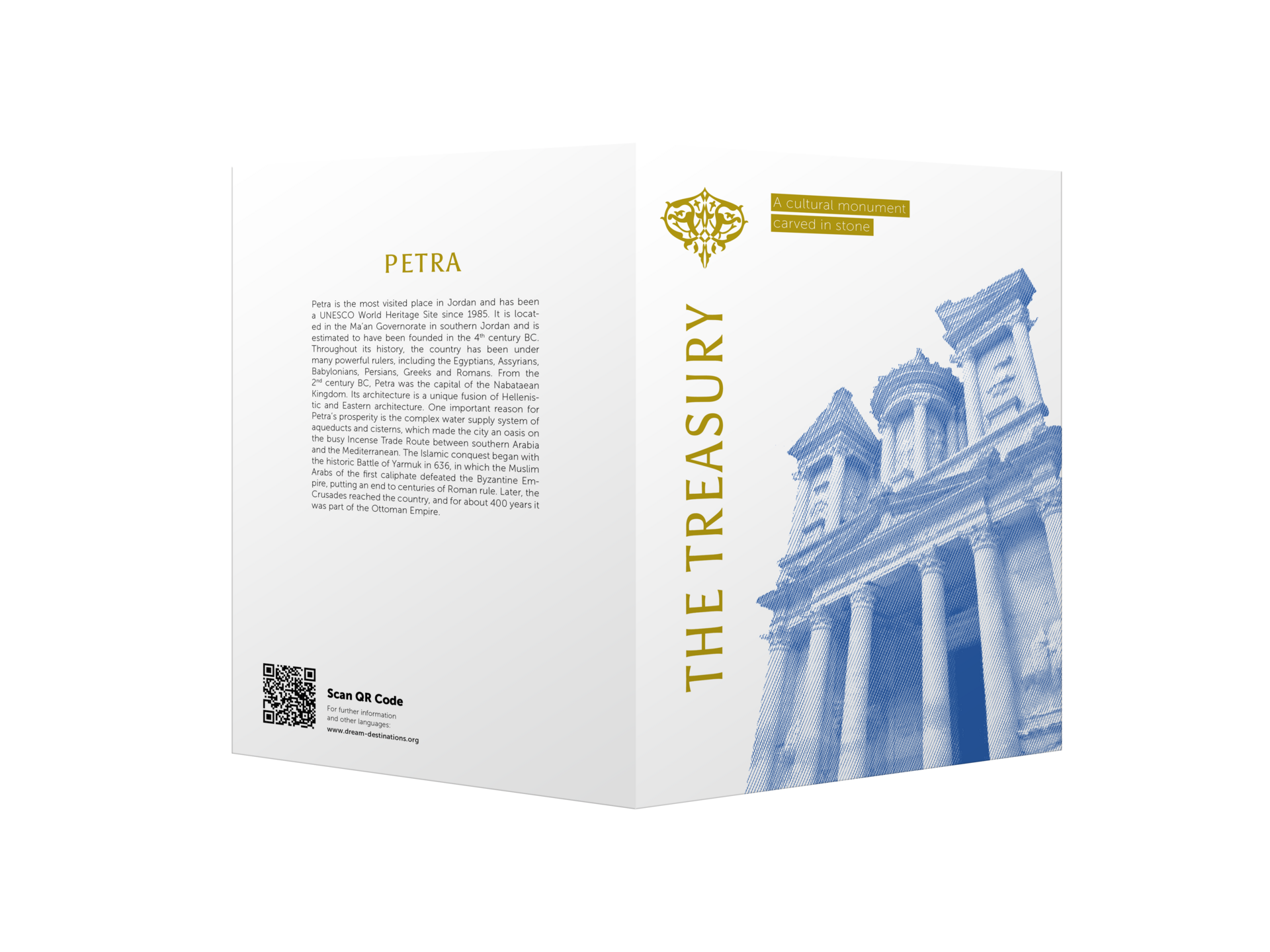
Petra is estimated to be founded in the 4th century BC. From the 2nd century BC, it was the capital of the Nabataean Kingdom. Its architecture is a unique fusion of Hellenistic and Eastern architecture. One important reason for Petra's prosperity is the complex water supply system of aqueducts and cisterns, which made the city an oasis on the busy Incense Trade Route between southern Arabia and the Mediterranean. Petra is the most visited place in Jordan and has been a UNESCO World Heritage Site since 1985.
The Treasury
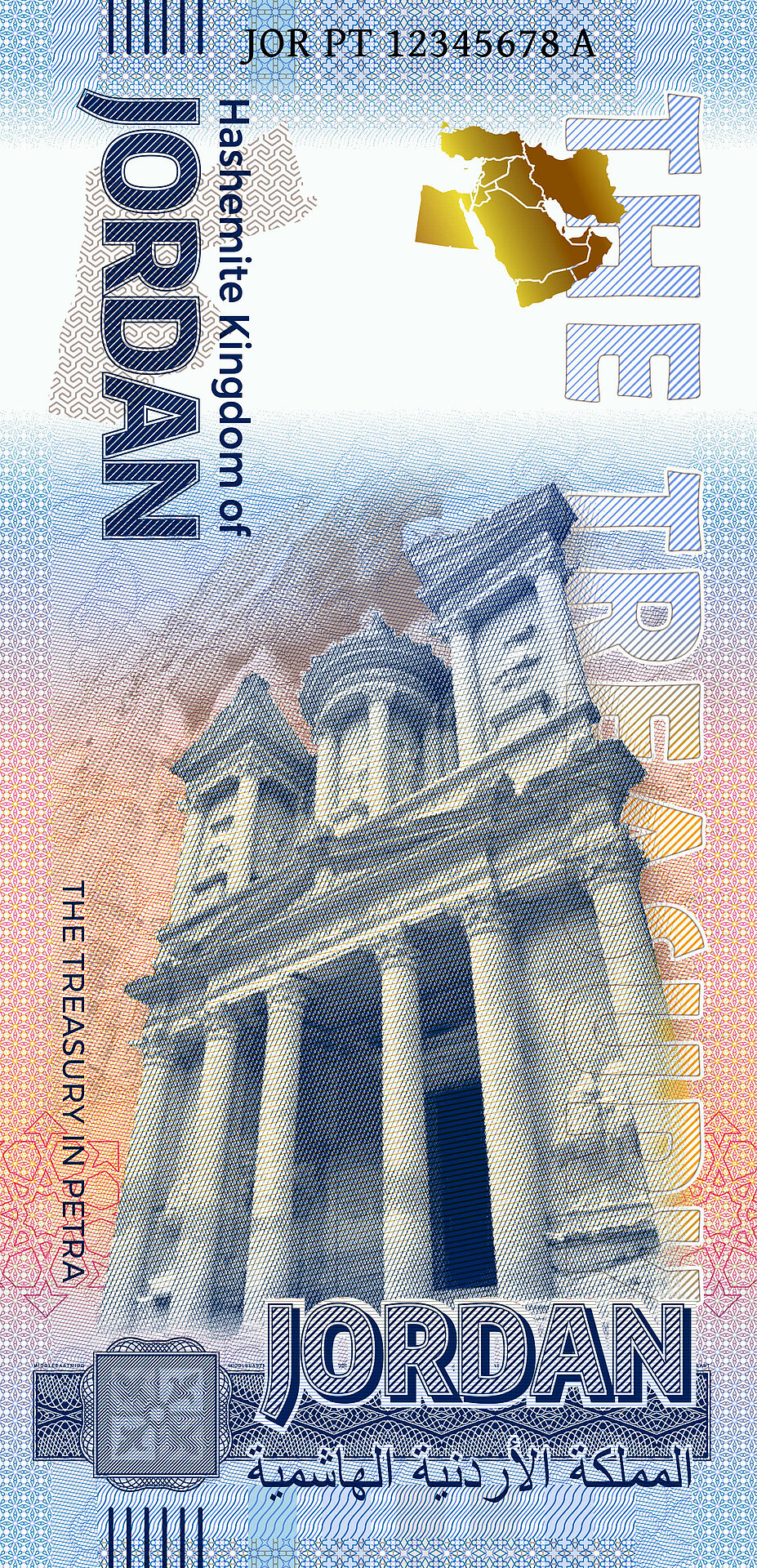
The "Treasury of the Pharaoh", Khazneh el-Far'oun, in the Jordanian ruined city of Petra is world-famous, although its name is misleading. It goes back to Bedouins, who mistook the 3.5-meter (11.5 ft) sandstone urn above the large portal for the hiding place of a treasure. Apparently, they even shot at it, as evidenced by bullet holes on the urn. The entire façade is almost 40 meters (131.2 ft) high.
King Aretas IV
The complex also includes several chambers and was probably built as the mausoleum of King Aretas IV. He ruled from around 9 BC to 40 AD and led the Nabataean Kingdom to its greatest expansion. A crucial event of his reign also plays an important role in the biblical narrative. Aretas was victorious in the war against Herod Antipas from neighboring Galilee, presumably also because many of Herod's soldiers had previously been followers of John the Baptist and refused to serve Herod after John's execution.
Facts
- Other names: Raqmu (Nabataean for "the red one"), Rose City
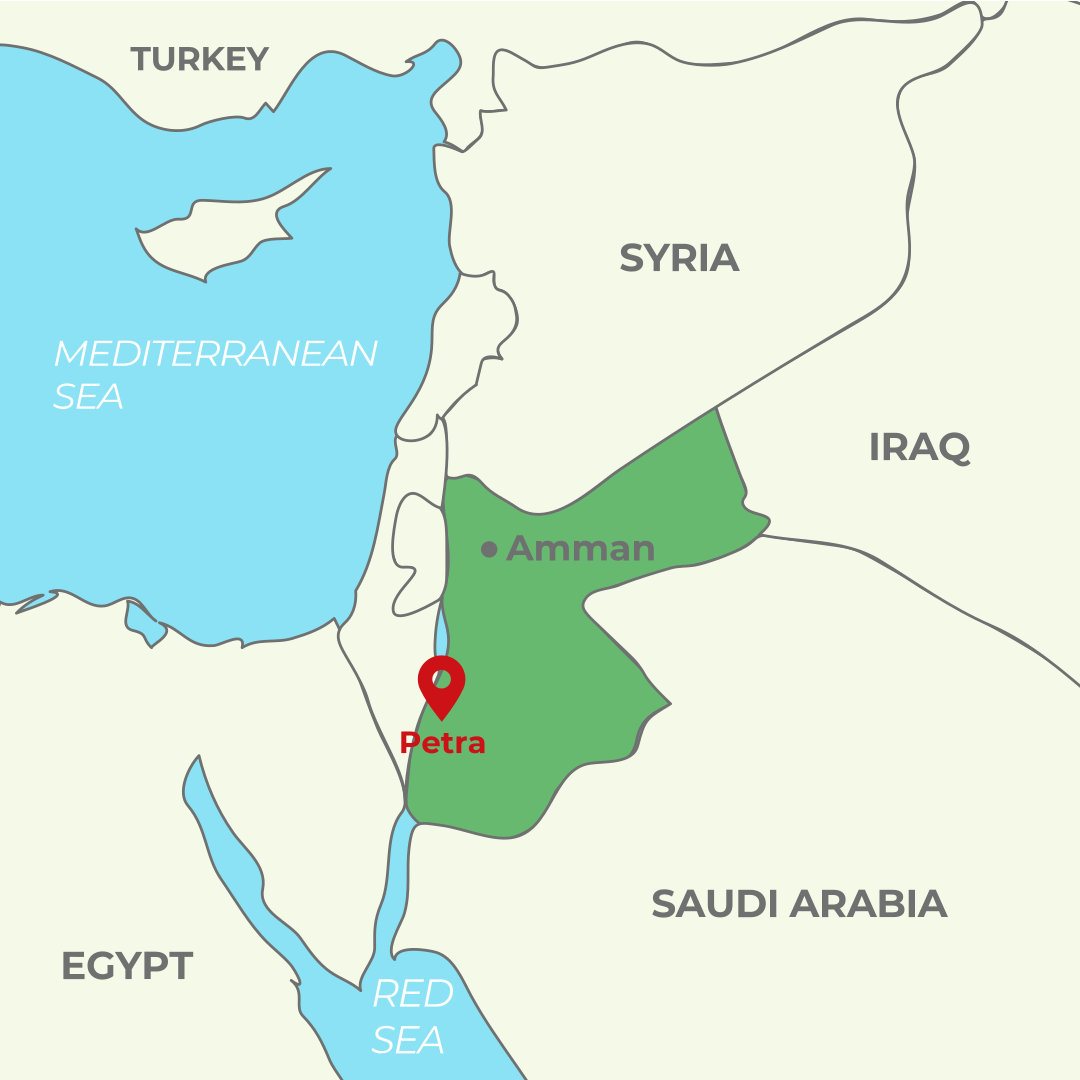
- Location: Ma'an Governorate, southern Jordan
- Area: 264 km2 (102 sq mi)
- Built: c. 4th century BC to 1st century AD
- Roman annexation: 106 AD
- Major sites: The Treasury, The Monastery, Petra Garden and Pool Complex, Royal Tombs
- UNESCO World Heritage Site: Petra (1985)


Petra Folding Card
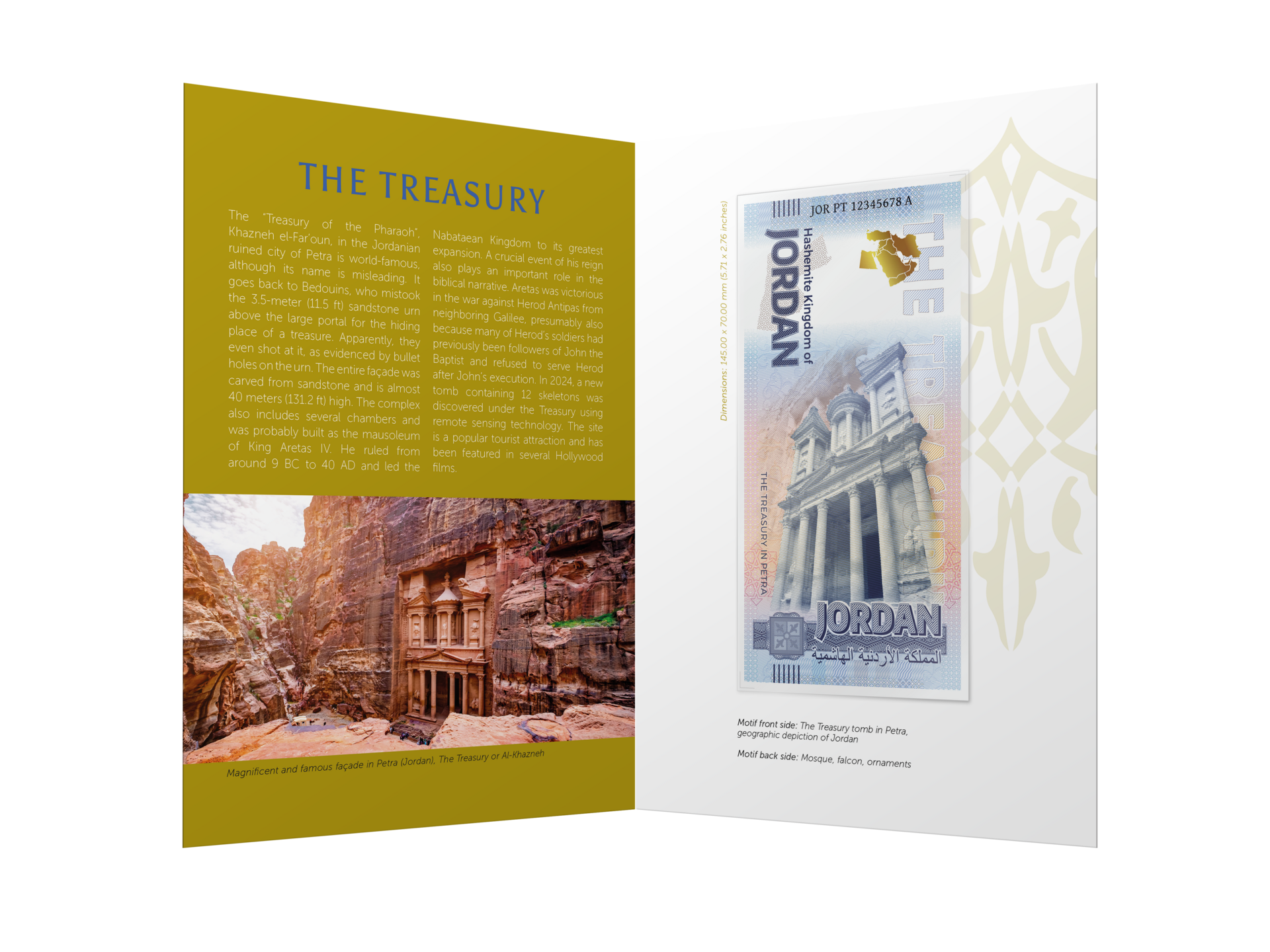
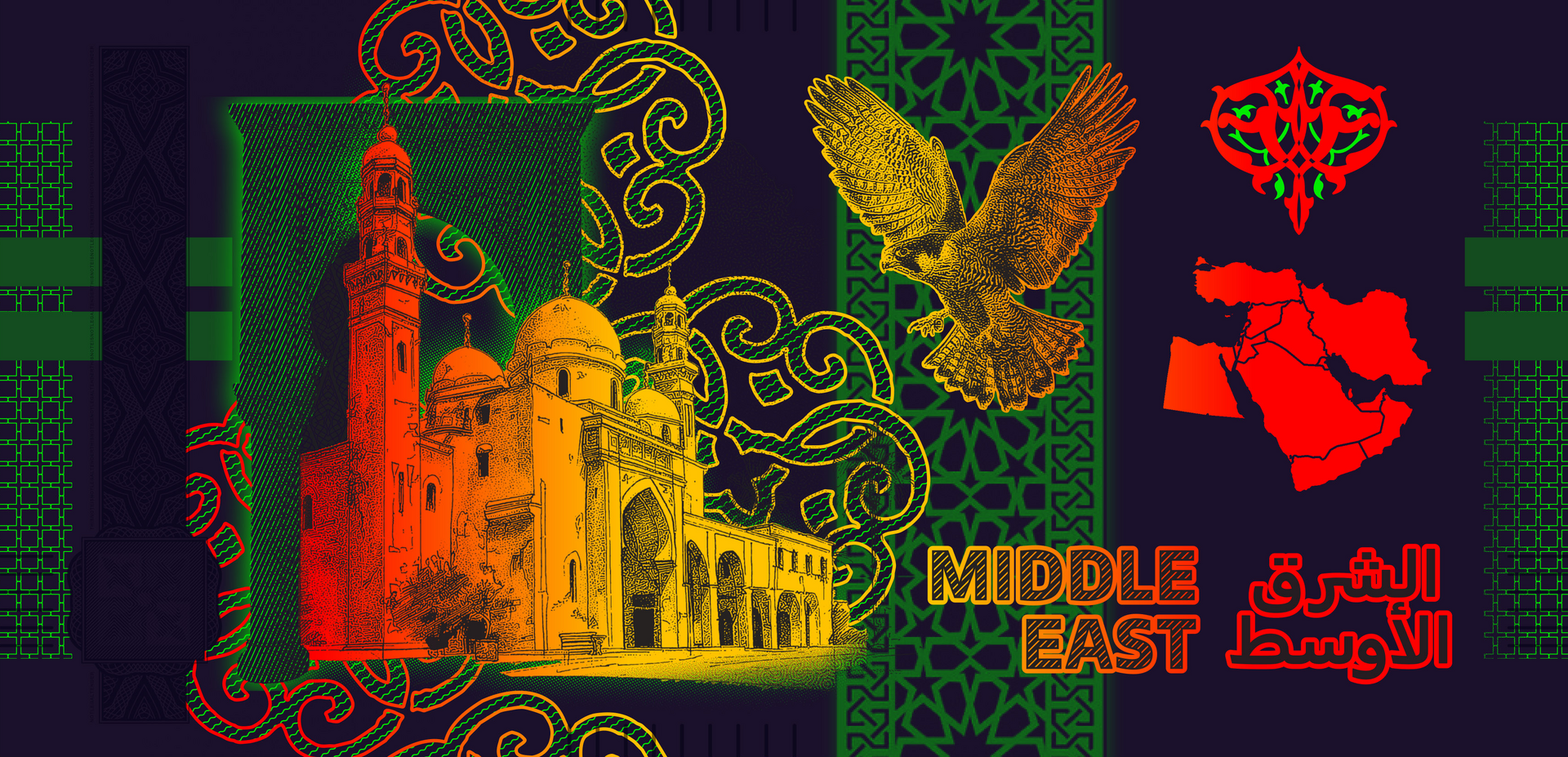
This unique souvenir note from the Middle East Series is dedicated to Jordan's famous historical heritage. It is printed on genuine banknote paper and has several modern security features such as a gold foil patch in the shape of a map of the Middle Eastern countries. The obverse is designed vertically and depicts “The Treasury” in Petra. The reverse shows a mosque and a falcon, the traditional heraldic animal of several Arab states.
Obverse: Al-Khazneh ("The Treasury") tomb in Petra, geographic depiction of the Middle Eastern countries, geographic depiction of Jordan
Reverse: Mosque, falcon, ornaments
| Dimensions: 145 x 70 mm (5.71 x 2.76 in) Material: Paper |