
Roman Theatre of Amman
The beginning of Roman rule
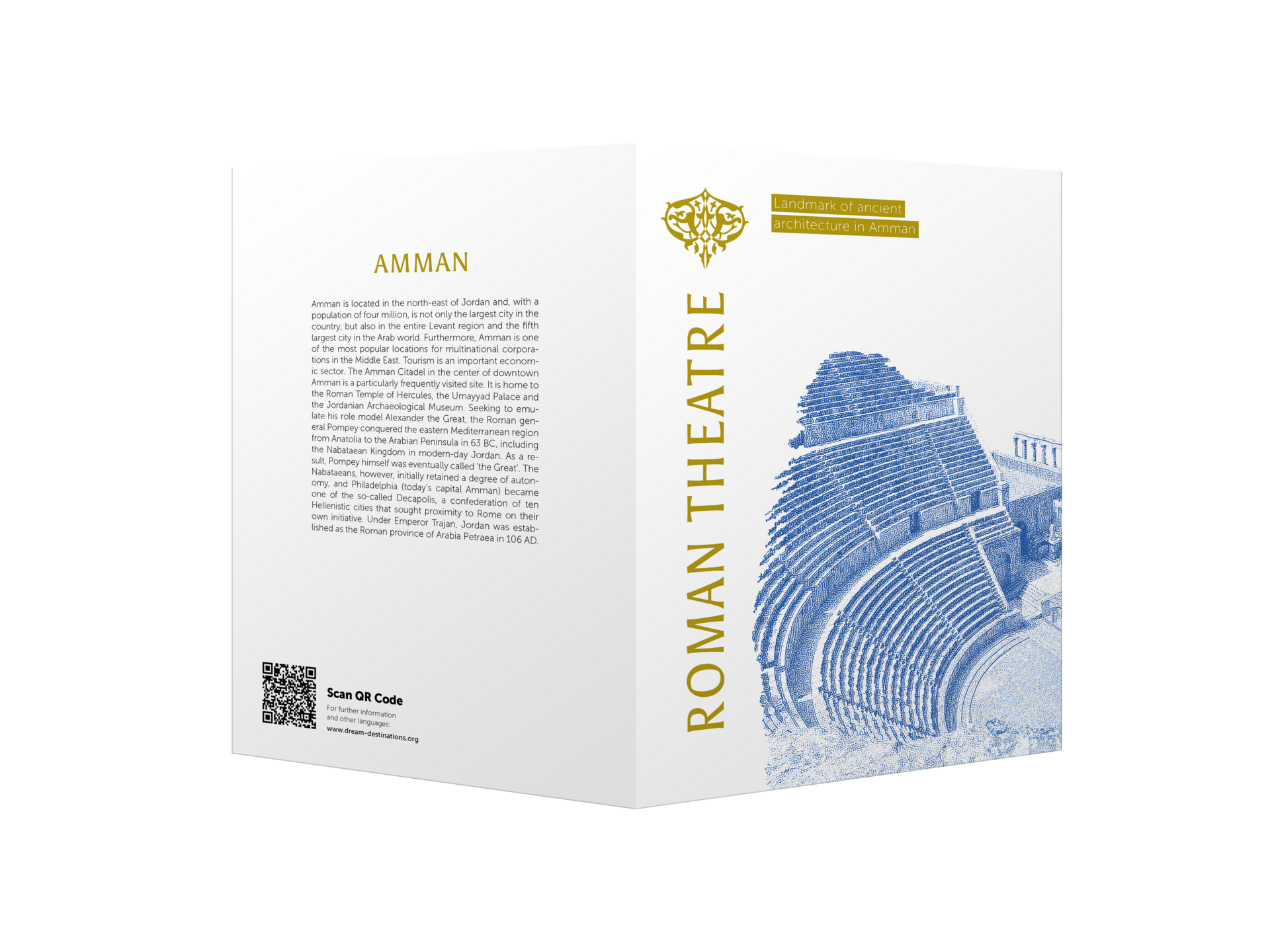
Seeking to emulate his role model Alexander the Great, the Roman general Pompey conquered the entire eastern Mediterranean region from Anatolia to the Arabian Peninsula in 63 BC. As a result, Pompey himself was eventually called 'the Great'. The Nabataeans, however, initially retained a degree of autonomy, and Philadelphia (today's capital Amman) became one of the so-called Decapolis, a confederation of ten Hellenistic cities that sought proximity to Rome on their own initiative. Under Emperor Trajan, Jordan was established as the Roman province of Arabia Petraea in 106 AD.
Construction of the theater
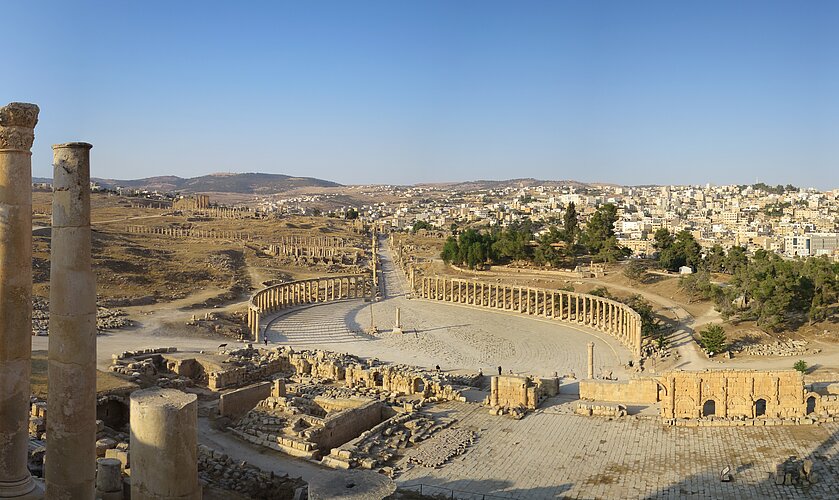
One of the most important testimonies to Roman rule in Jordan is the Roman Theatre of Amman, which was built towards the end of the Pax Romana, the "Golden Age of the Roman Empire", probably in honor of Emperor Antoninus Pius (138–161 AD).
Size and characteristics
It is located in the east of the Jordanian capital and offered space for around 6,000 people. The auditorium was constructed on a slope facing north to protect the audience from the sun, and is 102 m (335 ft) in diameter. It is divided into three sections, which were intended for different social classes. Due to the special architecture, the actors could still be clearly heard even in the top level. Today, the theater hosts events such as the Amman Marathon prize ceremony, the International Book Fair and concerts.
Facts
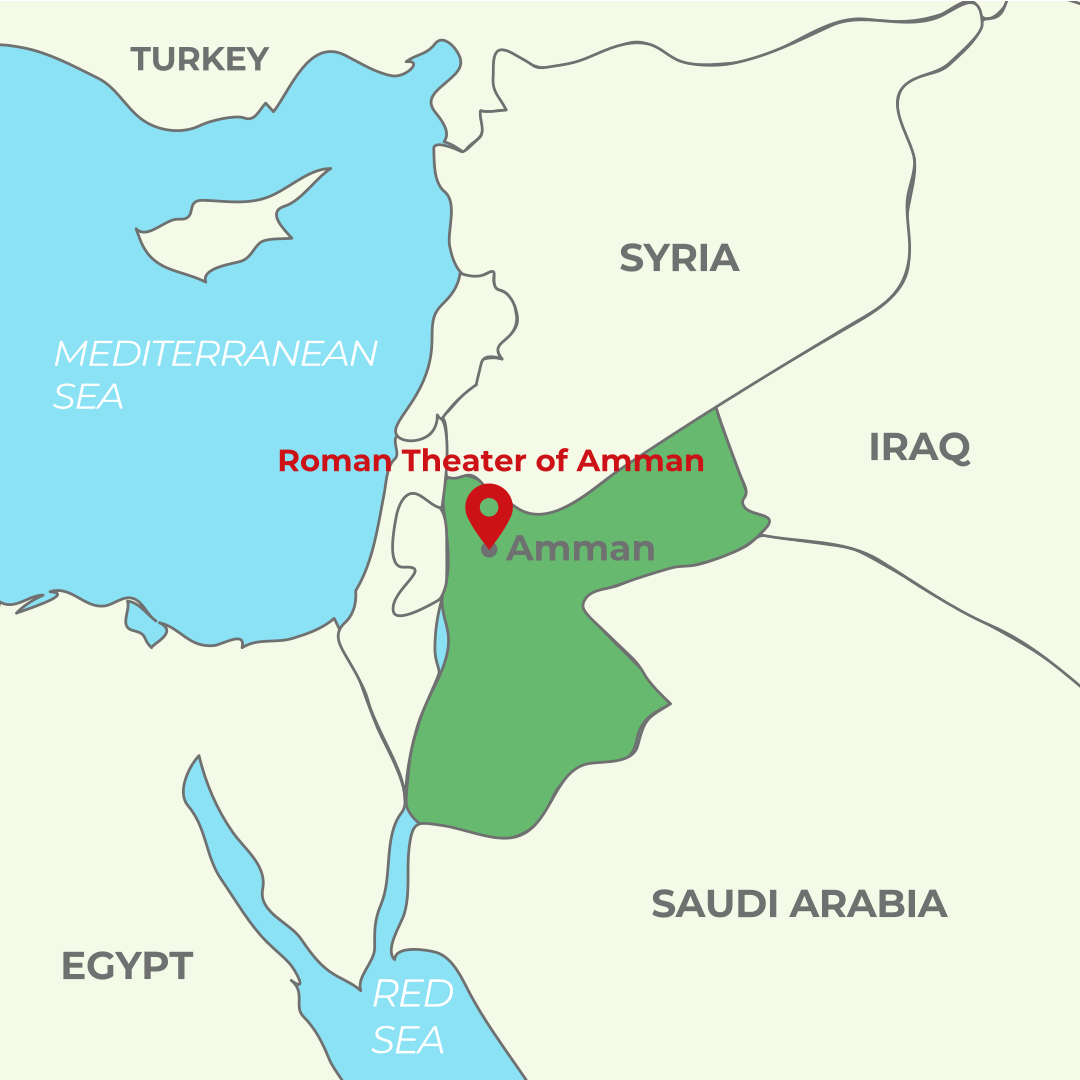
- Location: Hashemite Plaza, Amman, northwestern Jordan
- Built: 2nd century AD
- Roman emperor: Antoninus Pius (138–161 AD)
- Seats: 6,000
- Rows: 44
- Current use: Al-Balad Music Festival, International Book Fair, Amman Marathon prize ceremony
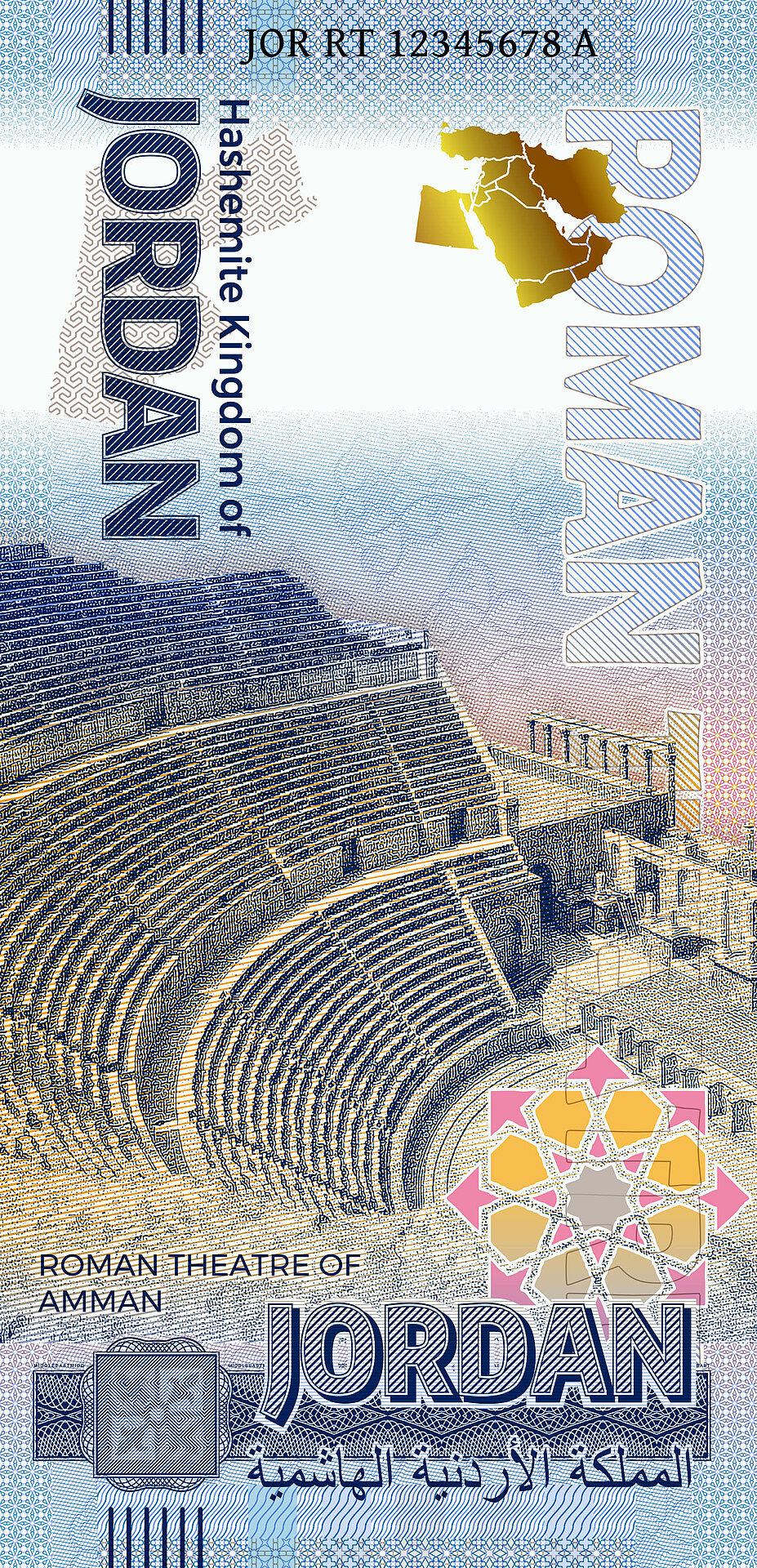



Roman Theatre of Amman Folding Card
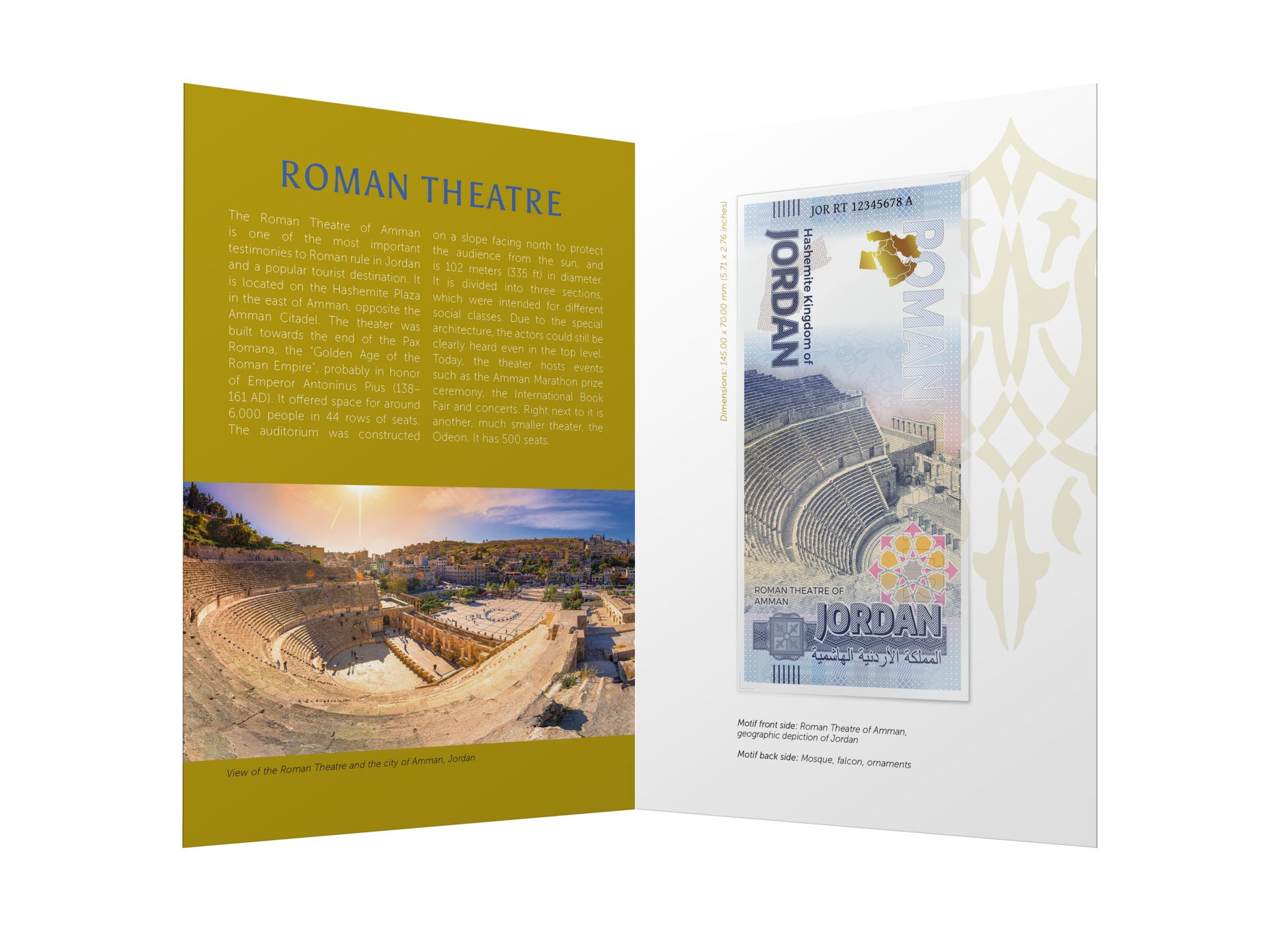
This unique souvenir note from the Middle East Series is dedicated to Jordan's famous historical heritage. It is printed on genuine banknote paper and has several modern security features such as a gold foil patch in the shape of a map of the Middle Eastern countries. The obverse is designed vertically and depicts the Roman Theatre of Amman. The reverse shows a mosque and a falcon, the traditional heraldic animal of several Arab states.
Obverse: Roman Theatre of Amman, geographic depiction of the Middle Eastern countries, geographic depiction of Jordan
Reverse: Mosque, falcon, ornaments
| Dimensions: 145 x 70 mm (5.71 x 2.76 in) Material: Paper |