
Alabama
Alabama is located in the Southeastern United States. The largest city, Huntsville, is home to NASA's Marshall Space Flight Center, which was instrumental in the development of the Apollo program and the construction of the ISS. The government-run museum was opened in 1970 after the first moon landings and houses rockets as well as other equipment of the U.S. space program.
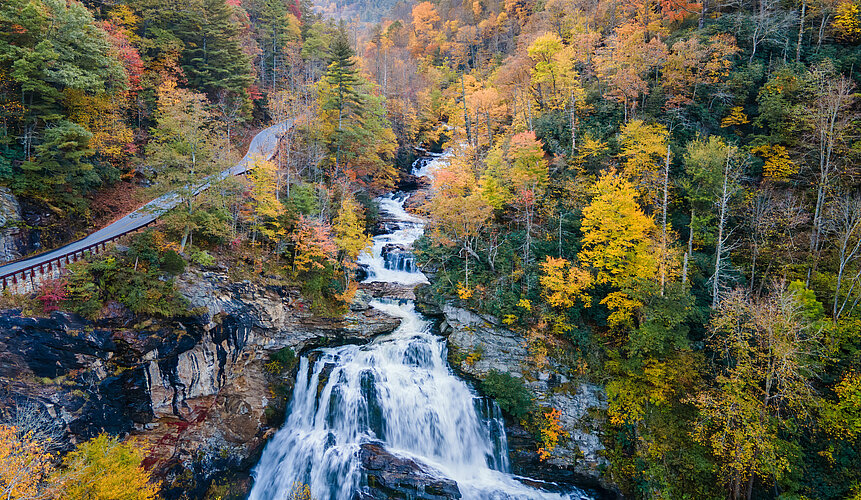
The Little River flows through the Little River Canyon National Preserve on Lookout Mountain in northeast Alabama. It is considered the nation’s longest mountaintop river and one of wildest and cleanest waterways in the Southern states.
At the time of the arrival of the Europeans, Alabama was inhabited by various native tribes, including the Cherokee, Alabama, Chickasaw, Choctaw, Creek and Koasati. The first Europeans to enter the territory were the Spanish in the 16th century, while the French established the first settlement in 1702. After the Seven Years' War, the British took control of the French possessions and held them until the American Revolution. The Spanish lost their territory in the west to the U.S. in 1813, but continued to claim it until 1819, when Alabama was admitted to the Union as the 22nd state. After the Southern states formed the Confederacy in 1861, Alabama's present-day capital, Montgomery, became its first seat of government. Because of its historical importance, Alabama is sometimes called the "Heart of Dixie". Another nickname is the "Yellowhammer State", after the official state bird. The Latin state motto "Audemus jura nostra defendere" means "We dare to defend our rights".

Facts
- Capital city: Montgomery
- Largest city: Huntsville
- Area: 52,419 square miles (135,765 km²)
- Population: 5 million
- Date of statehood: 14th December 1819
- Rank of the admission: 22nd


Alabama Folding Card
During World War II, Benjamin O. Davis Jr. participated in the air battles of Europe as a fighter pilot. He was the first African-American to fly an Army Air Corps aircraft solo and became the first black brigadier general in the U.S. Air Force in 1954. Davis completed his pilot training at Tuskagee Institute in Alabama. This note of the 50 U.S. States Program depicts him in his cockpit, a North American P-5ID Mustang fighter aircraft, a photo of Major James A. Ellison reviewing the first class of Tuskegee Airmen cadets in 1941, Little River in Little River Canyon National Preserve on Lookout Mountain, Alabama's motto "Audemus jura nostra defendere" (Lat. for "We dare to defend our rights") and the year of admission to the Union.
100 Souvenir Dollars
Obverse: Benjamin O. Davis Jr. (1912–2002), brigadier general, Little River Canyon National Preserve, North American P-5ID Mustang fighter aircraft, photo of the first class of Tuskegee Airmen from 1941
Reverse: United States Capitol in Washington, D.C., seals of the commemorative series
| Dimensions: 7.07 x 3.00 inches (179.50 x 76.20 mm) Material: Paper |