
Louisiana
Louisiana is located in the Southern United States bordering the Gulf of Mexico. The landscape is marked by the Mississippi River Delta and surrounding swamps or so-called „bayous“. More than half of the state is covered by forest, providing a habitat for many animals. Since early European settlers were fascinated by the parental care of the native brown pelican, Louisiana is nicknamed “The Pelican State.”
Prior to the arrival of Europeans, various Mound Builders developed in the area. The Poverty Point earthwork, which was constructed at least 1100 BC, has been a UNESCO World Heritage Site since 2014. Later cultures include the Caddoan-Mississippian and Plaquemine cultures. After the Spanish first explored the region in 1528, the French laid claim to the area in 1682, naming it after King Louis XIV. As a result of the defeat in the Seven Years' War (1754–1763), France ceded most of Louisiana west of the Mississippi to Spain and the possessions east of the Mississippi to Great Britain. French rule was restored by Napoleon Bonaparte through a secret treaty with Spain in 1800, but finally ended in 1803 when the U.S. acquired the territory through the Louisiana Purchase. In 1812, Louisiana became the 18th state to be admitted to the Union. The state motto is "Union, Justice, Trust".
New Orleans is a major port city on the Mississippi River. Its unique culture has Creole influences and features a variety of dialects. The world-famous French Quarter, with many colonial buildings of French and Spanish architecture, is a National Historic Landmark. Built in 1789, St. Louis Cathedral is the oldest continuously used cathedral in the United States, along with the Royal Presidio Chapel in California. In addition, New Orleans is considered the "birthplace of jazz" and is also important for many other musical genres.
Facts
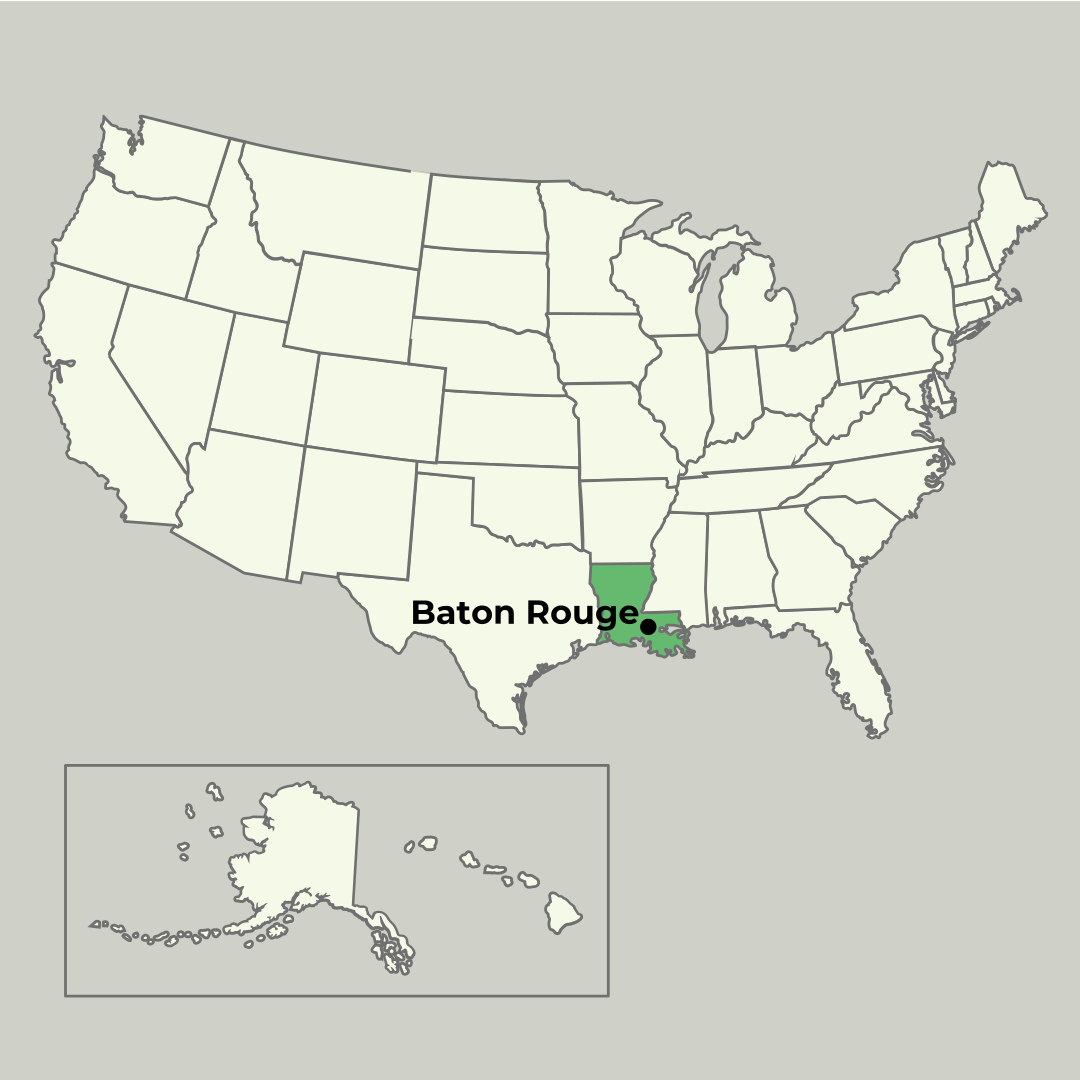
- Capital city: Baton Rouge
- Largest city: New Orleans
- Area: 52,069 square miles (134,858 km²)
- Population: 4.7 million
- Date of statehood: 30th April 1812
- Rank of the admission: 18th


Louisiana Folding Card
As a trumpet virtuoso, Louis Armstrong, born in New Orleans in 1901, basically invented the role of the soloist in jazz, which had previously been played as collective ensemble music. Through his innovative improvising, he made an enormous impact on the genre, and with his charismatic, raspy voice, he was also very successful as a singer. This note from the 50 U.S. States Program depicts Armstrong, the New Orleans skyline, a trumpet, musical notes, a G clef, the state motto "Union, Justice, Confidence" and the year of admission to the Union.
100 Souvenir Dollars
Obverse: Louis Armstrong (1901–1971), trompeter and vocalist, skyline of New Orleans, stylized trumpet, musical notes, G clef
Reverse: United States Capitol in Washington, D.C., seals of the commemorative series
| Dimensions: 7.07 x 3.00 inches (179.50 x 76.20 mm) Material: Paper |