
Mississippi
Mississippi is located in the Southeastern United States and is named after the Mississippi River, which together with the Missouri forms the largest river system in North America. Throughout history, the Mississippi has been an important natural border and transportation route. Native American tribes living in the region at the time of European contact included the Chickasaw, Choctaw, Natchez, Yazoo and Biloxi. After Spanish explorers had already reached the Mississippi in 1540, the French founded the first European settlement in 1699. As a result of the Seven Years' War, Great Britain gained control in 1763. However, during the Revolutionary War, the British ceded most of the Mississippi to the United States, while the southern third became part of Spanish West Florida in 1783. In 1812, the Spanish possession was annexed by the U.S. and in 1817, Mississippi was admitted to the Union as the 20th state.
Mississippi produced more cotton than any other state and was economically heavily dependent on slave labor before the Civil War. As one of the seven original Confederate states, Mississippi left the Union in 1861. Statehood was restored in 1870, and the 20th century saw a number of pivotal events in the civil rights movement in Mississippi, such as the Ole Miss riot in 1962, the assassination of Medgar Evers in 1963, and the Freedom Summer murders in 1964.
The southern magnolia is both the state tree and the state flower, and Mississippi's official nickname is "The Magnolia State". Since the plant blooms for a very long time and even several times a year under good conditions, it symbolizes hope and rebirth. The Latin state motto, "Virtute et armis", means "By valor and arms".
Facts
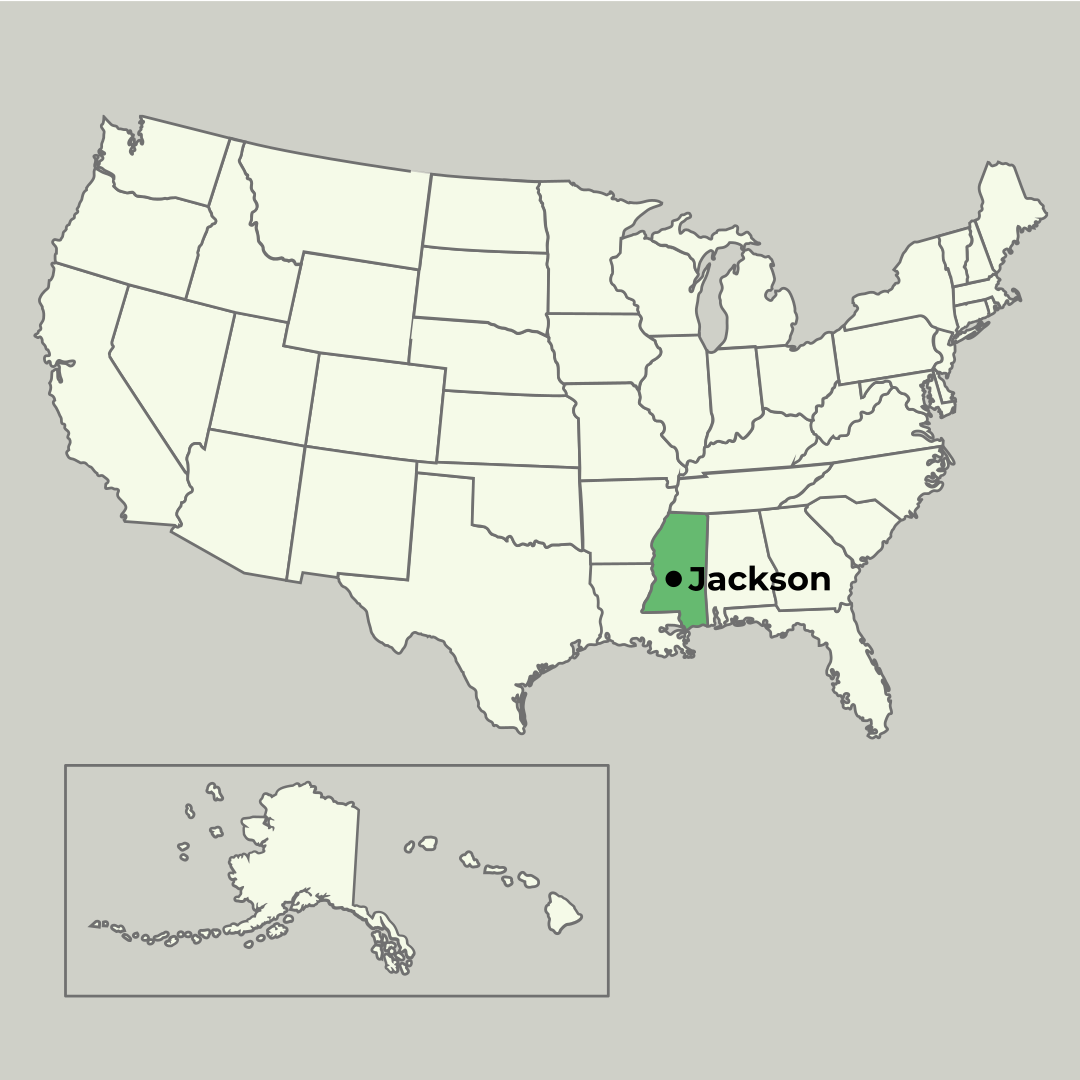
- Capital and largest city: Jackson
- Area: 48,430 square miles (125,443 km²)
- Population: 3 million
- Date of statehood: 10th December 1817
- Rank of the admission: 20th


Mississippi Folding Card
In the War of 1812, the chief of the Choctaw people, Pushmataha, fought alongside the United States Army and attained the rank of brigadier general. Highly respected by both Native Americans and European settlers, he was also called "Indian General". This note of the 50 U.S. States Program depicts Pushmataha from an 1824 painting by artist Charles Bird King, the Mississippi State Capitol in Jackson, the Great Seal of Mississippi, the state motto "Virtute et Armis" (Latin for "By valor and arms"), and the year of admission to the Union.
100 Souvenir Dollars
Obverse: Pushmataha (c. 1764–1824), chief of the Choctaw people and brigadier general, Mississippi State Capitol in Jackson, seal of Mississippi
Reverse: United States Capitol in Washington, D.C., seals of the commemorative series
| Dimensions: 7.07 x 3.00 inches (179.50 x 76.20 mm) Material: Paper |