
South Carolina
South Carolina is located in the Southeastern United States and borders the Atlantic Ocean. Like North Carolina, the state is geographically characterized by the Atlantic Coastal Plain, the Piedmont region and the Blue Ridge Mountains. Accounting for about two-thirds of the state's area, the Atlantic coastal plain is very diverse and ranges from the Sea Islands chain to numerous estuaries and salt marshes to the Carolina Sandhills. Among the indigenous peoples who lived in the area prior to colonization were the Cherokee, Catawbe, Apalachee, Yuchi and Yamasee. The Spanish first reached South Carolina in 1521, and in 1526 established the colony of San Miguel de Gualdape near present-day Georgetown. It was the first European settlement in the continental United States, although it was abandoned after only eight months. Permanent European settlement did not begin until 1663, when King Charles II granted a charter for the land to the English Lords Proprietors who had helped him restore his power. In 1719, the Carolinas were divided into separate colonies.
Over 200 battles were fought in South Carolina during the Revolutionary War. This was about one-third of all battles, more than in any other state. In 1788, South Carolina became the eighth state to be admitted to the Union. However, on 20th December 1860, it was the first state to secede. After the Civil War, South Carolina rejoined the Union in 1868. The state motto "Dum spiro spero" is Latin for “While I breathe, I hope.”
The palmetto palm is the state tree of South Carolina. Its resilient wood was used in the construction of Fort Moultrie and is credited with its steadfastness during the Revolutionary War. A palmetto palm has been on the state flag since 1861 and South Carolina is also called the “Palmetto State.”
Facts
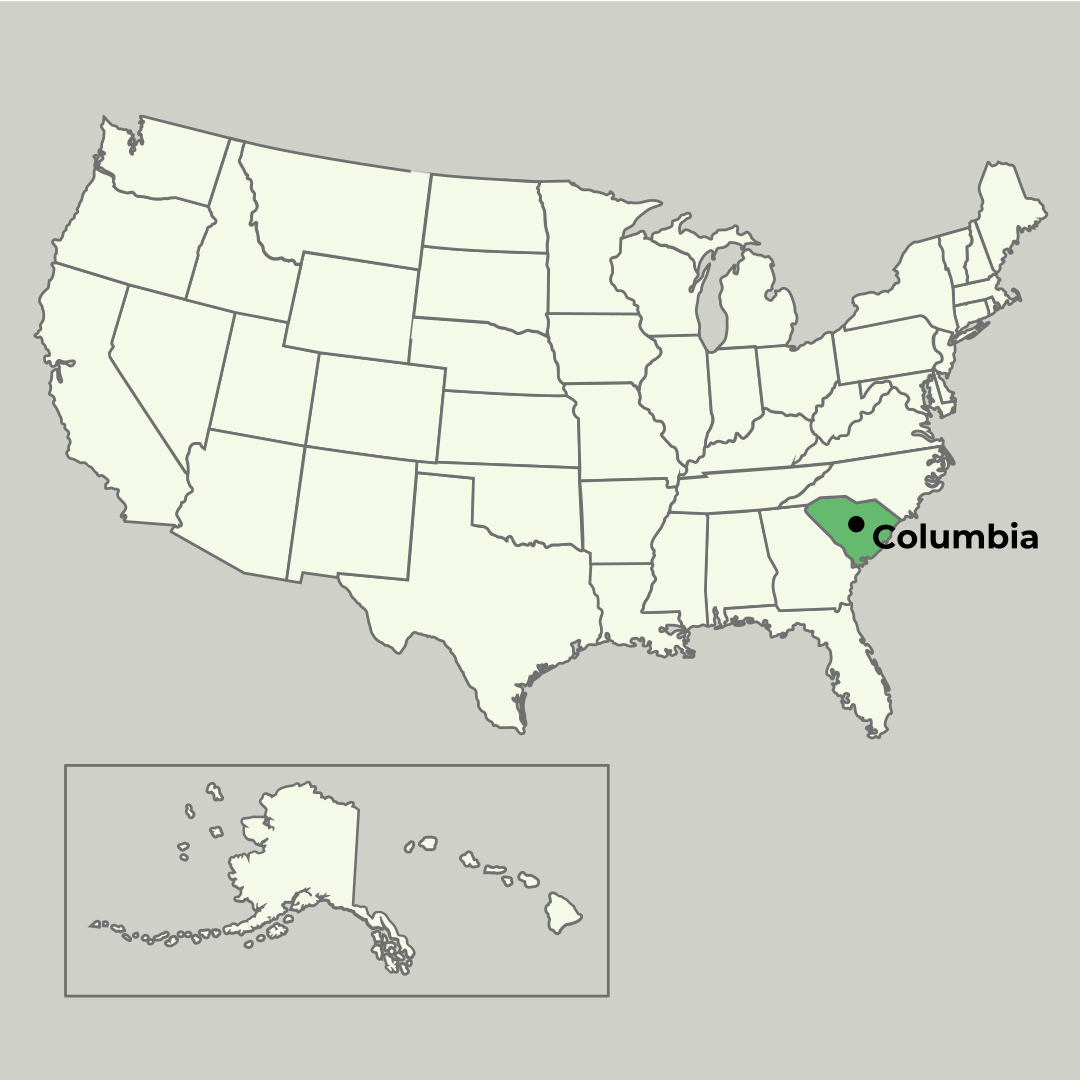
- Capital city: Columbia
- Largest city: Charleston
- Area: 32,020 square miles (82,932 km²)
- Population: 5.3 million
- Date of statehood: 23rd May 1788
- Rank of the admission: 8th


South Carolina Folding Card
With songs like "Please Please Please" (1956) and "I Got You (I Feel Good)" (1965), South Carolina-born James Brown became one of the most important soul musicians in history and is considered the major pioneer of funk music. He was a singer, songwriter and a producer and was among the first 10 artists inducted into the Rock and Roll Hall of Fame. This note of the 50 U.S. States Program shows his portrait, a depiction of Brown performing, the Columbia skyline, a palmetto palm tree, the state motto "DUM SPIRO SPERO" (Latin for "While I breathe, I hope") and the year of admission to the Union.
100 Souvenir Dollars
Obverse: James Brown (1933–2006), musician, skyline of Columbia, G-clef and musical notes, sabal palmetto palm tree
Reverse: United States Capitol in Washington, D.C., seals of the commemorative series
| Dimensions: 7.07 x 3.00 inches (179.50 x 76.20 mm) Material: Paper |