

Minnesota
Minnesota is located in the Midwest of the United States on the border with Canada. In pre-Columbian times, the Hopewell culture and the Upper Mississippian culture, among others, flourished in this area. The name of the state is derived from the Minnesota River and comes from the language of the Dakota people who inhabited the region when the Europeans arrived. It means "cloudy water". Other tribes living in Minnesota at the time were the Ojibwe and the Mdewakanton.
Because of its more than 14,000 bodies of water, Minnesota is also called the "Land of 10,000 Lakes." About one-third of Minnesota is covered with forests, which also include large areas of wilderness. Among the native animals are the white-tailed deer, bobcats, timber wolves and black bears.
Minnesota's motto, "L'Étoile du Nord," is the only French state motto. It is related to its location as the northernmost state (apart from Alaska) and means "The Star of the North." French voyageurs were the first Europeans to enter the region in the 17th century. Much of the territory became part of French Louisiana, which was ceded to the United States in 1803 through the Louisiana Purchase. The Minnesota Territory, established in 1849, also encompassed portions of North and South Dakota. Admitted to the Union as the 32nd state in 1858, Minnesota became a center of social activism in the late 19th century and was instrumental in the fight for women's suffrage. Immigration from Europe, especially from Germany and Scandinavia, continued into the 20th century.
The capital Saint Paul and the largest city Minneapolis form the so-called "Twin Cities" metropolitan area. A well-known landmark of Minneapolis is the Third Avenue Bridge over the Mississippi River.
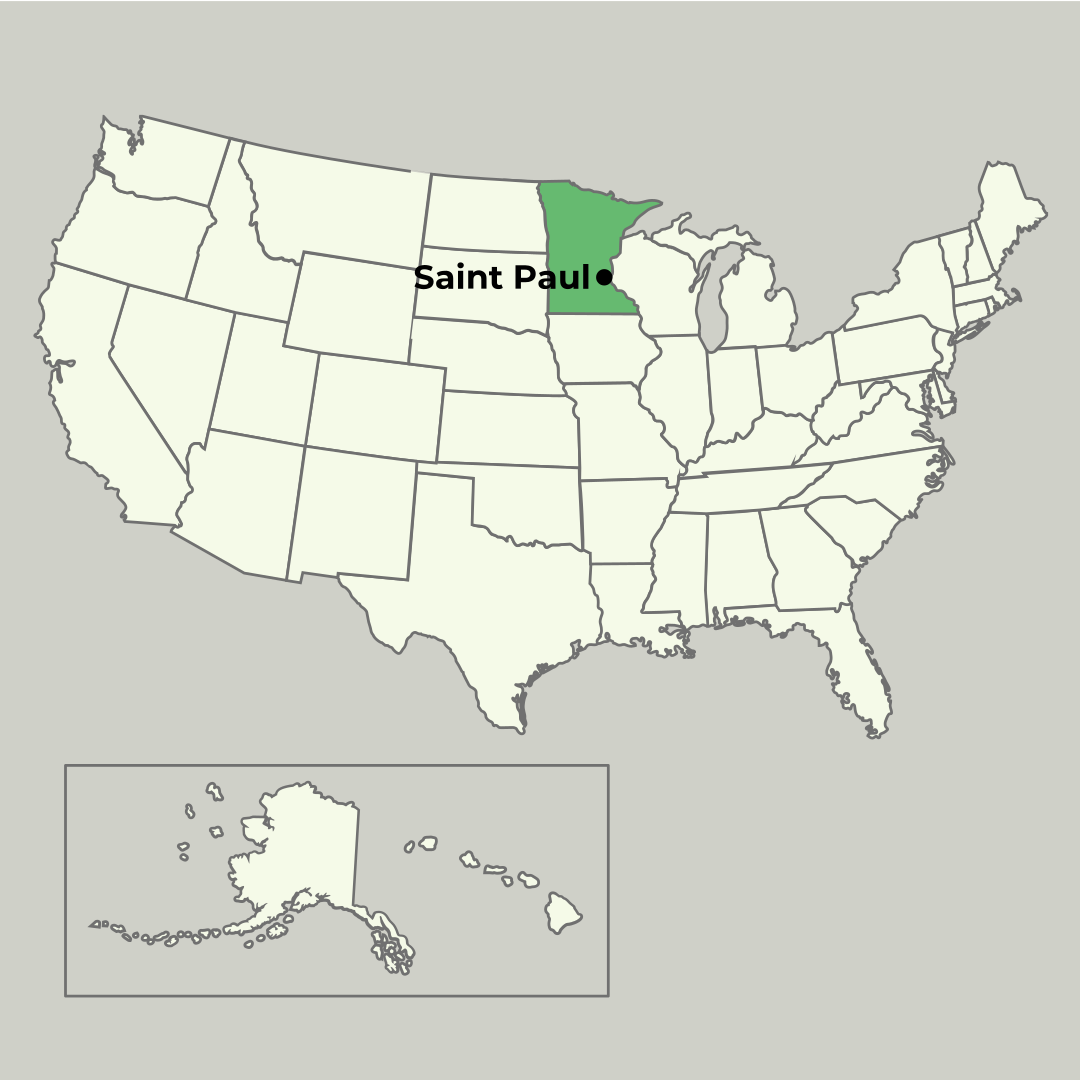
Facts
- Capital city: Saint Paul
- Largest city: Minneapolis
- Area: 86,935.83 square miles (225,163 km²).
- Population: 5.7 million
- Date of statehood: 11th May 1858
- Rank of the admission: 32nd


Minnesota Folding Card
At the age of 16, Minnesota-born actress and singer Judy Garland became famous for her performance of the song "Over the Rainbow" in the 1939 film “The Wizard of Oz.” In 1961, she was the first woman to be awarded the Grammy for Album of the Year. A portrait of Garland is featured on this note from the 50 U.S. States Program. In addition, it shows Minnesota's skyline with the Third Avenue Bridge, a Minnesota welcome sign, the Star of the North, a Norway pine tree (Minnesota state tree), the state motto "L'Étoile du Nord" (French for "The Star of the North") and the year of admission to the Union.
100 Souvenir Dollars
Obverse: Judy Garland (1922–1969), actress and singer, skyline of Minneapolis with Third Avenue Bridge, Minnesota Welcome sign, Star of the North, Norway pine tree
Reverse: United States Capitol in Washington, D.C., seals of the commemorative series
| Dimensions: 7.07 x 3.00 inches (179.50 x 76.20 mm) Material: Paper |